

As CCTV cameras become more widespread, it’s becoming more difficult for people to protect their locational privacy in public.
Articles on Privacy
Displaying 361 - 380 of 624 articles
By choosing to deal with companies with better data protection policies, Australian consumers can create pressure for change in how personal data is handled across the board.

Small charities aren’t like small companies, and the way they operate may pose greater risks under GDPR than for others.
Organisations are on the losing side, especially those that rely on leveraging personal data to compete. But there will be a net benefit to consumers – and that’s a good thing.
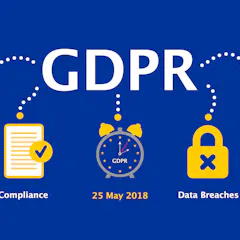
Everything you wanted to know but were scared to ask about… the General Data Protection Regulation (coming to a country near you).

We need to stop blaming consumers for not reading online privacy policies and fix the system.

It is vital for governments and citizens to discuss how much privacy should be sacrificed when issues of national security arise.

The routine gathering and monetisation of vast amounts of personal data has been normalised.

Australian businesses will not be forced to comply with or fall foul of the new data regulation merely because they maintain websites accessible in the EU.
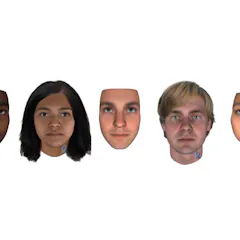
Our ability to reconstruct physical features from DNA is advancing, but can we ensure the privacy of “anonymised” genetic data if we can predict the face of its owner?
Words matter – not just for building trust and understanding, but for weighing up legal issues. So maybe “open” and “shared” aren’t the right words to use when we refer to our data.

When you send off a cheek swab to one of the private genome companies, you may sacrifice not just your own privacy but that of your family and your ancestors.
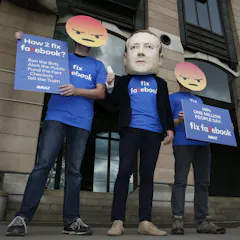
An expert explains how Facebook’s privacy issues are linked to a bigger problem – a ‘hostile information architecture,’ largely controlled by corporate interests.

The internet developed as a place for open collaboration; there are technical limits on its transformation into a commercial marketplace.

Facebook grapples with balancing the privacy needs of users with needs of the research community.

Canadians — and consumers around the world — have the power to hold industries accountable for misuse or unauthorized use of our data. It’s time to use it.

Personalisation has made decisions easier and quicker – but it is still large corporations, rather than individual users, who benefit most.
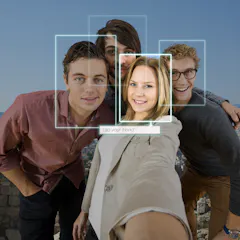
In a major blow to Facebook, a judge has ruled that a class action can proceed. If similar actions are brought around the world, Facebook could face billions of dollars in damages.

What kind of information do Canadian voters get through Facebook? It’s time for the social media giant to let researchers see exactly what it sends its 23 million users in Canada.

Facebook is not just in the business of providing you with a service. It is also in the business of farming your data.
Top contributors
-

Associate Professor, School of Law, University of Canberra
-
Associate Professor, Faculty of Law & Justice; Lead, UNSW Public Interest Law & Tech Initiative, UNSW
-
Professorial Fellow, University of Canberra
-
Emeritus Professor in Law and Criminal Justice, Adelaide University
-
Professor of Cyber Security Practice, Edith Cowan University
-
Professor specialising in Internet law, Bond University
-
Dean of Global Business, The Fletcher School, Tufts University
-
Director of UWA Centre for Software Practice, The University of Western Australia
-
Associate Professor in Telecommunications Engineering, Swinburne University of Technology
-
Research Director of the Security and Surveillance Research group; Professor, The University of Queensland
-
Professor (adjunct) and Senior Fellow, Institute for Health Policy, Management and Evaluation, Dalla Lana School of Public Health, University of Toronto
-
Research engineer, Advanced Surveillance Project, CSIRO
-
Senior Lecturer, The University of Melbourne
-
Senior Researcher and Project Manager, Advanced Surveillance Project, CSIRO
-
Former data protection and surveillance stream lead, Allens Hub for Technology, Law and Innovation, UNSW Law Faculty, UNSW