
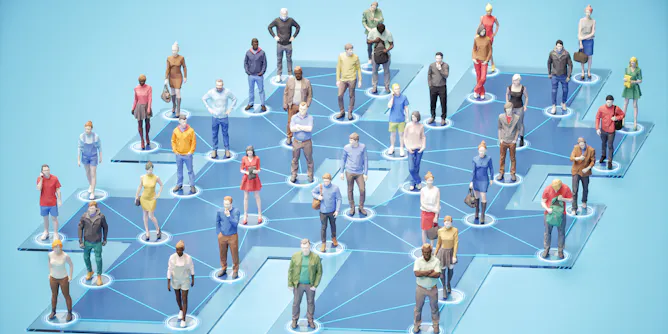
Differential privacy lets people to share data anonymously, but people need to know more about it to make informed decisions.
Articles on Privacy
Displaying 221 - 240 of 624 articles
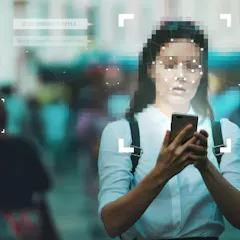
Our current digital era and reliance on technology favours information as a form of capital.

The voices of recreational cannabis users are curiously missing from the official debate about legalisation.

Facebook relies on targeted ads for a large proportion of its income, and reacted with fury over Apple’s new privacy opt-in.

“Alexa, why are the likes of Google and Amazon so determined to get us all to buy smart speakers?”

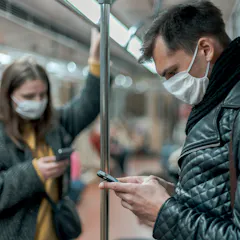
With face masks now compulsory or recommended in various parts of the country, how are facial recognition systems functioning?

Banning the Chinese-owned social media platforms raises free speech concerns and could worsen the US-China trade war.

Children need to learn how to manage their own accounts and passwords as an extension of their identity.

Technology is not neutral, as facial recognition algorithms and predictive policing have shown us. Algorithms discriminate by design, reflecting and reinforcing pre-existing biases.
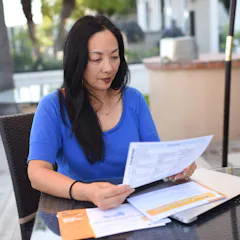
Voting at home is safe from fraud and disease, but gives up a key advantage of in-person voting at official polling places: a secure, safe environment where everyone can cast their ballot secretly.

Lack of privacy is a top concern for students required to log on to online courses, a scholar argues.
A national health plan that uses data to assess individual risk and control disease outbreaks would have created less disruption than the current coronavirus pandemic response.

Canada’s COVID Alert app maybe be privacy-safe, but the government has failed to release any information about what effect it expects it to have on COVID-19 transmission.

Self-regulation by the technology industry has failed to keep people safe online. That’s a job for government.
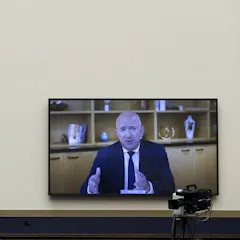
Taming Big Tech’s market power requires addressing their monopoly over user-related data collection instead of employing traditional antitrust measures such as breaking up the firms.

Private mode browsing is a useful way to cover your online tracks. Just don’t read too much into the word ‘private.’

For decades experts have puzzled over why most people claim to have privacy concerns, but few actually do enough about it.

Any update too Canada’s current regulations to manage online privacy and data protection needs to anticipate emerging trends in data collection.
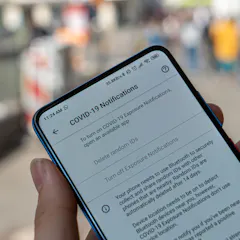
In response to the Covid-19 epidemic, more than 50 countries have developed tracing applications to help alert citizens and authorities when outbreaks occur. But the process is anything but simple.

National MP Hamish Walker and political powerbroker Michelle Boag have admitted leaking confidential patient information – but does that make them legally liable too?
Top contributors
-

Associate Professor, School of Law, University of Canberra
-
Associate Professor, Faculty of Law & Justice; Lead, UNSW Public Interest Law & Tech Initiative, UNSW
-
Professorial Fellow, University of Canberra
-
Emeritus Professor in Law and Criminal Justice, Adelaide University
-
Professor of Cyber Security Practice, Edith Cowan University
-
Professor specialising in Internet law, Bond University
-
Dean of Global Business, The Fletcher School, Tufts University
-
Director of UWA Centre for Software Practice, The University of Western Australia
-
Associate Professor in Telecommunications Engineering, Swinburne University of Technology
-
Research Director of the Security and Surveillance Research group; Professor, The University of Queensland
-
Professor (adjunct) and Senior Fellow, Institute for Health Policy, Management and Evaluation, Dalla Lana School of Public Health, University of Toronto
-
Research engineer, Advanced Surveillance Project, CSIRO
-
Senior Lecturer, The University of Melbourne
-
Senior Researcher and Project Manager, Advanced Surveillance Project, CSIRO
-
Former data protection and surveillance stream lead, Allens Hub for Technology, Law and Innovation, UNSW Law Faculty, UNSW