

Effective national leadership and trust in government appear to be prerequisites for countries to achieve widespread digital contact tracing.
Articles on Privacy
Displaying 241 - 260 of 624 articles

In a country marred by systematic discrimination and continued social marginalisation, particular consideration needs to be given to the measures being used to contain the spread of COVID-19.
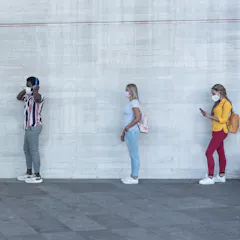
The reason the UK contact-tracing apps failed? It fell foul of privacy rules decided in California.
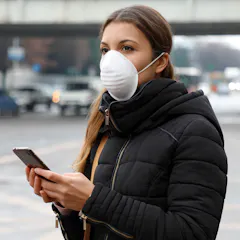
Police departments have suggested using contact tracing approaches to track protesters, raising concerns about data and privacy.
Artificial intelligence insatiable data needs has encouraged the mass collection of personal data, placing privacy at risk. But AI can help solve the very problem it creates.
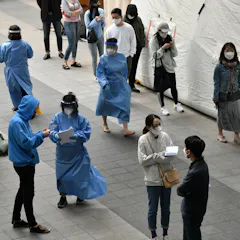
South Korea’s mass surveillance to curb the coronavirus pandemic uses technologies and techniques that are grounded in anti-LGBTQ discrimination.
With more people working from home post-COVID-19, what are the privacy implications of employers using spyware to monitor worker activity?
A patchwork of state and federal laws cover the surveillance of private conversation. But, in all cases, there is a “public interest” defence.

The use of body cameras by police forces raises questions about surveillance, privacy and regulation.

Smartphone apps and wearable devices can tell when workers have been within six feet of each other, promising to help curb the coronavirus. But they’re not all the same when it comes to privacy.
As the pandemic drives more of our lives online, we move further into a world optimised by big tech to suit itself.
Privacy regulation can’t keep pace with the supersystems collecting, analyzing and using personal data.

The NZ COVID Tracer app helps you keep track of places you visit in New Zealand, in case anyone infected also visited. But the app has some shortcomings that won’t be fixed until June at the earliest.
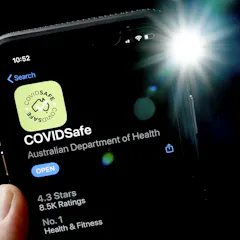
The COVIDSafe app hasn’t come out of nowhere. The promises of ‘smart city’ data collection may be seductive, but we must always weigh up what we’re being asked to give up in return.

Technology has made life under coronavirus workable and bearable for a great many. But will it mean further intrusions into our privacy that normally would be unacceptable?
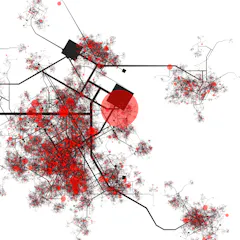
Contact tracing is being touted as essential to controlling the spread of COVID-19, but it comes with alarming concerns related to our rights to privacy.
As governments consider the use of surveillance technologies to trace and contain the spread of COVID-19, it is important to consider human rights in the implementation.

Bluetooth wireless communication makes it possible to track when people have been exposed to people infected with the coronavirus. The right cryptography scheme keeps alerts about exposures private.

Providing the relevant safeguards are in place, there should be no particular threat to Australians’ privacy.

Zoom’s privacy and security shortcomings are just the latest videoconferencing vulnerabilities. Knowing each platform’s risks can help people avoid many of the downsides of virtual gatherings.
Top contributors
-

Associate Professor, School of Law, University of Canberra
-
Associate Professor, Faculty of Law & Justice; Lead, UNSW Public Interest Law & Tech Initiative, UNSW
-
Professorial Fellow, University of Canberra
-
Emeritus Professor in Law and Criminal Justice, Adelaide University
-
Professor of Cyber Security Practice, Edith Cowan University
-
Professor specialising in Internet law, Bond University
-
Dean of Global Business, The Fletcher School, Tufts University
-
Director of UWA Centre for Software Practice, The University of Western Australia
-
Associate Professor in Telecommunications Engineering, Swinburne University of Technology
-
Research Director of the Security and Surveillance Research group; Professor, The University of Queensland
-
Professor (adjunct) and Senior Fellow, Institute for Health Policy, Management and Evaluation, Dalla Lana School of Public Health, University of Toronto
-
Research engineer, Advanced Surveillance Project, CSIRO
-
Senior Lecturer, The University of Melbourne
-
Senior Researcher and Project Manager, Advanced Surveillance Project, CSIRO
-
Former data protection and surveillance stream lead, Allens Hub for Technology, Law and Innovation, UNSW Law Faculty, UNSW