

With so many people working from home on vulnerable networks and set-ups, cybersecurity is a growing concern.
Articles on Privacy
Displaying 261 - 280 of 624 articles

Cellphone data can show who coronavirus patients interacted with, which can help isolate infected people before they feel ill. But how digital contact tracing is implemented matters.
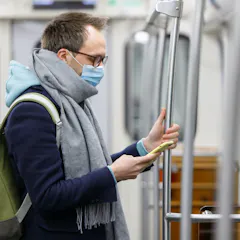
Research indicates people would be willing to give up privacy to tackle the COVID-19 pandemic.

It’s important to strike a balance between protecting Americans’ privacy and having accurate statistics for governments and businesses to make data-based decisions.

Automated text messages if your phone detects you’re a long way from home, or discounted home internet, are just a few possible technology solutions to make New Zealanders “stay home to save lives”.
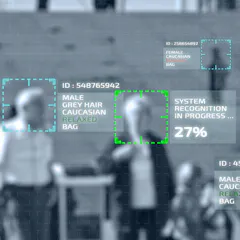
Recently, police forces have come under criticism for their engagement of facial recognition technologies. But pandemic response plans may increasingly incorporate surveillance.
Some measures taken in China to contain the COVID-19 outbreak have raised concerns about patient privacy. As other countries bring in containment measures, will patient privacy be compromised?
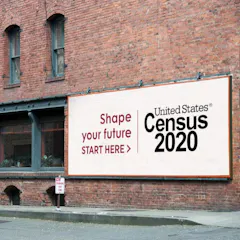
A quarter of Americans, many of them non-white, are worried about data privacy and confidentiality in the 2020 census.

Research reveals a complicated relationship between surveillance and freedom, as surveillance activities allow for greater autonomy for women hoping to work in Jordan.
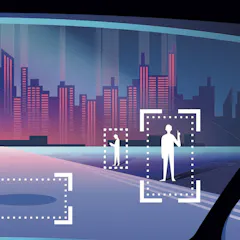
You’d thinking flying in a plane would be more dangerous than driving a car. In reality it’s much safer, partly because the aviation industry is heavily regulated. Airlines must stick to strict standards…

The more we use facial recognition, the more we see its limits and its risks.

Pediatric epigenetic clocks have the potential to accurately assess biological age. However, possible applications in law enforcement and immigration raise ethical issues.
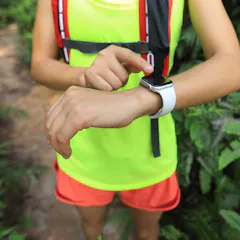
The use of online health platforms is on the rise, allowing us to track and share our personal data. While such platforms have promise, significant scientific, ethical and privacy questions remains.
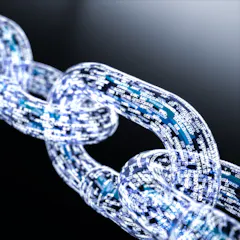
Data breaches are on the rise, but blockchain can provide a secure way for consumers to manage their data and their privacy.
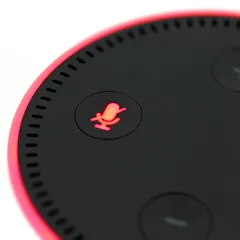
Hey Alexa, who are you sharing my data with?

Predicting life expectancy remains in the realm of science fiction, but it may soon be possible. Are we prepared for such information? And who else would benefit from this knowledge?

Medical data will need to be treated as precious to our health as drinking water.

The EPA has just adopted a rule that limits what kinds of science regulators can use in setting rules. A scholar explains how this shift could impede his work mapping child lead poisoning.
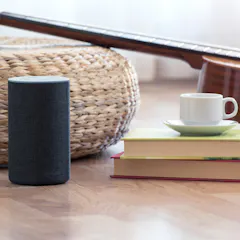
When hosting a dinner party, are you obliged to let your guests know that you own a smart device like Amazon Echo or Google Home? The answer is yes, according to a privacy researcher.

DNA testing kits will be a popular gift this holiday season. Before mailing off your saliva, it’s important to understand what these kits can and cannot tell us.
Top contributors
-

Associate Professor, School of Law, University of Canberra
-
Associate Professor, Faculty of Law & Justice; Lead, UNSW Public Interest Law & Tech Initiative, UNSW
-
Professorial Fellow, University of Canberra
-
Emeritus Professor in Law and Criminal Justice, Adelaide University
-
Professor of Cyber Security Practice, Edith Cowan University
-
Professor specialising in Internet law, Bond University
-
Dean of Global Business, The Fletcher School, Tufts University
-
Director of UWA Centre for Software Practice, The University of Western Australia
-
Associate Professor in Telecommunications Engineering, Swinburne University of Technology
-
Research Director of the Security and Surveillance Research group; Professor, The University of Queensland
-
Professor (adjunct) and Senior Fellow, Institute for Health Policy, Management and Evaluation, Dalla Lana School of Public Health, University of Toronto
-
Research engineer, Advanced Surveillance Project, CSIRO
-
Senior Lecturer, The University of Melbourne
-
Senior Researcher and Project Manager, Advanced Surveillance Project, CSIRO
-
Former data protection and surveillance stream lead, Allens Hub for Technology, Law and Innovation, UNSW Law Faculty, UNSW