
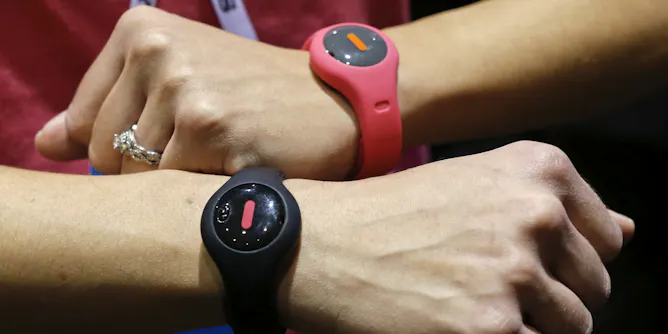
Insurer John Hancock now requires customers to use activity trackers for life insurance policies. Here’s how that will put life insurance and even mortgages out of reach for many people.
Articles on Privacy
Displaying 341 - 360 of 624 articles

As Canada moves to legalize marijuana and online sales become commonplace, privacy concerns can’t be an afterthought; they must be built into the system from the outset. That’s not happening.

Financial institutions and stores judge our credit-worthiness based on how we handle our money. But we should be cautious of letting others compile our health data into a “wellness report.”

The Law and Order Index says South Africans feel less secure than people in Yemen, the DRC and Libya, countries all affected by violent conflict.

Permanently and completely deleting information from IT systems is complex. The government should consider pausing the roll-out of My Health Record for longer to properly address this issue.

The My Health Record brings a unique set of confidentiality concerns for young people under 18. These need to be better addressed to ensure teens don’t forego important health care.
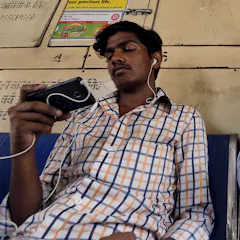
Three trends suggest people in less developed nations – who are coming online in greater numbers – use and trust the internet very differently those in more developed economies.

Judge’s decision means the media cannot identify a suspect until they are arrested. This may be challenged on appeal.

There is even more research showing open-plan environments can actually have negative impacts on collaboration. Workspaces should provide various options for different work styles and preferences.

Unless you take action to remove yourself before October 15, the federal government will make a digital copy of your medical record, store it centrally, and give numerous people access to it.

My Health Record is a step towards empowering patients with greater knowledge about their health – and could help save lives in emergencies.
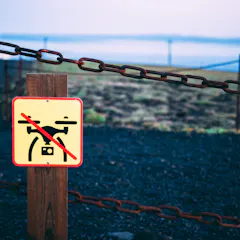
Drones are pesky, hazardous and can spy on you while you’re getting dressed. But they can also do a huge amount of good
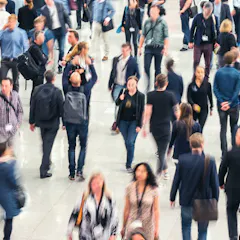
Data breaches are fact of modern life. It’s likely each of us will have our personal information compromised at some point. Here’s how to reduce the risk and limit the damage if and when it occurs.
People’s most private information isn’t on paper locked in desks anymore – it’s online, stored on corporate servers. The Supreme Court now says some privacy protections cover that data.

People find data difficult to own – and things we don’t own, we tend not to protect.

Paradoxically, it is only when I disappear into the digital crowd that my personal data becomes interesting for digital merchants.

Remote cameras used to track wildlife in Australia could pose a privacy risk, especially if the images they capture fall into the wrong hands.
Privacy rules enacted in Europe are affecting companies – and their customers and users – all around the world.

Imagine if we could specify our general privacy preferences in our devices, have them check privacy policies when we sign up for apps, and warn us if the agreements overstep.

Researchers analyze social media data to gain useful insights into modern society and culture. But it’s important to protect users’ privacy. How can both ends meet?
Top contributors
-

Associate Professor, School of Law, University of Canberra
-
Associate Professor, Faculty of Law & Justice; Lead, UNSW Public Interest Law & Tech Initiative, UNSW
-
Professorial Fellow, University of Canberra
-
Emeritus Professor in Law and Criminal Justice, Adelaide University
-
Professor of Cyber Security Practice, Edith Cowan University
-
Professor specialising in Internet law, Bond University
-
Dean of Global Business, The Fletcher School, Tufts University
-
Director of UWA Centre for Software Practice, The University of Western Australia
-
Associate Professor in Telecommunications Engineering, Swinburne University of Technology
-
Research Director of the Security and Surveillance Research group; Professor, The University of Queensland
-
Professor (adjunct) and Senior Fellow, Institute for Health Policy, Management and Evaluation, Dalla Lana School of Public Health, University of Toronto
-
Research engineer, Advanced Surveillance Project, CSIRO
-
Senior Lecturer, The University of Melbourne
-
Senior Researcher and Project Manager, Advanced Surveillance Project, CSIRO
-
Former data protection and surveillance stream lead, Allens Hub for Technology, Law and Innovation, UNSW Law Faculty, UNSW