
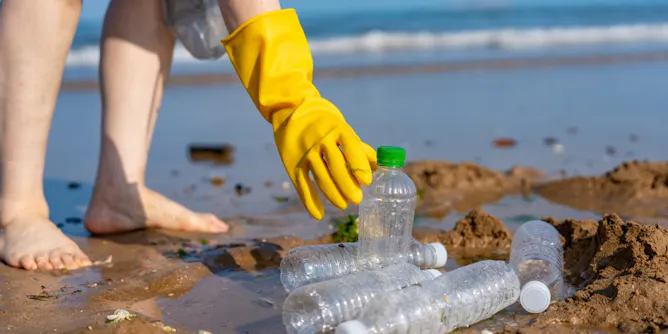
A new mobile app helps volunteers track down plastic littered along the Irish coast.
Articles on Plastic
Displaying 21 - 40 of 399 articles

To date, every family of marine mammal and seabird and all seven species of sea turtles have been documented to ingest plastics.
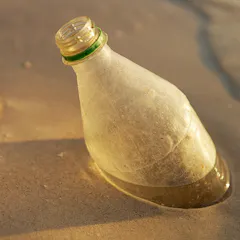
Like the bronze and iron ages, plastic is defining an archaeological era.
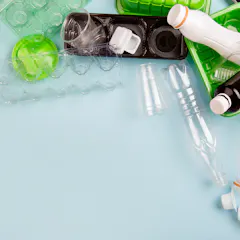
Plastic pollution is often hidden in plain sight – behind positive “eco” or “recyclable” labels, within supply chains and under the convenience of online shopping.

Only 9% of plastics ever made have been recycled. Clever industry campaigns have shifted the costs of their own waste onto consumers.
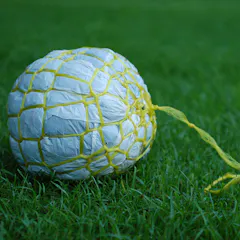
An EcoBall match is a live demonstration of the circular economy.

The world puts a lot of unnecessary microplastics into the environment − such as glitter in makeup. Even better filters in washing machines could help.

Nanoplastics can cross the blood-brain barrier – and being able to better detect them is the first step in addressing their potential impact.

How will the new recycling scheme involving Woolworths, Coles and Aldi work? And what are some upsides for shoppers if we had more plastic-free food to choose from?
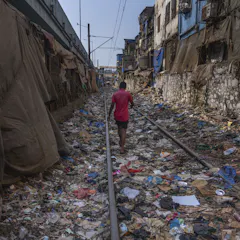
Cleanup is needed to mitigate ecological, economic and social impacts of plastic pollution now and in the future.

Water systems are vulnerable to melting plastic components, toxic contamination and failures that can leave firefighters without flowing water.

International efforts to reach agreement on reducing plastic pollution are disappointing. But we don’t need to wait for a treaty to make changes in our own lives.
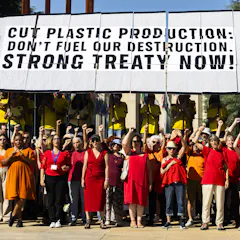
Negotiators in Geneva face a critical moment to agree a Global Plastics Treaty before talks end, with the planet’s future at stake.

Lobbyists and petrostates want to avoid a strong focus on human health in the impending global treaty on plastic pollution.
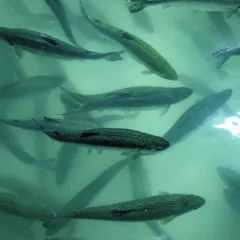
Tires are complex chemical products. When they wear away, they release additives into the environment that can poison wildlife.

Studying the evolution of the plastic chair provides unique insights into society’s shifting attitudes to plastic.
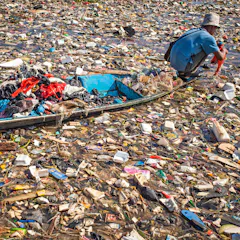
The talks in Geneva may be the world’s last chance to agree a strong treaty to tackle plastic pollution, scientists warn.
A healthy and sustainable planet means supporting action based on scientific evidence, not misinforming people with catchy phrases and political rhetoric.

We discovered how a plastic-eating enzyme made a germ more harmful.

Not all plastic is the same. Old yogurt cups and milk jugs, for example, don’t play well together when being turned into new materials. However, there are solutions.
Top contributors
-

Senior Principal Research Scientist, Environment, CSIRO
-
Research Chair, Indigenous Approaches to Environmental Management, Keele University
-
Senior Principal Research Scientist, CSIRO
-
Lecturer, School of Life and Environmental Sciences, Deakin University
-
Professor of Sustainable Development, Keele University
-
Research Scientist, Stanford University
-
Lecturer in Ornithology, Charles Sturt University
-
Assistant Professor of Ecology and Evolutionary Biology, University of Toronto
-
Professor, School for Resource and Environmental Studies, Dalhousie University
-
Professor of Ocean Policy and Economy, University of Portsmouth
-
Professor of Coastal Oceanography, The University of Western Australia
-
Associate professor, University of Portsmouth
-
Oceanographer, The University of Western Australia
-
Research associate, Loughborough University
-
Professor of Global Environmental Politics, University of California, Berkeley