
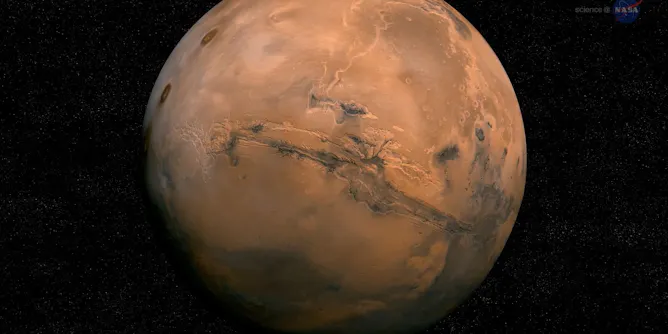
It turns out that Mars has a similar interior structure to Earth.
Articles on Planetary science
Displaying 21 - 40 of 120 articles
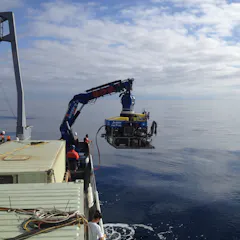
Microbes hidden deep in ocean volcanoes could resemble life on other planets or moons.
Keeping Earth safe from asteroids isn’t just spotting them – it’s also helping people understand what a high-impact probability with Earth means.
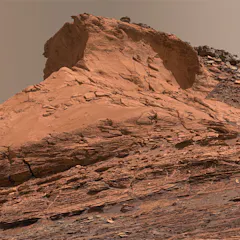
Mars isn’t a bright, fire-engine red, but the iron oxide in its rocks makes it appear redder than other planets, especially from afar.
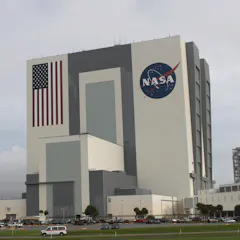
Under the proposed budget, several major projects, such as the Mars Sample Return and the Space Launch System, would face cancellation.
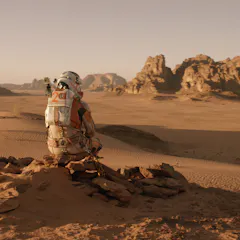
NASA hasn’t landed humans on Mars yet. But thanks to robotic missions, scientists now know more about the planet’s surface than they did when the movie was released.
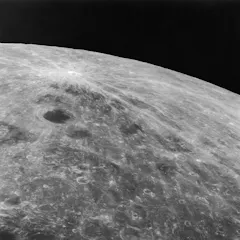
NASA’s learned a lot about the Moon since Apollo. But a perfect landing still requires incredible planning and scientific precision.
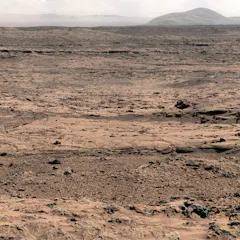
NASA’s Curiosity rover has spotted carbon-containing minerals that can tell scientists more about what ancient Mars’ atmosphere may have looked like.
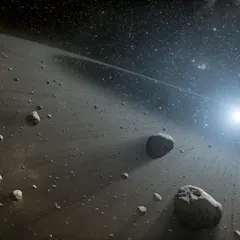
The Earth started as a mixture of gas and dust around the Sun and grew as it collided with asteroids and dust particles.
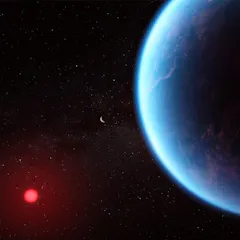
The exoplanet K2-18b could harbor a massive ocean, but scientists will need to study the planet more to see if it’s really likely to host life.
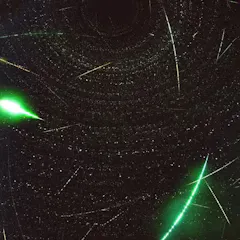
Water-rich meteorites contain key ingredients for life, yet they barely appear in meteorite collections. Recent research using shooting stars may explain why.
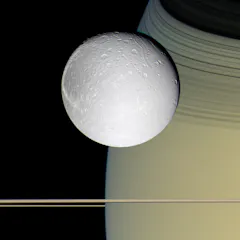
The number of known moons in our Solar System has been rising for centuries, but astronomers say it has probably peaked – for now.
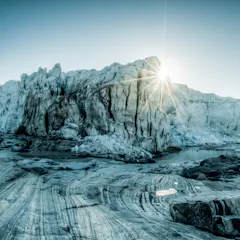
Hundreds of millions of years ago, rocks crushed under kilometres of ice injected vital nutrients into Earth’s oceans.
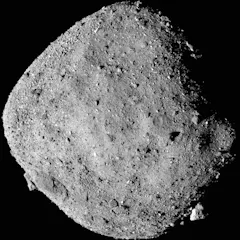
New findings reveal that a NASA mission traveled to an asteroid that may have once been covered in salty lakes containing organic molecules.

The ‘Martian dichotomy’ is one of the Solar System’s greatest mysteries – but new research in closing in on a solution.

Comets without tails, called dark comets, are a newly discovered space object. Now, astronomers know they come in 2 classes.
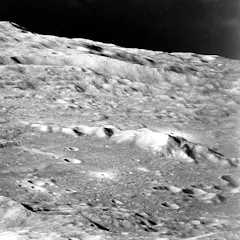
An extreme heating event may have interfered with scientists’ attempts to figure out the Moon’s age by dating lunar rock samples.
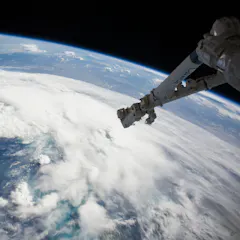
It’s all about perspective: The higher you go, the more you can see the curve.
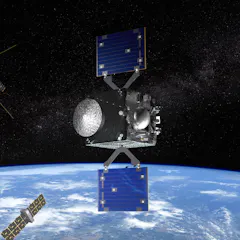
Ramses, a European space mission to study the asteroid Apophis, has been approved for perparatory work.
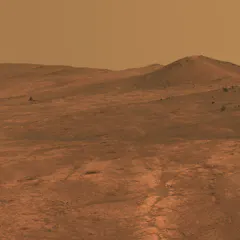
Before sending humans to Mars, NASA will first return humans to the Moon’s surface to test its technology and train astronauts.
Top contributors
-

Professor (Astrophysics), University of Southern Queensland
-
Senior Instrument Scientist, Australian Nuclear Science and Technology Organisation
-
Assistant Professor of Astrophysical and Planetary Sciences, University of Colorado Boulder
-
Postdoctoral research associate, University of Oxford
-
Senior Lecturer in Physics, Nottingham Trent University
-
Program Manager / Adjunct Research Fellow, Swinburne University of Technology
-
Earth Sciences Postdoctoral Scientist and Adjunct Associate, Dartmouth College
-
Research Associate, Curtin University
-
Postdoctoral Fellow in Planetary Sciences, NASA
-
Associate Professor of Earth, Environmental, and Planetary Sciences, Washington University in St. Louis
-
Postdoc astrophysicist, Mississippi State University
-
Associate Professor, School of Earth and Planetary Sciences, Curtin University
-
Co-Director Space Technology and Industry Institute, Swinburne University of Technology
-
Professor of Planetary Geosciences, The Open University
-
Professor of Physics, Deputy Director (Solar System) at the Mullard Space Science Laboratory, UCL