
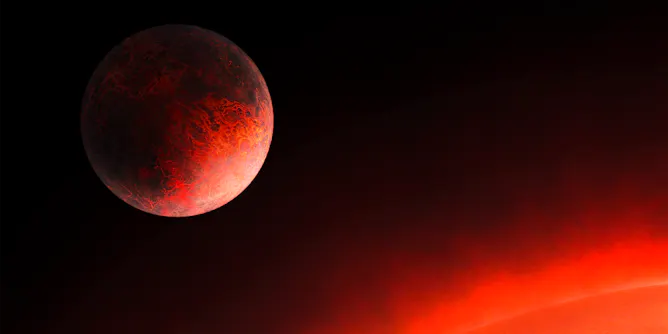
Most of what we know about planets outside our Solar System relates to gas-giant planets. A new study has identified and characterised a smaller exoplanet.
Articles on Planetary science
Displaying 81 - 100 of 120 articles

Tiny pieces of an asteroid have revealed an unlikely origin for much of the water in Earth’s oceans.
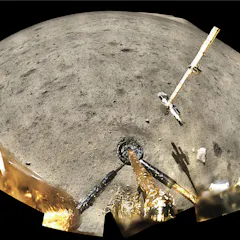
Volcanic Moon rocks collected by a Chinese probe last year are around 2 billion years old, a new analysis shows. That’s a billion years younger than those brought back by the Apollo and Luna missions.
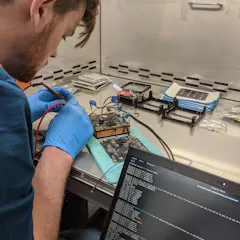
The Binar-1 mission is the first in a series that will hopefully culminate in a mission to the Moon, with satellites developed using know-how gained from designing tough instruments for the WA outback.
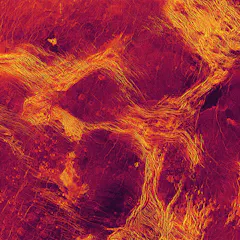
Researchers used decades-old radar data and found that some low-lying areas of Venus’ crust are moving and jostling. This evidence is some of the strongest yet of tectonic activity on Venus.
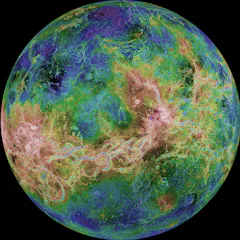
Two new NASA missions – VERITAS and DAVINCI+ – are headed to Venus. The missions will use radar and a probe to learn about Earth’s hard-to-study and potentially prophetic neighbor.
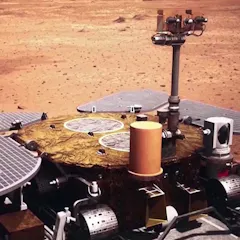
China has fast-tracked its way onto the red planet, almost matching NASA’s capability in a fraction of the time. Its Zhurong rover will become the first to measure Mars’s magnetic field.
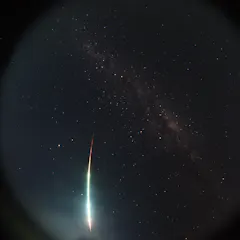
You might think lots of meteorites ultimately come from comets. Turns out, you’d be wrong, according to a new study that tracked meteors hurtling through the sky to find out where they came from.
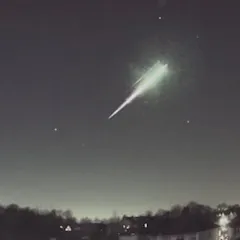
The hunt for the space rock involved a few bits of sheep poo before the real meteorite was found.
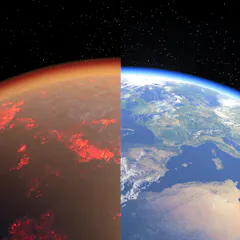
Unlike our hellish neighbour Venus, Earth was far enough from the Sun for liquid water to form and create a more hospitable environment for life.
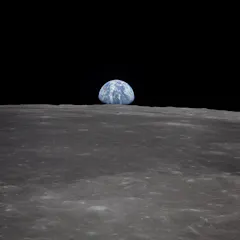
Researchers have long suspected there’s water - or ice, to be precise - on the Moon. New research now confirms it, and suggests it lurks in sun-starved nooks and crannies called ‘cold traps’.
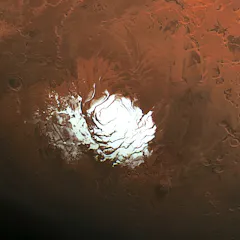
Three newly discovered bodies of liquid water deep beneath the south polar ice cap on Mars have planetary scientists intrigued.
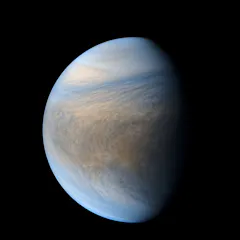
The discovery of phosphine in the acidic clouds of Venus can’t be explained by any known chemical or geological processes.
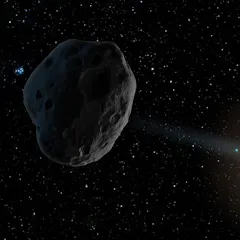
Following on from the 2019 International Year of Indigenous Languages, 2020 has seen 5 asteroids given new names recognising the contribution of illustrious Aboriginal and Torres Strait Islander people.
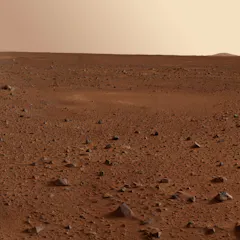
NASA’s InSight lander has recorded the first evidence of earthquake-like tremors on Mars. The discovery opens a new chapter in our understanding of the geological processes at play on another world.
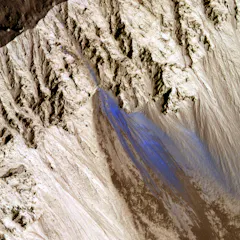
New research on landslides on Mars could help protect against devastating landslides on Earth.
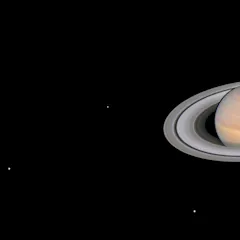
Astronomers have found 20 new moons around Saturn, and will keep finding more as technology improves.
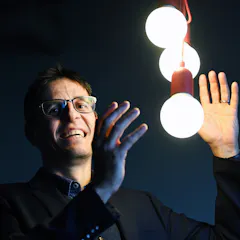
The 2019 Nobel Prize in Physics went to a cosmologist who helped unlock the secrets of the Big Bang’s aftermath, and two astronomers who found a “hot Jupiter” orbiting a nearby star.
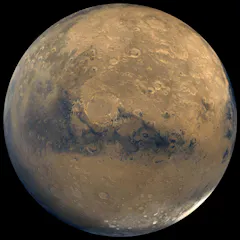
NASA has released a sound recording from Mars. So what do these literally otherworldly sounds tell us about the processes at play inside the red planet?
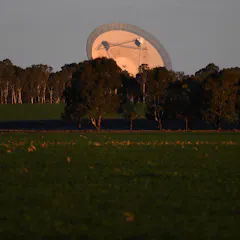
Australia played a vital role in beaming the Apollo 11 Moon landing to the world. But since then we’ve passed up the opportunity to cement our place in exploring outer space.
Top contributors
-

Professor (Astrophysics), University of Southern Queensland
-
Senior Instrument Scientist, Australian Nuclear Science and Technology Organisation
-
Assistant Professor of Astrophysical and Planetary Sciences, University of Colorado Boulder
-
Postdoctoral research associate, University of Oxford
-
Senior Lecturer in Physics, Nottingham Trent University
-
Program Manager / Adjunct Research Fellow, Swinburne University of Technology
-
Earth Sciences Postdoctoral Scientist and Adjunct Associate, Dartmouth College
-
Research Associate, Curtin University
-
Postdoctoral Fellow in Planetary Sciences, NASA
-
Associate Professor of Earth, Environmental, and Planetary Sciences, Washington University in St. Louis
-
Postdoc astrophysicist, Mississippi State University
-
Associate Professor, School of Earth and Planetary Sciences, Curtin University
-
Co-Director Space Technology and Industry Institute, Swinburne University of Technology
-
Professor of Planetary Geosciences, The Open University
-
Professor of Physics, Deputy Director (Solar System) at the Mullard Space Science Laboratory, UCL