
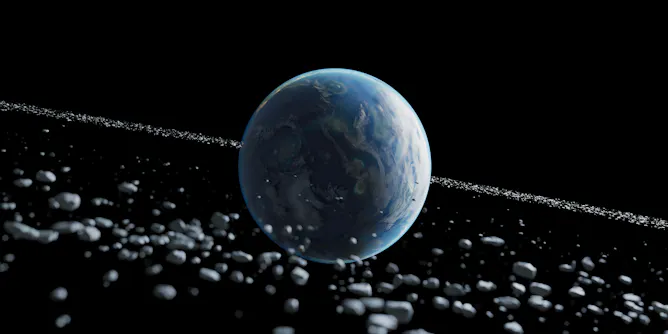
Mounting evidence suggests the rubble of an asteroid once formed a ring orbiting our planet’s equator.
Articles on Planetary science
Displaying 41 - 60 of 120 articles
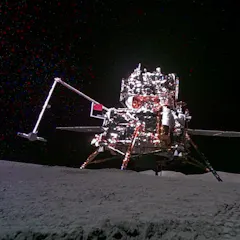
The far side of the Moon has a very different composition from the near side − so researchers are eager to see what stories these samples will tell.

These rare rocks come in a few different types, which can tell geologists about Mars’ volcanic past and hint at its potential habitability.
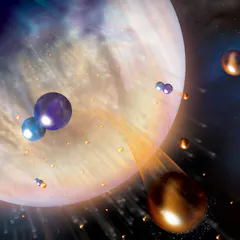
Studying Venus’ water loss can help scientists better understand how planets go from potentially habitable to incapable of supporting life.

It’s not easy to collect rocks on a budget when the rocks are 140 million miles away.

Saturn’s moon Enceladus has geysers shooting tiny grains of ice into space. These grains could hold traces of life − but researchers need the right tools to tell.
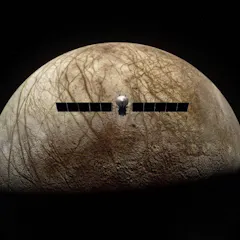
An instrument on the Europa Clipper mission might be able to detect biological cells from space.
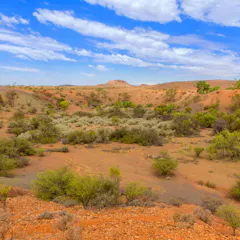
A zap with a laser in the lab confirmed the extraterrestrial origins of enigmatic lumps of glass found in the Northern Territory.

Deep-sea sediments show how the changing orbits of Earth and Mars are linked to past global warming and the speeding up of deep-ocean eddies.
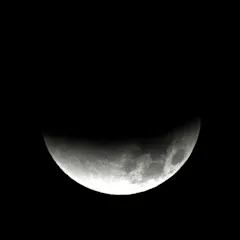
Projects under NASA’s CLPS program – including the Odysseus lander that made it to the lunar surface – will probe unexplored questions about the universe’s formation.
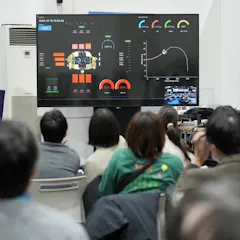
Japan is one of several countries that weren’t part of the space race of the 1950s and 1960s looking toward the Moon. They’ve now become the 5th country to have landed on its surface.

The Peregrine and Nova-C landers are due to carry out valuable science at two diverse lunar locations.
Scientists analyzing isotope ratios have found that many of the elements that make up life could be left over from Earth’s formation.
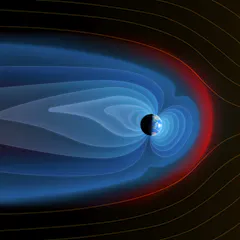
Ever seen the northern lights? You have a magnetic layer in Earth’s atmosphere to thank for those beautiful displays. But the magnetosphere does a lot more than create auroras.
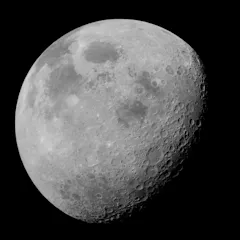
Some dark craters on the Moon are never exposed to light − ice could be hiding in these permanently shadowed regions, and India’s Chandrayaan-3 mission marked a big step toward finding it.
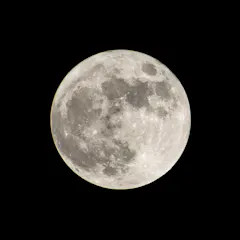
Despite the distances involved, people as far apart as the UK and Australia can see the Moon at the same time.
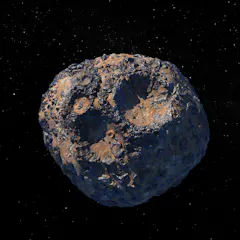
A distant lump of space rock may have a surprising amount in common with the core of our own planet.
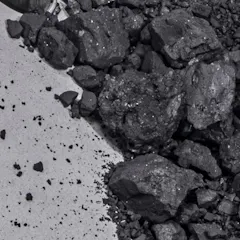
Studying the sample could help answer how water arrived on Earth and how life started.
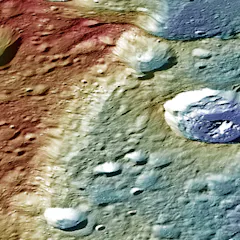
Mercury has shrunk by7 km. Most of this happened long ago, but now we have evidence that it continues.
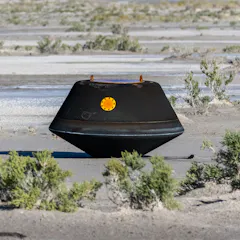
NASA’s OSIRIS-REx mission has delivered pieces of asteroid Bennu, which scientists hope will offer a window into the early era of the Solar System billions of years ago.
Top contributors
-

Professor (Astrophysics), University of Southern Queensland
-
Senior Instrument Scientist, Australian Nuclear Science and Technology Organisation
-
Assistant Professor of Astrophysical and Planetary Sciences, University of Colorado Boulder
-
Postdoctoral research associate, University of Oxford
-
Senior Lecturer in Physics, Nottingham Trent University
-
Program Manager / Adjunct Research Fellow, Swinburne University of Technology
-
Earth Sciences Postdoctoral Scientist and Adjunct Associate, Dartmouth College
-
Research Associate, Curtin University
-
Postdoctoral Fellow in Planetary Sciences, NASA
-
Associate Professor of Earth, Environmental, and Planetary Sciences, Washington University in St. Louis
-
Postdoc astrophysicist, Mississippi State University
-
Associate Professor, School of Earth and Planetary Sciences, Curtin University
-
Co-Director Space Technology and Industry Institute, Swinburne University of Technology
-
Professor of Planetary Geosciences, The Open University
-
Professor of Physics, Deputy Director (Solar System) at the Mullard Space Science Laboratory, UCL