
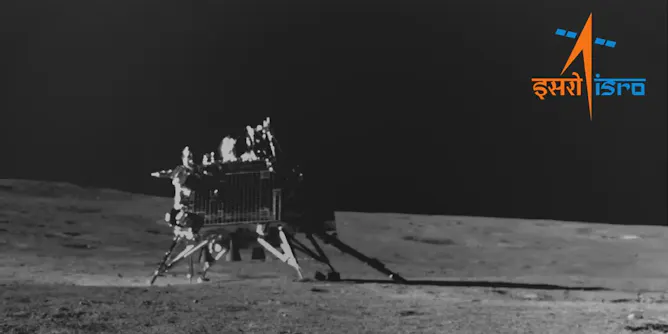
India’s Chandrayaan-3 rover has found sulfur on the Moon’s surface at higher concentrations than previously seen. Sulfur, a useful resource, could pave the way for future Moon bases.
Articles on Planetary science
Displaying 61 - 80 of 120 articles
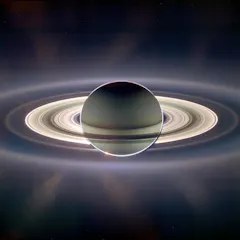
New research suggests Saturn’s rings may be surprisingly young.
Astronomers are hot on the search for new exoplanets – planets that lie beyond our Solar System – which might show potential for sustaining life.
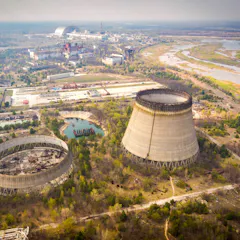
Zircons formed in the hellish Chernobyl meltdown are changing how geologists understand their favourite crystals.
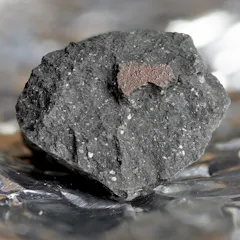
In 2021, searchers recovered a meteorite that fell over the UK just hours earlier. Scientists have now reconstructed its story.
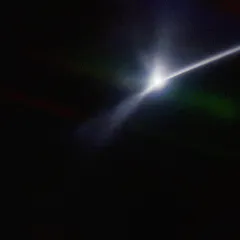
Five new studies show smashing spacecraft into asteroids could be a viable way to defend Earth from threatening space rocks.
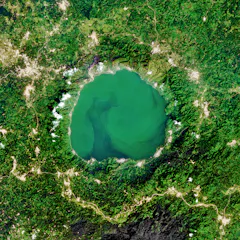
It’s time to get more Ghanaians interested in this fascinating, important aspect of science.
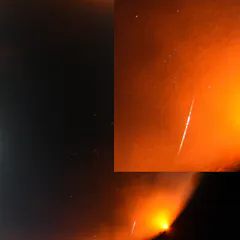
Within hours of its landing, samples of the Winchcombe meteorite had been recovered and its origins tracked back beyond Mars to the asteroid belt.
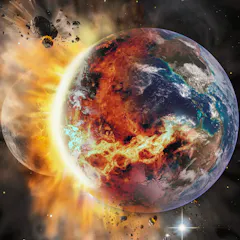
Believe it or not, this sort-of happened before in Earth’s history – and now we have the Moon.
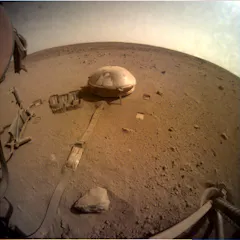
In an extraterrestrial first, scientists have linked seismic waves on Mars to meteorite impact craters spotted via satellite.
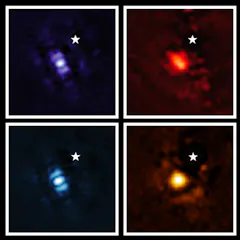
The James Webb Space Telescope just released its first-ever exoplanet image. Here’s what’s so exciting about it, and what we can stand to learn.

By tracking a meteorite found in Morocco back to its origin in an asteroid crater on Mars millions of years ago, scientists can learn more about how the planets formed.
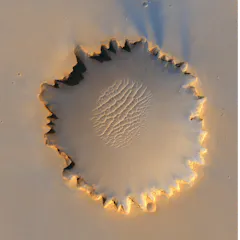
There are many bodies in the solar system we can’t easily access. But observations of their winds and sediments reveal a surprising amount.
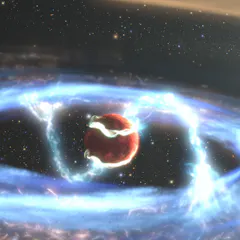
A glimpse of a distant Jupiter-sized exoplanet sheds light on how gas giants form.
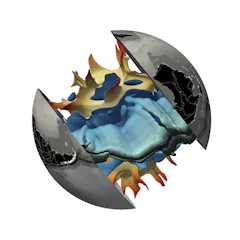
Ancient blobs deep inside the Earth gather together and break apart like continents, according to new research.
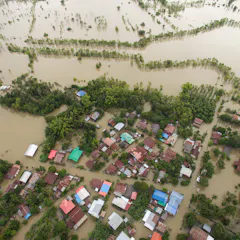
Plus, a section of a rocket is about to crash on the Moon. What scientists hope to learn from it. Listen to The Conversation Weekly podcast.

Across the solar system, asteroids and comets crash into moons and planets every day. The rocket collision will provide researchers with important data on how these collisions work.
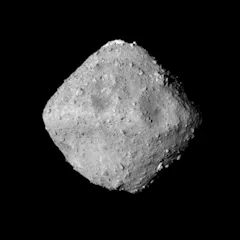
The Hayabusa2 mission brought a piece of asteroid Ryugu back to Earth, where it has helped scientists resolve a long-standing puzzle.
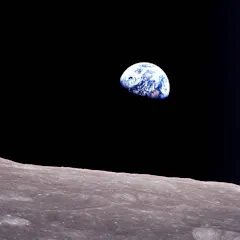
The mission is set to launch in March 2022. Here’s what you need to know.
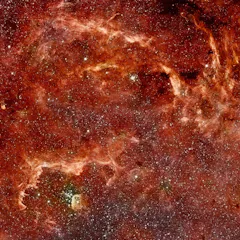
As we await the launch of the James Webb Space telescope, it’s timely to look back on what previous generations of telescopes have shown us.
Top contributors
-

Professor (Astrophysics), University of Southern Queensland
-
Senior Instrument Scientist, Australian Nuclear Science and Technology Organisation
-
Assistant Professor of Astrophysical and Planetary Sciences, University of Colorado Boulder
-
Postdoctoral research associate, University of Oxford
-
Senior Lecturer in Physics, Nottingham Trent University
-
Program Manager / Adjunct Research Fellow, Swinburne University of Technology
-
Earth Sciences Postdoctoral Scientist and Adjunct Associate, Dartmouth College
-
Research Associate, Curtin University
-
Postdoctoral Fellow in Planetary Sciences, NASA
-
Associate Professor of Earth, Environmental, and Planetary Sciences, Washington University in St. Louis
-
Postdoc astrophysicist, Mississippi State University
-
Associate Professor, School of Earth and Planetary Sciences, Curtin University
-
Co-Director Space Technology and Industry Institute, Swinburne University of Technology
-
Professor of Planetary Geosciences, The Open University
-
Professor of Physics, Deputy Director (Solar System) at the Mullard Space Science Laboratory, UCL