
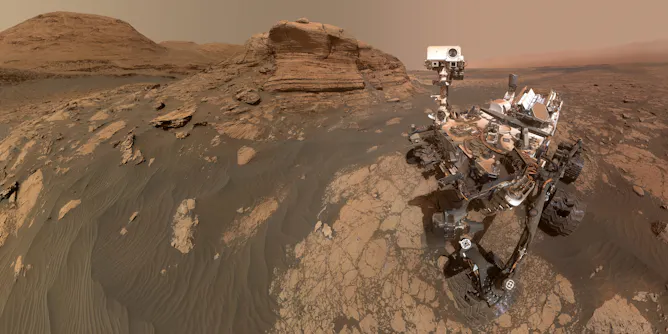
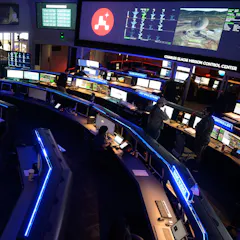
Each day in the control room of the Curiosity rover is jam-packed with important scientific decisions, as a NASA project scientist describes.
Articles on Planetary science
Displaying 1 - 20 of 120 articles
NASA’s CADRE mission will test a small team of autonomous rovers that can function without constant communication with Earth.
An Australian politician says pumping groundwater might save Earth from ‘flipping the poles’. What’s she on about?
An observatory director describes the differences between the types of rocks that fly through space.
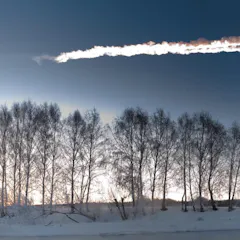
2026 has already been a banner year for meteor spottings and sonic booms across the world.
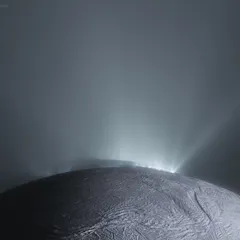
Future missions may be able to take only a small, damaged sample from space back to Earth. A simple analysis tool could help determine whether its contents suggest the presence of life.
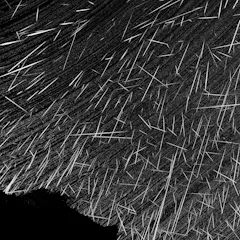
A newly identified meteor shower reveals that intense heat is fragmenting a previously unknown asteroid as it passes too close to the Sun.

A chemical signature in a lunar rock offers new insights into what early oxygen conditions were like on the Moon.

Several robotic spacecraft orbiting the Moon can take detailed pictures of its surface, so why send people around the Moon? A planetary geologist explains the benefits.
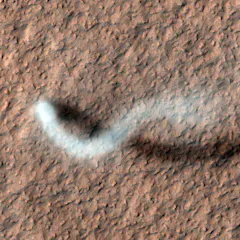
A rover recently captured sounds of lightning crackling on Mars, over a decade after scientists uncovered the first evidence for electric discharges on the planet.
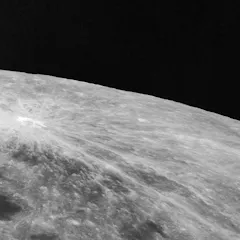
The US, China, India, Europe and Japan all have exciting missions on the horizon in 2026. Many of them are collaborative feats.
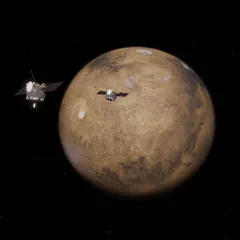
What’s better – many small space missions, or a few large, sweeping ones? Space scientists are asking this question as they face budget uncertainties.
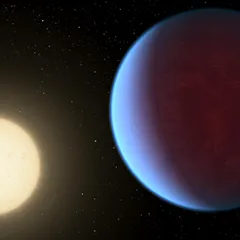
Searching for life on other planets requires more than just measuring their distances from their stars. A future NASA telescope may help search for potentially habitable worlds.

The twin spacecraft Blue and Gold could open a new era in space exploration and planetary science, powered by commercial partnerships and innovations.

Biosphere 2 isn’t just the site of a famous human experiment. Today, scientists there work to understand how life emerges in barren environments.

Would you guess that the Earth is spinning at 1,000 mph around its axis and at the same time hurtling through space on its orbit around the Sun at 67,000 mph? Here’s why you don’t feel all that motion.
A planetary scientist walks through the sensors and systems that went into the recent detection of potential biosignatures.
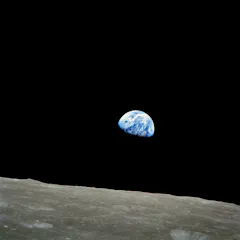
The Moon influences ocean tides – and ocean tides, in some ways, influence the Moon back.
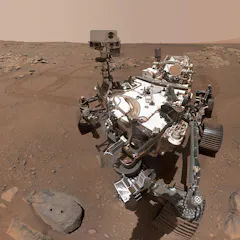
Unique, spotted rocks in Mars’ Jezero Crater could indicate that the planet once hosted life.
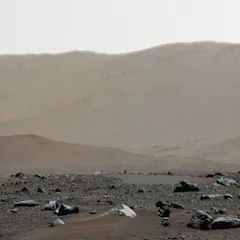
The Viking missions paved the way for future Mars missions and helped researchers understand the red planet’s climate and geology.
Top contributors
-

Professor (Astrophysics), University of Southern Queensland
-
Senior Instrument Scientist, Australian Nuclear Science and Technology Organisation
-
Assistant Professor of Astrophysical and Planetary Sciences, University of Colorado Boulder
-
Postdoctoral research associate, University of Oxford
-
Senior Lecturer in Physics, Nottingham Trent University
-
Program Manager / Adjunct Research Fellow, Swinburne University of Technology
-
Earth Sciences Postdoctoral Scientist and Adjunct Associate, Dartmouth College
-
Research Associate, Curtin University
-
Postdoctoral Fellow in Planetary Sciences, NASA
-
Associate Professor of Earth, Environmental, and Planetary Sciences, Washington University in St. Louis
-
Postdoc astrophysicist, Mississippi State University
-
Associate Professor, School of Earth and Planetary Sciences, Curtin University
-
Co-Director Space Technology and Industry Institute, Swinburne University of Technology
-
Professor of Planetary Geosciences, The Open University
-
Professor of Physics, Deputy Director (Solar System) at the Mullard Space Science Laboratory, UCL