

No longer viewed only as waste, used cooking oil is a common ingredient in biofuels.
Articles on PFAS
Displaying 1 - 20 of 94 articles

Residents near a Lancashire chemical plant have high Pfas levels in their blood. A decade of research shows what that can and can’t tell us.

Dependent on a delicate hormonal balance, the thyroid gland is adversely affected by ultra-processed foods, among other artificial interventions in our diet.

Philadelphia’s tap water meets federal drinking water standards but falls far short of public health goals when it comes to cancer-causing chemicals.

Nowhere is safe from forever chemical pollution – not even the middle of the ocean. PFAS levels are on the rise in the world’s whales and dolphins.

It’s the largest lawsuit ever brought by the Australian government. But what is the $2 billion forever chemicals case meant to achieve?

New research offers a cautionary tale about the difficulty of removing ‘forever chemicals’ from the environment.
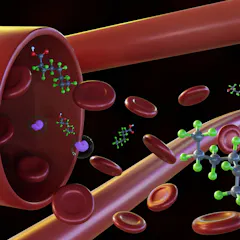
Your body likely contains an accumulation of various PFAS types, making it difficult to trace them to their sources.

An organism can appear compliant under single chemical regulation while still carrying a potentially concerning mixture burden.

Cancer-linked chemicals can remain hidden in drinking water supplies for decades.

Fashion brands promise sustainability. But a formal investigation into Lululemon reveals a deeper problem: green claims that no one is required to prove.

This study is one of the first to identify a link between Pfas exposure and asthma in childhood.

From wearable samplers to passive environmental monitoring, new research is changing how scientists observe chemical exposure – without invasive sampling.

Tiny particles bounce light around in a unique way, a property that researchers are using to detect pollutants in water and soil samples.

The key is to gently wash your raincoat regularly.

Heavy metals, phthalates and other potentially harmful chemicals have been detected in a range of menstrual products – the latest category of concern in the personal care aisle.

Until now, UK regulation has focused on just a few well-studied Pfas, mainly through drinking water standards.

Concentrations of a forever chemical known as TFA is increasing in rainwater, drinking water, soil and plants.

Some of these ‘forever chemicals’ are toxic at very low levels. They can get into water systems and bioaccumulate in fish, ultimately posing risks to people.

When worried communities talk to authorities about forever chemicals, officials often seek to explain and clarify. But this isn’t what people actually want.
Top contributors
-

Associate Professor in Environmental Science, Western Sydney University
-
Assistant Professor of Environmental Health, Middlebury College
-
Honorary Professor, School of Natural Sciences, Macquarie University
-
Professor of Water Science, Liverpool John Moores University
-
Associate Professor of Environmental Health, University of Birmingham
-
Professor of Biochemistry, Michigan State University
-
Professor of Environmental and Soil Chemistry, Michigan State University
-
Professor of Environmental Chemistry, University of Birmingham
-
Principal Health Risk Advisor – Chemicals, EPA Victoria, and PhD graduate, School of Pharmacy and Medical Sciences, Adelaide University
-
Professor of Chemistry, RMIT University
-
Senior Research Consultant, Institute for Sustainable Futures, University of Technology Sydney
-
PhD Candidate in Emerging Technologies Governance, Institue for Sustainable Futures, University of Technology Sydney
-
Adjunct Assistant Professor of Biological Sciences, North Carolina State University
-
Senior Lecturer in Chemical Engineering, University of Surrey
-
Postdoctoral Research Associate in Law and Justice, UNSW