
Residents near a Lancashire chemical plant have high Pfas levels in their blood. A decade of research shows what that can and can’t tell us.
Articles on Forever chemicals
Displaying 1 - 20 of 62 articles

Dependent on a delicate hormonal balance, the thyroid gland is adversely affected by ultra-processed foods, among other artificial interventions in our diet.

Nowhere is safe from forever chemical pollution – not even the middle of the ocean. PFAS levels are on the rise in the world’s whales and dolphins.

It’s the largest lawsuit ever brought by the Australian government. But what is the $2 billion forever chemicals case meant to achieve?

New research offers a cautionary tale about the difficulty of removing ‘forever chemicals’ from the environment.
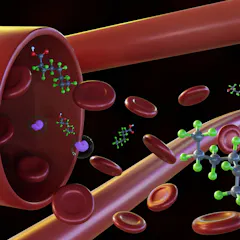
Your body likely contains an accumulation of various PFAS types, making it difficult to trace them to their sources.

An organism can appear compliant under single chemical regulation while still carrying a potentially concerning mixture burden.

Cancer-linked chemicals can remain hidden in drinking water supplies for decades.

From wearable samplers to passive environmental monitoring, new research is changing how scientists observe chemical exposure – without invasive sampling.

For decades, ECCC research scientists have been integral to the work of the Arctic Monitoring and Assessment Programme.

The key is to gently wash your raincoat regularly.

Until now, UK regulation has focused on just a few well-studied Pfas, mainly through drinking water standards.

Concentrations of a forever chemical known as TFA is increasing in rainwater, drinking water, soil and plants.

The uncertainty and stigma of living with PFAS pollution can be stressful. Here’s the support communities need.

Water scientist Patrick Byrne tells The Conversation Weekly podcast what testing rivers can reveal about the biggest, often hidden, sources of PFAS pollution.

An environmental engineer explains how his research team is developing a system containing bacteria, biochar and gel to break down pollutants in waterways.
New research shows that the biggest sources of forever chemicals are rooted in the past – old landfills, waste sites or historic industrial use.

It’s taken years for Australia to ban three types of forever chemicals. But Europe plans to ban thousands of these chemicals to avoid future issues.

A forever chemical known as TFA is accumulating in our environment, contaminating our rivers, food and even our wine.

The Australian Bureau of Statistics looked at concentrations of 11 types of PFAS, or ‘forever chemicals’, in our blood. Here’s what the results show.
Top contributors
-

Associate Professor in Environmental Science, Western Sydney University
-
Associate Professor of Environmental Health, University of Birmingham
-
Honorary Professor, School of Natural Sciences, Macquarie University
-
Professor of Water Science, Liverpool John Moores University
-
Professor of Biology, University of Portsmouth
-
Assistant Professor of Environmental Health, Middlebury College
-
Professor of Biochemistry, Michigan State University
-
Adjunct Assistant Professor of Biological Sciences, North Carolina State University
-
Professor of Environmental and Soil Chemistry, Michigan State University
-
Senior Research Consultant, Institute for Sustainable Futures, University of Technology Sydney
-
PhD Candidate in Emerging Technologies Governance, Institue for Sustainable Futures, University of Technology Sydney
-
Professor of Environmental Chemistry, University of Birmingham
-
Knowledge Mobilization Specialist, Water Institute, University of Waterloo
-
Clinical Research Manager, Macquarie University
-
Researcher, Sentinel North, Université Laval