
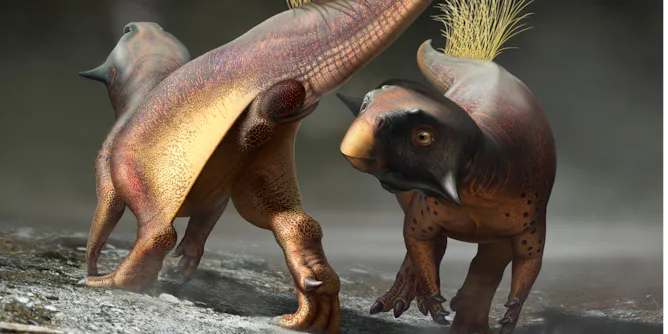
A reconstruction of a dinosaur’s back passage reveals it may have been used for visual communication.
Articles on Paleontology
Displaying 81 - 100 of 184 articles
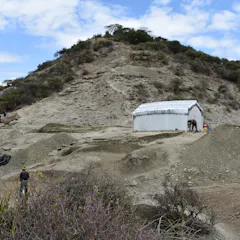
The research shows that 2 million years ago humans were not constrained technologically and already had the capacity to expand their geographic range.
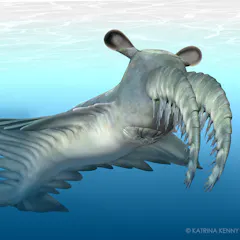
Our study on weird ancient marine animals called radiodonts supports the idea that vision played a crucial role during the Cambrian Explosion, a rapid burst of evolution about 500 million years ago.

One avian track, probably made by a large gull or a small goose, was found in sediments that have been dated to about 400,000 years. That makes it the oldest avian track reported from southern Africa.
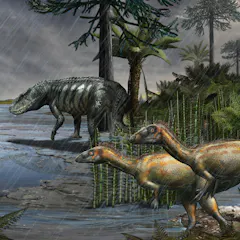
Our new research has discovered how a series of volcanic eruptions 233 million years ago fundamentally changed life on Earth.
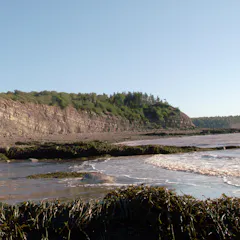
A very early mammal ancestor is one of the most recent discoveries at the Joggins Fossil Cliffs in Nova Scotia. This new finding sheds further light on theories of mammalian evolution.
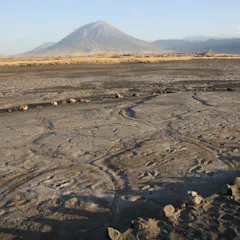
The footprints of over 20 different prehistoric people, pressed into volcanic ash thousands of years ago in Tanzania, show possible evidence for sexual division of labor in this ancient community.
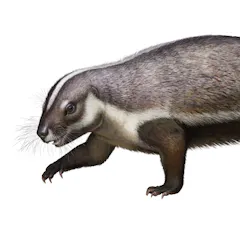
This ancient cat-sized animal lived millions of years ago and had features not found in any of today’s mammals.
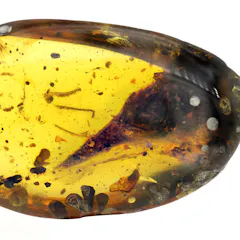
The skull of Oculudentavis, found encased in amber, provides new clues into the transition from dinosaurs to birds and may be smallest of either ever found.
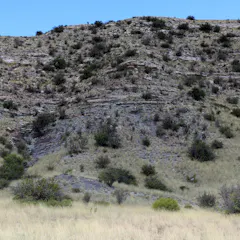
The analysis suggests that there was a mass extinction event at the time of the end-Permian, on land - and that it happened at the same time as the marine end-Permian extinction.
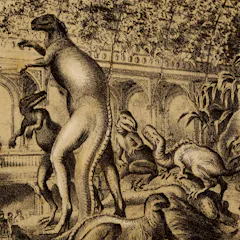
Dinosaurs are malleable beasts: so much so that their constant reshaping has often been driven by cultural and political trends.
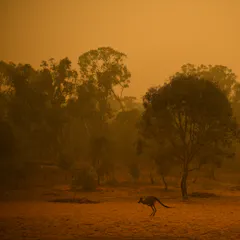
The asteroid that wiped out the dinosaurs sparked global firestorms. On land, only creatures that could evade fire survived
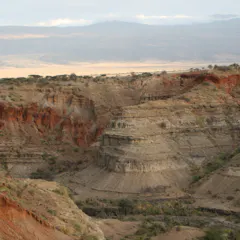
20 years ago, who could predict how much more researchers would know today about the human past – let alone what they could learn from a thimble of dirt, a scrape of dental plaque, or satellites in space.
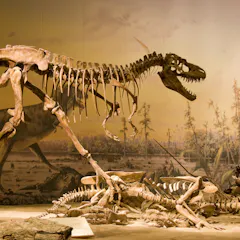
Sometimes the only way to tell the difference between a baby dinosaur and a grown-up one is to find fossils of them both together.
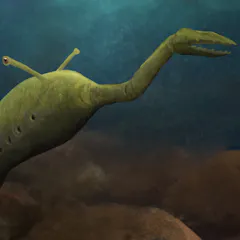
Scientists claimed they knew what this bizarre creature was – our evidence suggests the question is still open.

New research models how the Homo floresiensis species could have evolved its small size remarkably quickly while living on an isolated island.
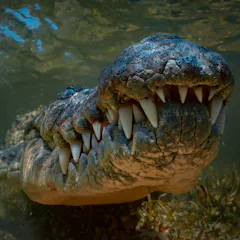
Paleontologists created an evolutionary map of how croc body size changed over the last 200 million years – with some interesting implications for today’s species.
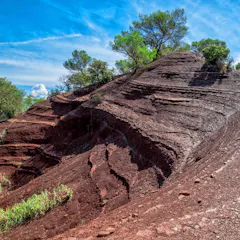
The geological and biological archives of the Earth shed light on both the distant past of our planet and allow us to imagine its future.
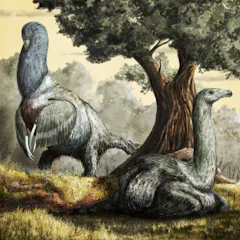
New research suggests some dinosaurs buried and protected eggs in groups.
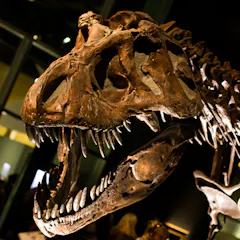
Dinosaurs ruled the Earth for about 180 million years. But around 66 million years ago, a huge rock from outer space (called an asteroid) smashed into the Earth. Then things got worse for dinosaurs.
Top contributors
-

Emeritus Strategic Professor in Palaeontology, Flinders University
-
Professor of Vertebrate Palaeontology, University of Bristol
-
Chancellor's Fellow in Vertebrate Palaeontology, University of Edinburgh
-
DeWitt Wallace Professor of Biology and Geology, Macalester College
-
Associate professor in Vertebrate Palaeontology, University of the Witwatersrand
-
Palaeontologist, University of Southampton
-
Adjunct professor, UNSW
-
Associate Professor in Ancient DNA, University of Otago
-
Professor of Palaeobiology, University of Leicester
-
John Curtin Distinguished Professor, Molecular and Life Sciences, Curtin University
-
Professor of Palaeobiology, University of Leicester
-
Professor of Earth and Atmospheric Sciences, Biology and Anthropology, Indiana University
-
Senior Research Scientist, South Australian Museum; Flinders University
-
Lecturer in the School of Applied Sciences, Edinburgh Napier University
-
Research Fellow in Biological Anthropology, Monash University