
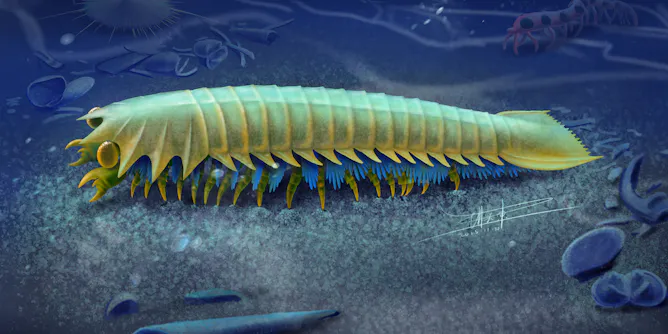
The 500 million year old shrimp-like Urokodia had pincer-like limbs emerging next to its eyes.
Articles on Paleobiology
Displaying 1 - 20 of 24 articles
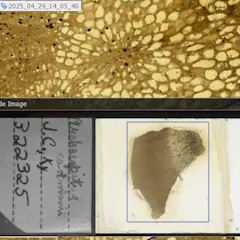
Pollen, algae, insects, radiolarians – each unique microfossil holds clues to how Earth has changed over millions of years. Combining AI with digital scanners helps researchers piece it all together.
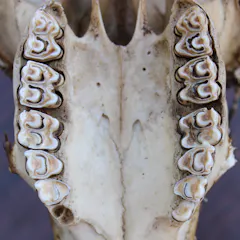
Through fossilized tooth enamel, scientists are reconstructing the diets and landscapes that existed millions of years ago. We really are what we eat.
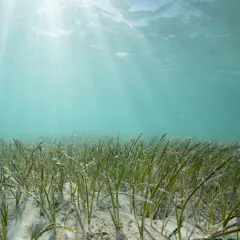
Scientists are using mollusk shells to evaluate the health of Florida’s seagrass ecosystems.
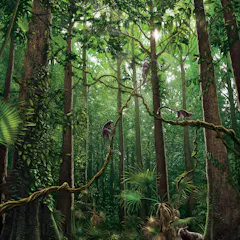
To understand how giant carbon emission events affect climate and life on Earth, scientists went deeper into our planet’s history.

From ice cores extracted from the Tibetan Plateau, scientists recovered the equivalent of 1,705 virus species. Reading their genomes tells the story of 41,000 years of climate change.
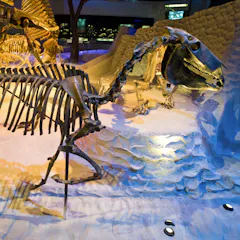
Horse fossils are abundant and widespread across North America. Scientists often use their long history to illustrate how species evolve in response to a changing environment.
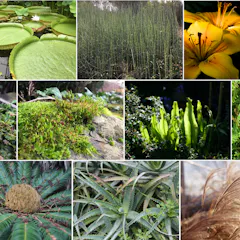
Plants have not lost their capacity for innovation over the years, finds new study.

Ancient microbes likely produced natural products their descendants today do not. Tapping into this lost chemical diversity could offer a potential source of new drugs.

Our ancient ancestors didn’t have clothes or houses – but that constant exposure to the sun helped their skin protect itself from the worst sun damage.
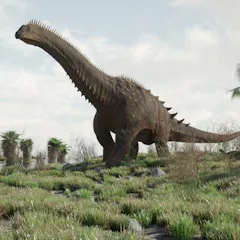
Thanks to our new technique using fossilised tracks, we have been able to learn more about the locomotion of the largest creatures ever to have roamed this planet.
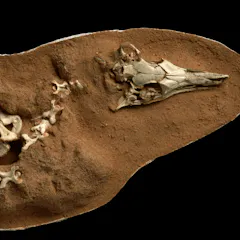
By looking at the eye bones and ear canals of extinct dinosaurs, researchers show that a small ancient predator likely hunted at night and had senses as good as a modern barn owl.
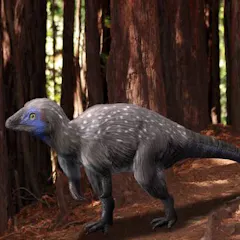
Plus, what Israel’s latest election could mean for its foreign policy. Listen to episode 11 of The Conversation Weekly podcast.
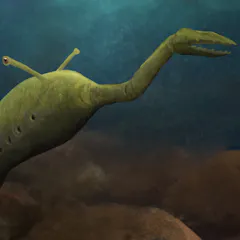
Scientists claimed they knew what this bizarre creature was – our evidence suggests the question is still open.
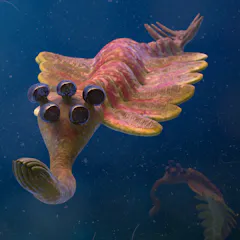
Exceptionally well preserved 500m year old fossils show Cambrian seas were more diverse than scientists had thought.
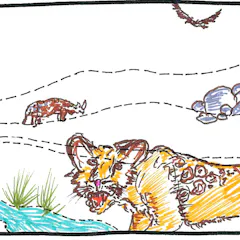
Scientists asked young people to draw what they would like the natural world to look like when they’re older. Their imagination could help make conservationists more ambitious.
Death is inevitable for individuals and also for species. With help from the fossil record, paleontologists are piecing together what might make one creature more vulnerable than another.
What can we expect from our future climate after looking at the ‘Hothouse Earths’ of the past?
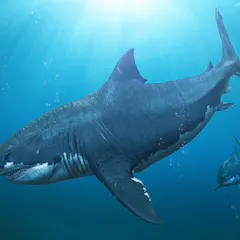
Megalodons are the latest Hollywood monster to leap out of the fossil record, but what else is lurking in prehistoric seas?
Strange frond-like sea creatures are among the planet’s earliest animals, but new research dates them and the entire animal kingdom to much earlier than first thought.
Top contributors
-

Professor of Palaeobiology, University of Leicester
-
Research Geologist and Curator of Paleobotany, Smithsonian Institution
-
Professor of Palaeobiology, University of Leicester
-
Assistant Professor in Palaeontology, Trinity College Dublin
-
Swiss National Science Foundation Ambzione Fellow in Geo- and Cosmochemistry, ETH Zurich
-
Doctoral Researcher, University of Sussex
-
Lecturer, University of Essex
-
Doctoral Candidate of Lithosphere and Biosphere Science, Lund University
-
Honorary Research Fellow in Palaeobiology, University of Leicester
-
Assistant Professor of Earth and Environmental Sciences, Vanderbilt University
-
Senior Lecturer in Biology, University of Sussex
-
Research Fellow in Palaeobiology, University of Leeds
-
PhD Researcher, University of Leicester
-
Postdoctoral Researcher in Palaeobiology, University College Cork
-
Professor, Northwest University, Xi'an