

Real-life experience suggests that game-based learning (GBL) techniques can be useful in reducing student anxiety toward technical and/or abstract concepts and in increasing class involvement.
Articles on Online learning
Displaying 81 - 100 of 210 articles

Australia’s mature-age students often must juggle work, children and study, are studying off campus and have a higher risk of dropping out. Higher education can do better for these 430,000 students.

It is morally unjustifiable for tech companies to walk away from the pandemic with massive profits while schools are burdened with debt.

South Africa’s constitution provides for equal access to education and its inclusive education policy exists to make this a reality. But in practice students’ diverse needs are not being met.

High school pupils enjoy using mobile devices for socialising. But their motivation to use devises decreases when it comes to studying online, especially unsupervised.

Student respondents to a survey discussed memories of historical trauma of infectious disease and displacement, financial hardship related to Alberta tuition hikes and mental health concerns.

About two-thirds of Australian universities won’t be offering on-campus lectures in 2021. But that’s not all the pandemic’s fault – it simply accelerated a shift away from the traditional format.

What if one of the answers to the challenges of distance learning was to go back to basics and set up less “tech” and more human contexts?

University teaching has been incredibly hard – but some practices have changed for the better.

The restrictions put in place during the COVID-19 pandemic have led to a boom in online fitness opportunities. Here’s what to look for in online classes.
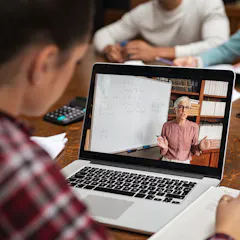
Students prefer videos that are simply produced, convenient to watch and with a narrative that’s delivered in an informal conversational way.
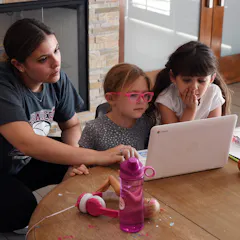
YouTube may have more potential to encourage children to learn than you’d think.

As provinces consider extended holidays, or school closures loom as a possibility under COVID-19, schools should commit to providing in-person schooling for students with disabilities.

A learner’s digital education experience can be very different from the seamless user-friendly world of the social internet. Replicating the old classes online isn’t good enough. A rethink is needed.

This isn’t the first time America’s schoolchildren have studied remotely – and Chicago’s 1937 ‘radio school’ experiment shows how technology can fill the gap during a crisis.

Teachers still hold the key to children’s learning and no keyboard or screen can replace their role.

Online learning is not automatically inferior to face-to-face teaching.

A study documents how universities’ centres for teaching and learning are responding to helping faculty create quality online courses for all students.
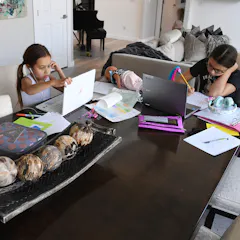
Digital educational resources are likely to remain indispensable for modern K-12 classrooms, even after the coronavirus pandemic ends.

Guidance on strong passwords has changed and children need to learn about it in a way that suits their stage of development.
Top contributors
-

Senior Lecturer in Technology Enhanced Learning, Lancaster University
-
Professor of learning technologies, University of Minnesota
-
Associate Professor, Faculty of Education, University of Windsor
-
Professor and Co-Director, Centre for Research in Assessment and Digital Learning, Deakin University
-
Senior Lecturer in Education, Queensland University of Technology
-
Director of UWA Centre for Software Practice, The University of Western Australia
-
Professor Emeritus, The University of Queensland
-
Emeritus professor, Deakin University
-
Director of the Learning, Instruction & Technology Lab and Professor of Educational Psychology, School of Education, The University of Queensland
-
Pro Vice-Chancellor (Learning Transformations), Swinburne University of Technology
-
CEO of Smart Sparrow and Adjunct Lecturer, School of Computer Science and Engineering, UNSW
-
Professor Emerita of Linguistics, American University
-
Postdoctoral Researcher, University of California, Irvine
-
Chief Executive Officer, Australian Institute of Business
-
Professor of Higher Education Policy, Monash University