

With the surge in e-books and digital devices, one concern has been whether students are learning as much. Research shows that some crucial elements of learning are indeed being lost.
Articles on Online learning
Displaying 161 - 180 of 210 articles
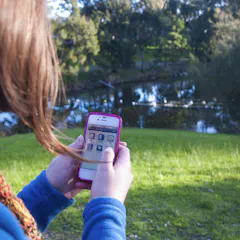
A third of families living below poverty level access the Internet only through their phones. And young people from these families get access to few learning opportunities.

It’s no longer acceptable to upload video lectures to a website and call it a course. We need to start redesigning courses from scratch to find new ways to engage students.

Parents and teachers need to be aware of which types of feedback actually help students learn.

Slideshows, when designed right, can be a useful part of online instruction. But they shouldn’t be the main, or the only, method of instruction.
How Massive Open Online Courses are maturing into useful tools.

The way schools and universities teach and test has to keep up with the way young people are processing information.

Lecturers need to flag up graphic material with their students before they click on it.

With low-income kids unable to participate in the social media conversations of their wealthier peers, a new form of digital inequity is emerging.

A recent US survey commissioned by the children’s books publisher Scholastic found that 65% of 6-11 year olds prefer to read print books even when e-books are available on tablets. In the UK, a National…

If you have studied an online course at a university over the past couple of decades, you’ve probably already experienced a SPOC, or Small Private Online Course. SPOC is a new term for an old concept…
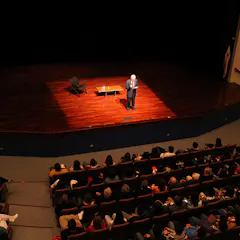
Ever since the invention of the printed word, academics have been arguing about the proper place of technology in teaching. On one side are those who I’ll call the traditionalists who insist on the primacy…

Online learning has been around for more than 30 years, but recent excitement around Massive Open Online Courses (MOOCs) has brought it fully into the public eye. In schools, online learning used to be…

Ten years after the launch of Facebook and eight years after the launch of Twitter, social media has become more pervasive and our use of it more sophisticated. It’s no longer a place where we report what…

The belief that technology can automate education and replace teachers is pervasive. Framed in calls for greater efficiency, this belief is present in today’s educational innovations, reform endeavours…
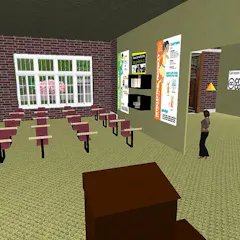
For the past couple of years Australian universities’ enthusiasm for online learning has increased, following the lead of international universities in realising the potential of MOOCs to replace traditional…

It’s a brave new world for higher education in Australia. We will soon have an open market and an overall reduction in government expenditure per student. This means universities will need to find alternate…

The founder of free online learning platform edX, set up by Harvard and the Massachusetts Institute of Technology (MIT), has spoken out against the US State department’s decision to block people in Iran…

With technology changing the landscape of higher education, The Conversation this week is running a series “Re-imagining the Campus” on the future of campus learning. Here, Jason Lodge ponders the future…

Students in the UK are now paying annual fees of up to £9,000 – and they expect more for their money. This is a radical change from the situation a couple of decades ago when student grants provided the…
Top contributors
-

Senior Lecturer in Technology Enhanced Learning, Lancaster University
-
Professor of learning technologies, University of Minnesota
-
Associate Professor, Faculty of Education, University of Windsor
-
Professor and Co-Director, Centre for Research in Assessment and Digital Learning, Deakin University
-
Senior Lecturer in Education, Queensland University of Technology
-
Director of UWA Centre for Software Practice, The University of Western Australia
-
Professor Emeritus, The University of Queensland
-
Emeritus professor, Deakin University
-
Director of the Learning, Instruction & Technology Lab and Professor of Educational Psychology, School of Education, The University of Queensland
-
Pro Vice-Chancellor (Learning Transformations), Swinburne University of Technology
-
CEO of Smart Sparrow and Adjunct Lecturer, School of Computer Science and Engineering, UNSW
-
Professor Emerita of Linguistics, American University
-
Postdoctoral Researcher, University of California, Irvine
-
Chief Executive Officer, Australian Institute of Business
-
Professor of Higher Education Policy, Monash University