

For universities, investing in flexible systems is a matter of survival.
Articles on Online teaching
Displaying 1 - 20 of 26 articles

The switch to online delivery further disadvantaged students from migrant and refugee backgrounds. But a new study also finds many students and staff developed closer and more caring relationships.

Research is now showing what works — and what doesn’t — for students forced online by the pandemic. Better course design should be the next step.
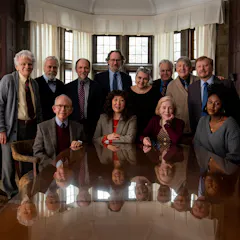
Even though The Chair confronts some of the tougher realities of higher education, the world it depicts is still rosier than the reality.

As the saying goes, you can lead a horse to water, but you can’t make it drink. Just because students are given the freedom to learn, it does not mean they will.

Some students may wonder why they bothered returning to campus. Others are struggling online. But lecturers who do engage students think deeply about how they do it, using all available tools.

Treating online education as a cheap alternative to lectures will be a mistake. At first universities will probably have to allow more preparation time and invest more in training and technology.
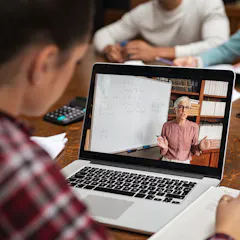
Students prefer videos that are simply produced, convenient to watch and with a narrative that’s delivered in an informal conversational way.

A learner’s digital education experience can be very different from the seamless user-friendly world of the social internet. Replicating the old classes online isn’t good enough. A rethink is needed.
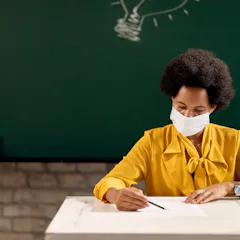
Most educators have no experience nor did they receive preparation during their training on how to deal with teaching in a crisis.

Many people feel some form of anxiety when speaking in front of others. That includes taking part in video hook-ups for work or study thanks to coronavirus restrictions.
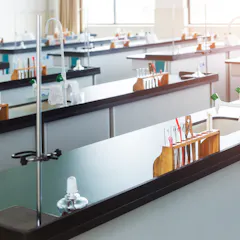
Many university teaching labs are empty as students have been moved off campus during the pandemic. There are other ways to put theory into practice, at home and online.
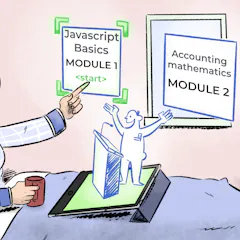
Technology has disrupted the way universities offer courses, the types of skills we will need, and the duration for which we will need them. Here are three things universities must do to survive.

A professor of literature who is also a poet tackles the issue of the inroads technology has made in the relationship between teacher and learner.

Educational technology can be a powerful tool, but it must be accompanied by new, modern teaching methods.

Across the globe, we are experiencing rapid changes to our environment and social structures. Climate change, population growth, and social unrest are causing ever increasing problems. The rate of change…

From preschool to PhD, education is afflicted by a malaise. Many students, teachers, parents and politicians, feel that with all the effort and money spent, we should be doing better. Salman Khan, founder…

FUTURE OF HIGHER EDUCATION: We continue our series on the rise of online and blended learning and how free online courses are set to transform the higher education sector. Today, Victoria University’s…

FUTURE OF HIGHER EDUCATION: We continue our series on the rise of online and blended learning and how free online courses are set to transform the higher education sector. Today, ANU’s Rod Lamberts and…

FUTURE OF HIGHER EDUCATION: We continue our series on the rise of online and blended learning and how free online courses are set to transform the higher education sector. Today Ruth Morgan looks at the…
Top contributors
-

Adjunct Research Fellow Victoria University of Wellington; Head of the Quality Assurance Institute and Senior Lecturer, Universitas Islam Negeri Syarif Hidayatullah Jakarta
-
Vice Rector in Gjøvik, CQUniversity Australia
-
Former Associate Vice Provost, The University of Texas at Austin
-
Senior Lecturer, Australian National Centre for the Public Awareness of Science, Australian National University
-
Deputy Vice-Chancellor (Students & Education), University of Tasmania
-
Chief Executive Officer, Australian Institute of Business
-
Associate Professor in Education & Technology, University of KwaZulu-Natal
-
Senior Research Fellow, Curtin University
-
Pro Vice-Chancellor (Learning Transformations), Swinburne University of Technology
-
Associate Professor of History, Australian National University
-
Associate Director Student Experience, Monash University
-
Associate Professor (hon) at the Centre for Public Awareness of Science, Australian National University
-
Professor of Theoretical Physics, Australian National University
-
Discipline Leader, Mathematics & Physics, College of Engineering and Science, Victoria University
-
Professor and Co-Director, Centre for Research in Assessment and Digital Learning, Deakin University