

From incorporating video-based performances to learning new composition apps, teaching students virtually has forced music educators to learn and share new ways to reach students.
Articles on Online learning
Displaying 41 - 60 of 210 articles
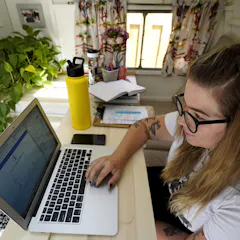
Claims the digital divide has been ‘closed’ don’t include the full picture of internet inequality in the United States.

Learning the skills and techniques of music production has never been more accessible. Online tutorials and free music-creation resources have made it possible to create anytime and anywhere.

Enrollment in online courses surged during the pandemic. An expert on online learning behaviors shares what to do before, during and after taking a course in order to reap the most benefits.

A survey of high school students highlighted the tensions they faced when classes moved online during COVID-19 lockdowns.

Want to observe native bees? Or seek out invasive species? There are many ways to get hands-on science learning. An expert on adult STEM education suggests four places to start.
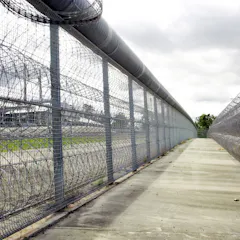
Prisons seem an unlikely source of outstanding university students, but it is. What’s more, those who have done such study are much less likely to reoffend when they get out.

Lockdowns and learning from home have further embedded digital technology in young people’s lives. Educational theory and practice need to catch up fast.

During the lockdowns last year, many experts and parents were concerned children’s education would suffer. But on average, students did OK. A lot of learning is incidental.

Papua, one of Indonesia’s most rural provinces, struggled with online learning during the COVID-19 crisis. Interestingly, it may just be the right moment to invest in Papua’s education technology.

Research is now showing what works — and what doesn’t — for students forced online by the pandemic. Better course design should be the next step.
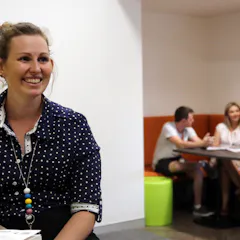
Community-run centres in regional and remote Australia are having positive impacts on students who were historically under-represented at university and at high risk of dropping out.
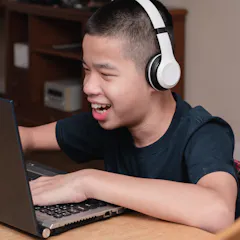
Traditional learning formats often fail marginalized students. We should be skeptical of a ‘one-size-fits-all’ or even ‘one-size-fits-most’ model.
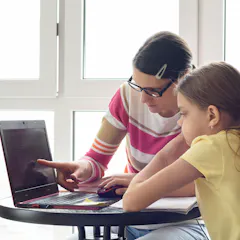
If you think the ‘digital natives’ have better online search skills than their parents, you’d be wrong. But simply telling students what to do isn’t the best way to improve their skills.

We live in a world of spoken, visual and written communication, but the third mode continues to dominate teaching and assessment in university communication courses.

A study of Australian students affected by COVID restrictions found the more adaptable ones had more confidence about online learning and made greater progress. So how can this skill be taught?

Some promoters of educational technology see COVID-19 as a ‘tech reckoning’ for professors who refused to accept progress. But before the pandemic, many students also preferred in-person classes.
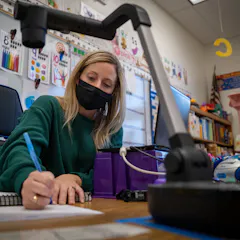
Virtual education piggybacked onto classroom learning demonstrates a lack of respect for teachers, student equity and public education.

The evidence clearly shows one-on-one tutoring improves disadvantaged students’ skills. An Australian pilot program has now shown the benefits of online tutoring that supports students in their homes.

Online learning during the pandemic gives students more autonomy. For high-achieving students, especially those in academically mixed classes, that’s an advantage, whereas others might struggle.
Top contributors
-

Senior Lecturer in Technology Enhanced Learning, Lancaster University
-
Professor of learning technologies, University of Minnesota
-
Associate Professor, Faculty of Education, University of Windsor
-
Professor and Co-Director, Centre for Research in Assessment and Digital Learning, Deakin University
-
Senior Lecturer in Education, Queensland University of Technology
-
Director of UWA Centre for Software Practice, The University of Western Australia
-
Professor Emeritus, The University of Queensland
-
Emeritus professor, Deakin University
-
Director of the Learning, Instruction & Technology Lab and Professor of Educational Psychology, School of Education, The University of Queensland
-
Pro Vice-Chancellor (Learning Transformations), Swinburne University of Technology
-
CEO of Smart Sparrow and Adjunct Lecturer, School of Computer Science and Engineering, UNSW
-
Professor Emerita of Linguistics, American University
-
Postdoctoral Researcher, University of California, Irvine
-
Chief Executive Officer, Australian Institute of Business
-
Professor of Higher Education Policy, Monash University