

Demand for professional development has grown but the pandemic has forced it online. Decades of evidence from online education tells us how to ensure professional development remains effective.
Articles on Online learning
Displaying 61 - 80 of 210 articles

People living outside our big cities face many obstacles to going to university, but the innovations during lockdowns have opened a door to permanently improving their access and experience of study.

As the saying goes, you can lead a horse to water, but you can’t make it drink. Just because students are given the freedom to learn, it does not mean they will.

Universities can best prepare students by teaching them in ways that reflect the realities of how professionals and the wider community now operate.
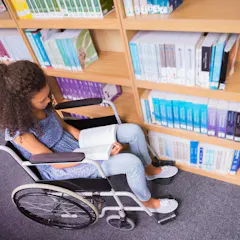
Students with disability continue to face dire exclusion in education and there is an urgent need to provide inclusive education for them.

While the loss of contact learning time can be quantified, it’s more difficult to quantify the effect of school closures on learning outcomes.

The pandemic has heightened existing weaknesses in South Africa’s skills training regime.

We ought to worry that the pandemic has made it even easier to reduce teaching to disseminating knowledge.
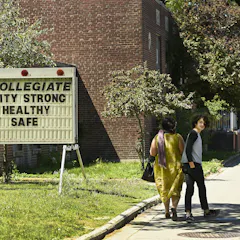
The pandemic education shock has raised five critical issues that demonstrate how student learning and achievement and social well-being are far from mutually exclusive.

Watching my teens play video games for hours on end tells me that video game designers understand something that my fellow teachers and I had not!

Insights of neuroscientist Ian McGilchrist, philosopher Nel Noddings and physicist Ursula Franklin help centre students and our collective future in debates about education and technology.
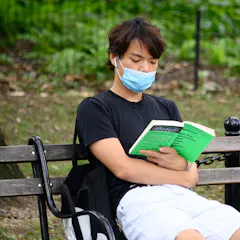
People tend to think of digital media as entertainment, so they devote less mental effort than when they’re reading a printed book.
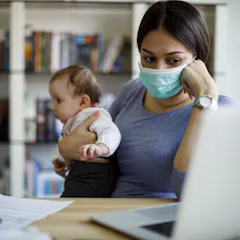
Since the pandemic began, parents have had to negotiate their own workplace demands and other responsibilities with around-the-clock child care responsibilities.

In New South Wales and Victoria the number of students being home educated increased by 20% in 2020 (1,224 extra children) compared with 2019. But the rise has been evidenced for a decade.

The coronavirus pandemic has entrenched educational technologies in schools. Parents and guardians have been forced to relinquish their children’s privacy, without assurance of protection.

The forced transition to online university learning will mean teaching practices will be permanently changed.
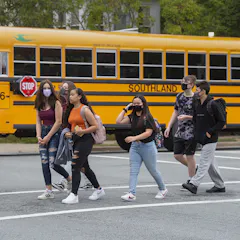
A policy of “choice” for full-time online schooling would weaken public education, erode funding for in-classroom supports and drive those who can afford it to private education.

Treating online education as a cheap alternative to lectures will be a mistake. At first universities will probably have to allow more preparation time and invest more in training and technology.

Not everyone needs to be on campus to learn. Governments, which subsidize higher education, need to change their funding models to support affordable remote learning.

Necessity truly can be the mother of invention. A new university president explains how the pandemic forced massive changes at his institution — and why smart use of technology was invaluable.
Top contributors
-

Senior Lecturer in Technology Enhanced Learning, Lancaster University
-
Professor of learning technologies, University of Minnesota
-
Associate Professor, Faculty of Education, University of Windsor
-
Professor and Co-Director, Centre for Research in Assessment and Digital Learning, Deakin University
-
Senior Lecturer in Education, Queensland University of Technology
-
Director of UWA Centre for Software Practice, The University of Western Australia
-
Professor Emeritus, The University of Queensland
-
Emeritus professor, Deakin University
-
Director of the Learning, Instruction & Technology Lab and Professor of Educational Psychology, School of Education, The University of Queensland
-
Pro Vice-Chancellor (Learning Transformations), Swinburne University of Technology
-
CEO of Smart Sparrow and Adjunct Lecturer, School of Computer Science and Engineering, UNSW
-
Professor Emerita of Linguistics, American University
-
Postdoctoral Researcher, University of California, Irvine
-
Chief Executive Officer, Australian Institute of Business
-
Professor of Higher Education Policy, Monash University