
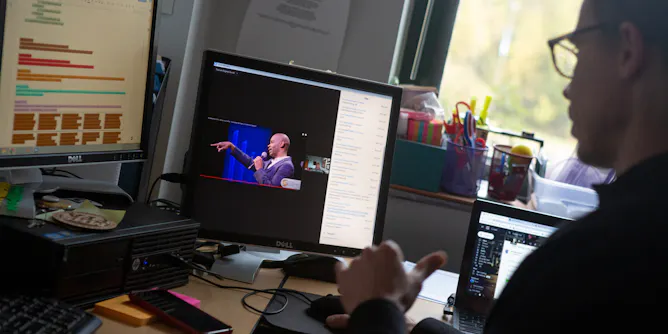
Making unsubstantiated claims that pandemic online learning caused mental health problems doesn’t help us address students’ current needs.
Articles on Online learning
Displaying 21 - 40 of 210 articles

Teaching approaches should be rooted in learning objectives or students’ experiences, and these considerations aren’t the same as whether course components are online or in-person.

A Melbourne private school is opening online-only enrolments. Headlines have focussed on the $18,000 fees. But there are many reasons why in-person schooling may not work.
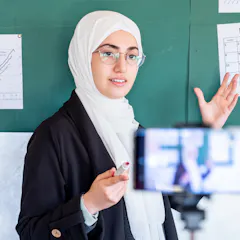
Research by geographers in Canada, the United States and Hong Kong identifies lessons for universities and colleges from the 2020 move to online learning.
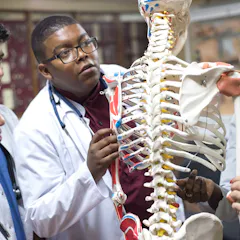
The development of an immersive mobile phone application for university anatomy students offers insights into the future of online learning.

Proctoring software is a symptom of a bigger problem: universities see themselves as businesses and students as customers.
Students in an international survey said they really missed chances to be together in person for campus-related activities, not only due to academic concerns.

Researchers studying ways to foster children’s inclusion in society worked with teachers to adapt classroom practices, like dedicated dialogue circles, to online learning.

Apple is positioning itself as a global education expert. It’s providing not just computers to classrooms, but also professional learning for teachers.

A new study of academic integrity policies and practices at 41 Australian universities found little evidence of changes to deal with cheating and academic misconduct arising from online assessment.
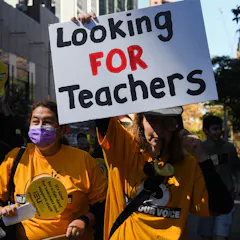
One teacher together with 25 kids in a classroom may no longer work as the norm for Australian schools.

Teachers went to great effort to help parents support their children’s learning.
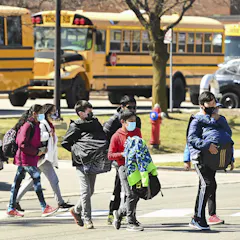
Ontario’s incoming government after the election will have its work cut out for it in restoring the public’s faith after extensive school closures.

The question for all educators should be: How do we capitalize on COVID-19 initiated change to build better education systems for the future?
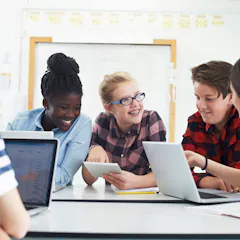
School closures were hard, but led to new skills that should be built upon.

The switch to online delivery further disadvantaged students from migrant and refugee backgrounds. But a new study also finds many students and staff developed closer and more caring relationships.
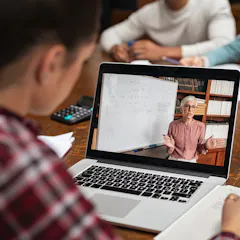
The solidarity that emerged between lecturers and students should be preserved.
While COVID forced a shift online, that doesn’t mean universities should roll back all the changes. A hybrid model of teaching and learning is now the best way to prepare students for a digital world.

We live in a digital and distributed world. Universities must adapt to that reality to do a better job of meeting today’s educational needs.

A medical genomics professor reflects on how lab simulations offer some advantages for student learning, but developing the muscle memory of performing hands-on lab work is important.
Top contributors
-

Senior Lecturer in Technology Enhanced Learning, Lancaster University
-
Professor of learning technologies, University of Minnesota
-
Associate Professor, Faculty of Education, University of Windsor
-
Professor and Co-Director, Centre for Research in Assessment and Digital Learning, Deakin University
-
Senior Lecturer in Education, Queensland University of Technology
-
Director of UWA Centre for Software Practice, The University of Western Australia
-
Professor Emeritus, The University of Queensland
-
Emeritus professor, Deakin University
-
Director of the Learning, Instruction & Technology Lab and Professor of Educational Psychology, School of Education, The University of Queensland
-
Pro Vice-Chancellor (Learning Transformations), Swinburne University of Technology
-
CEO of Smart Sparrow and Adjunct Lecturer, School of Computer Science and Engineering, UNSW
-
Professor Emerita of Linguistics, American University
-
Postdoctoral Researcher, University of California, Irvine
-
Chief Executive Officer, Australian Institute of Business
-
Professor of Higher Education Policy, Monash University