
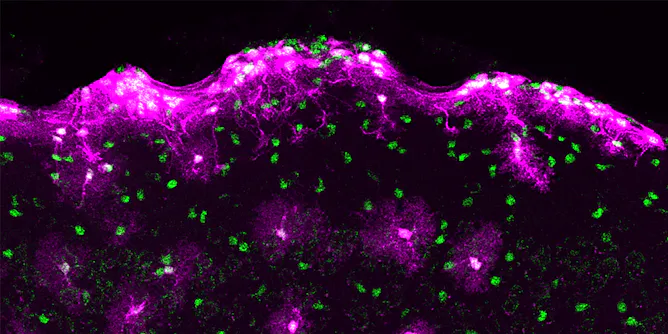
The transplantation of astrocytes — a type of brain cell as common as neurons — may provide hope of treatments or cures of some neurodegenerative disorders.
Articles on Neuroscience
Displaying 141 - 160 of 856 articles

If you didn’t forget things, you’d be in for a world of trouble.

Every human brain still holds primitive instincts that we share with our monkey ancestors. Is that part of your brain in charge when you cast your ballot?

Here are just some of the ways light is important for our wellbeing and mental health.
Five simple questions can help spot exaggerated research claims.

And some dogs have the same genetic mutation linked to autism in humans.

Bittersweet experiences aren’t uncommon. Do people ever truly feel both positive and negative at the same exact moment, or do we just switch quickly back and forth?

Researchers are developing theories about the purpose of dreams and learning why some people seem to be better at remembering them.
We don’t yet know the health effects of microplastics in the brain. But until we find out more, it’s best to limit our exposure to plastics where we can.
Here’s how your brain visualizes scenarios that you’re not actually looking at with your eyes.

New research predicts when noisy systems are approaching precarious “critical points” – and finds that some parts of the brain prefer to work at the edge of instability
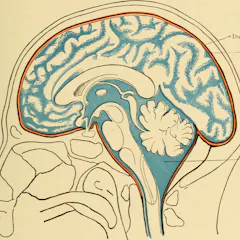
Cerebrospinal fluid can sometimes leak or collect in the brain without an identifiable cause, leading to symptoms that can be difficult to diagnose.

Athletes from a variety of sports have experimented with neurofeedback in recent years in a bid to gain a competitive edge.

Engineers have tried for decades to develop bionic eyes to reverse blindness. But the brain is far more complex than a computer.

Women typically suffer from more headaches than men, and some people experience migraines only during menstruation.
Brains encode language by matching words to patterns of activity. Large language models can do the same thing.

My team have studied the brainwaves of expert golfers to understand what it takes to hit the perfect putt.

Less sleep and later bedtimes are linked to a section of the brain involved in emotion regulation suffering reduced growth, along with weaker connections to other brain areas.

‘Body swapping’ may help people get a clearer idea of what their own bodies are really like.

Why are some individuals at greater risk for developing opioid dependence and addiction? Two neuroscientists at Rowan University discuss their latest findings.
Top contributors
-

Professor of Clinical Neuropsychology, University of Cambridge
-
Penn State
-
Postdoctoral Research Associate, Cognitive Neuroscience, University of Cambridge
-
Senior Lecturer (Adjunct), Nutritional neuroscientist, Adelaide University
-
Head of Developmental Psychobiology Lab, Deakin University
-
Postdoctoral Researcher in Cognitive Neurosciences, The University of Queensland
-
Senior Research Fellow, Uehiro Centre for Practical Ethics, University of Oxford
-
Professor of Anatomy, University of Bristol
-
Professor Emeritus of Cognitive NeuroImaging, Aston University
-
Professor of Cognitive Neuroscience, Bangor University
-
Senior Research Fellow, The Perron Institute for Neurological and Translational Science, and Faculty of Health Sciences, Curtin University
-
Associate Professor of Family & Community Medicine and Pediatrics, retired, University of California, San Francisco
-
Professor of Behavioral Neuroscience, University of Richmond
-
Lead, Cognition and Consciousness Imaging Group, Division of Anaesthesia, University of Cambridge
-
Associate Professor in Clinical Psychology and Neuropsychology, Trinity College Dublin