
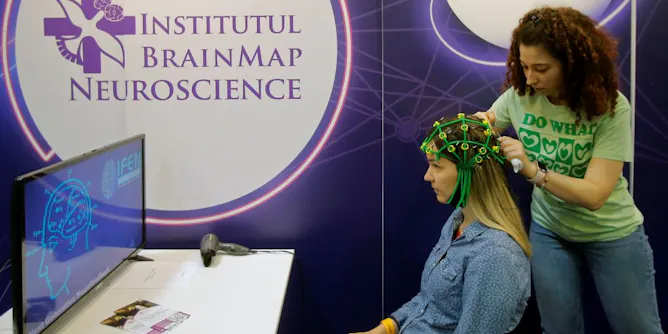
More invasive devices have prompted new debates about privacy and freedom. But it’s important to keep in mind that other technologies already sense and shape our thoughts, a neuroethicist argues.
Articles on Neuroscience
Displaying 221 - 240 of 856 articles
An objective way to measure pain is the holy grail of pain research. Gamma waves may be part of the answer.

Are holidays really necessary, and why do we need them? And, above all, what are the benefits of a few days off? This is what science says.
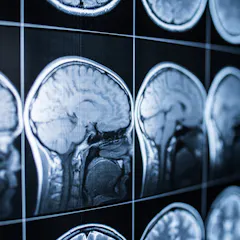
Mind uploading could allow human consciousness to live on long after their body dies.

When fruit flies see other dead fruit flies, their life spans are cut short. Other species also undergo analogous physiological changes when seeing their dead.
Glioblastoma is the most aggressive type of brain cancer, causing significant decline in cognitive function. New research suggests a common anti-seizure drug could help control tumor growth.
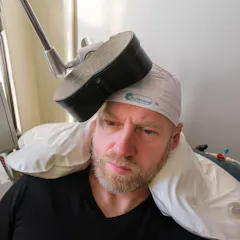
Transcranial magnetic stimulation is a safe, well-tolerated way to treat depression.
New research may upend our understanding of the brain, showing that travelling waves of neuronal excitation dominate the activity associated with our thoughts and feelings.

We have all experienced pain becoming more unbearable at night. The absence of stimuli and the influence of circadian rhythms could explain this phenomenon.
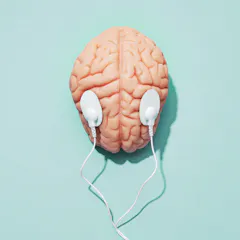
Transcranial alternating current stimulation, or tACS, is a type of brain stimulation that can change neural activity and improve memory, attention and executive function.
Pain has long been subjectively measured, leading to frustrations for patients and doctors alike. Identifying neural biomarkers of pain could improve diagnosis and lead to better treatments of chronic pain conditions.

Brain scans have been used to interpret thoughts, but how far can this technology go?

One genetic study of over a quarter million people highlights the cognitive benefits of exercise, while another, based on 30 years of scientific literature, says the opposite. Who’s right and who’s wrong?
Of the risks posed by AI, overtaking human intelligence isn’t an immediate concern.
Pinpointing where memories are stored in the brain and how they are transmitted could provide new targets to treat neurological diseases and serve as models for neuromorphic computing.

Healthy eating campaigns tend to put forward images of nutritious foods. But science shows there is a more effective and counterintuitive way of steering people away from junk food.
Learning new rules requires the suppression of old ones. A better understanding of the brain circuits involved in behavioral adaptation could lead to new ways to treat schizophrenia and bipolar disorder.

Collections of self-organising nanowires behave a lot like the neurons and synapses in our brains, with startling results.

Entrepreneurs are more flexible than high-level managers.

Orangutans, gorillas and chimpanzees seem to enjoy the buzz of getting dizzy.
Top contributors
-

Professor of Clinical Neuropsychology, University of Cambridge
-
Penn State
-
Postdoctoral Research Associate, Cognitive Neuroscience, University of Cambridge
-
Senior Lecturer (Adjunct), Nutritional neuroscientist, Adelaide University
-
Head of Developmental Psychobiology Lab, Deakin University
-
Postdoctoral Researcher in Cognitive Neurosciences, The University of Queensland
-
Senior Research Fellow, Uehiro Centre for Practical Ethics, University of Oxford
-
Professor of Anatomy, University of Bristol
-
Professor Emeritus of Cognitive NeuroImaging, Aston University
-
Professor of Cognitive Neuroscience, Bangor University
-
Senior Research Fellow, The Perron Institute for Neurological and Translational Science, and Faculty of Health Sciences, Curtin University
-
Associate Professor of Family & Community Medicine and Pediatrics, retired, University of California, San Francisco
-
Professor of Behavioral Neuroscience, University of Richmond
-
Lead, Cognition and Consciousness Imaging Group, Division of Anaesthesia, University of Cambridge
-
Associate Professor in Clinical Psychology and Neuropsychology, Trinity College Dublin