
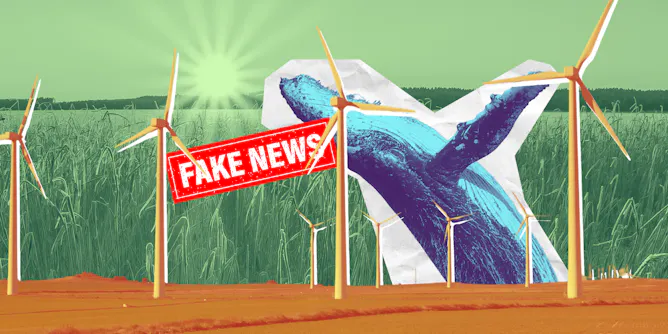
Disinformation is everywhere: AI-based material was even used to generate some of false claims in submissions to the inquiry into misinformation.
Articles on Misinformation
Displaying 41 - 60 of 564 articles
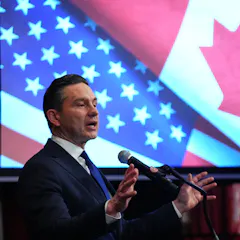
By promoting politically expedient misinformation on a show like Joe Rogan’s, Pierre Poilievre appears intent on pushing dangerous and misleading claims that resonate only with his base.

Because of the way generative AI works, there is no real way to prevent false information being presented as truth – or to correct it permanently.

False claims that COVID-19 mRNA vaccines cause cancer could, ironically, lead to worse cancer outcomes by undermining a promising tool to prevent and treat it.
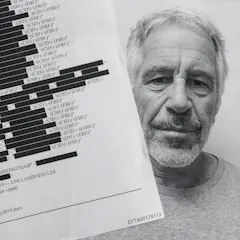
Online sleuths are on a mission to decode the massive Epstein file dump. The resulting chaos shows there’s a fine line between genuine clues and conspiracy.

New research suggests GCSE science builds thinking skills that matter far beyond the lab.
Priming people to watch out for political deepfakes helps them question the AI-generated videos.

From Bondi to Venezuela, Gaza to Ukraine, AI supercharges online misinformation. But understanding exactly how it impacts voters is a challenge.

Misinformation is not just a content problem, but an emotional and structural one.

New research shows highly educated people are just as likely to believe conspiracies as those with less education if they have these psychological traits.

Ancient thinkers struggled to tell facts from falsehoods just like we do – and their strategies are still relevant today.

Climate misinformation is undermining emergency response during crises. Canadian governments need to develop co-ordinated efforts to tackle it.
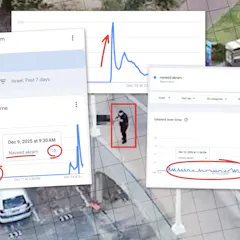
Google Trends results for attackers’ names from before an attack are increasingly (and incorrectly) being used as evidence of conspiracies.

After mass violence such as the Bondi beach terror attack, distress does not stop with those directly affected.
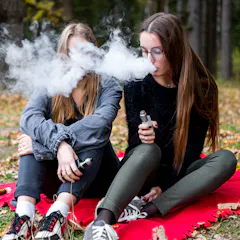
Teen vaping offers a powerful lesson in how misinformation shapes behaviour.

Donations to The Conversation will be matched for the next two weeks.
We are entering an era where seeing is no longer believing.
Experts can combat misinformation by sharing their opinions, instead of just information.

Conspiracy thinking, supernatural beliefs and pseudoscience can seem impervious to evidence. An anthropologist suggests the opposite: Extraordinary beliefs may be supported by an individual’s experience.
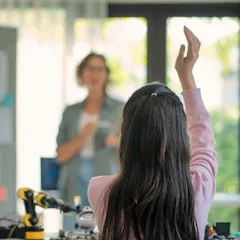
Critical thinking is an essential skill students should be encouraged to develop as part of their science learning. NZ’s draft science curriculum fails the test.
Top contributors
-

Professor of Social Psychology in Society, University of Cambridge
-
Professor and Chair, Department of Journalism, Stellenbosch University
-
Professor of Information Systems, Michigan State University
-
Associate Research Professor of Social Psychology, Louisiana State University
-
Associate Professor of Interdisciplinary Studies, Royal Roads University
-
Chair of Cognitive Psychology, University of Bristol
-
Lecturer in Psychology, University of Cambridge
-
Lecturer in Journalism and Global Communication, University of Sheffield; Independent Social Research Foundation
-
Senior Research Fellow, Melbourne School of Psychological Sciences, The University of Melbourne
-
Director, News & Media Research Centre, University of Canberra
-
Associate Professor, Epidemiology, Deakin University
-
Professor of Informatics and Computer Science, Indiana University
-
Professor of AI and Behavioral Data Science, University of Technology Sydney
-
Professor in Digital Media, Western Sydney University
-
Professor of Human Centered Design & Engineering, University of Washington