

A new study shows stronger guardrails on search engines are needed to prevent the spread and legitimisation of conspiratorial beliefs.
Articles on Conspiracy theories
Displaying 1 - 20 of 336 articles
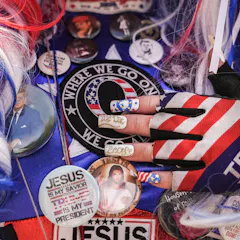
Ideas from QAnon’s conspiracy theory have appeared on government social media sites during Trump’s second term and continue to divide America amid social and economic crises.

Extremist groups have pointed to the federal indictment of the Southern Poverty Law Center as proof that their worldview is correct.

New research shows experiences of adversity are linked with stronger perceptions of injustice – and a greater tendency to believe in conspiracy theories.
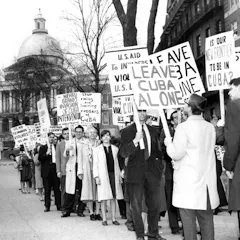
A State Department report on this alleged problem is new, but its claims about alleged communist machinations being behind activist movements in the US are old.
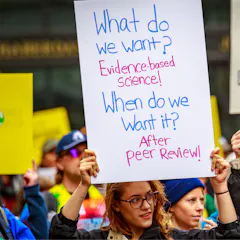
Trust in science seems compatible with believing almost anything, so long as it is expressed in plausibly scientific terms.

Jon Ronson’s Them was published just months before the world changed on September 11 2001. Its portrait of conspiracy theorists and extremists was eerily prescient.

The concept of ‘Cultural Marxism’, which can be traced back to the 1930s, has become a staple of contemporary right-wing discourse.

Italian and British governments conspired to brand Violet Albina Gibson ‘insane’ as it was politically expedient.
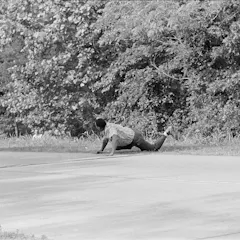
The modern rhetorical and political resistance to racial equality finds its roots in the conspiratorial segregationists of the civil rights era.

If science teachers embrace history as a lens for teaching complex accounts of science, we open possibilities for more socially relevant classrooms.

Sociologist Art Jipson talks to The Conversation Weekly podcast about how clamouring for the release of the Epstein files grew on fringe spaces of the internet.

Surveys may overestimate belief in conspiracy theories because of trolls and jokers – but genuine believers can still cause real-world harm.
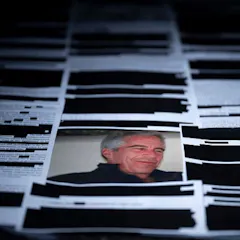
People have created their own online platforms to probe the millions of Epstein file documents, fostering new conspiracies that link to older ones like QAnon.

The online Agartha trend blends occult pseudoscience with neo-Nazism and weaponised irony to open a doorway to radicalisation.

More than 800 men, branded ‘enemy aliens’ were killed when cruise ship bound for Canada was torpedoed by a Nazi U-Boat.
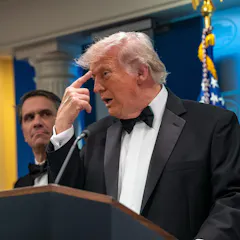
The moral dimension of political polarization in the US, where each side views the other as immoral, helps fuel attacks like the one against Trump at the Washington Hilton.
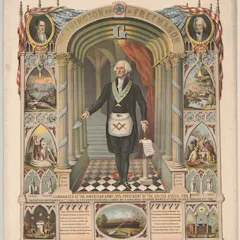
In the early days of the United States, Philly was a hotbed of conspiracy theories as fears grew that secret societies sought to dismantle religion’s influence on society.

Debunking alien claims matters, but so does telling richer, more compelling stories about how humans shaped their own past.

New research shows highly educated people are just as likely to believe conspiracies as those with less education if they have these psychological traits.
Top contributors
-

Associate Professor in Social Psychology, School of Psychology, University of Nottingham
-
Professor in Applied Cognitive Psychology, Manchester Metropolitan University
-
Senior Lecturer and Researcher in Cognitive and Parapsychology, Manchester Metropolitan University
-
Host of The Anthill Podcast, The Conversation
-
Professor of Social Psychology, University of Kent
-
Chair of Cognitive Psychology, University of Bristol
-
Professor of American Studies, University of Manchester
-
Senior Lecturer in Social Psychology, La Trobe University
-
PhD candidate Individualized Program, 2020-2021 Public Scholar, Concordia University
-
Senior Research Fellow, Melbourne School of Psychological Sciences, The University of Melbourne
-
Department of Media & Culture, Faculty of Humanities, University of Amsterdam
-
Senior Lecturer in Philosophy and Education; Curriculum Director, UQ Critical Thinking Project, The University of Queensland
-
Senior Lecturer in Psychology, The Open University
-
Associate Professor in Psychology, Te Kunenga ki Pūrehuroa – Massey University
-
Associate Professor of Sociology, University of Dayton