
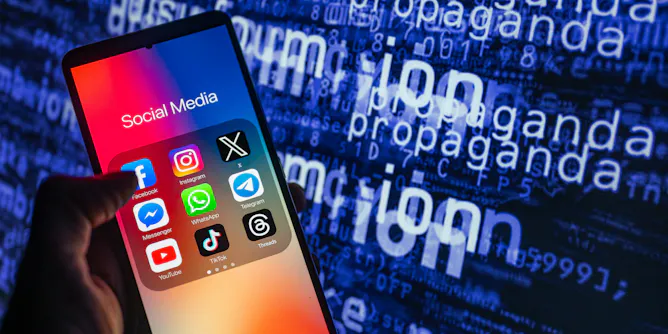
New research reveals a growing number of Australians are encountering political misinformation and disinformation in the election campaign and are worried about it.
Articles on Misinformation
Displaying 101 - 120 of 564 articles
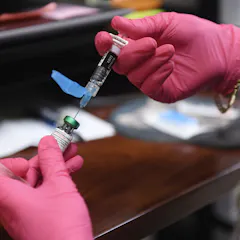
Robert F Kennedy Jr recently said the MMR vaccine contains fetal debris and DNA fragments. This is where these claims come from, and why there’s no need to worry.

Even if we feel we have some understanding of science, few of us have the time or the capacity to verify every claim made by every so called ‘expert’.

Projecting strength on the global stage doesn’t always require tanks and guns.
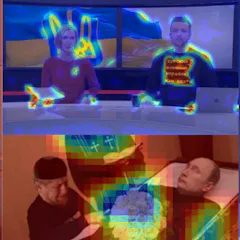
Visual content, including manipulated images, is a staple of propaganda and political messaging. AI analysis shows that a surge of these memes can precede the outbreak of wide-scale violence.
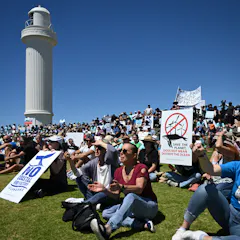
Two experts describe how climate misinformation has infiltrated the election campaign – and how Australians can protect themselves as they head to the polls.
A study of US state legislators found that posting misinformation online was a winning strategy for boosting a politician’s visibility – but not for Democrats.
At first glance it might seem contradictory that restricting some speech can preserve free speech, but research shows that online content moderation protects the marketplace of ideas.
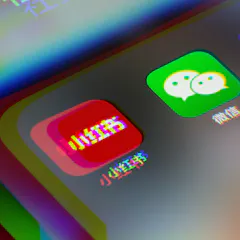
Thousands of Chinese Australians get their news on WeChat or RedNote, but there’s evidence disinformation is circulating unchecked.

Red-teaming is a simulation technique that is used by cybersecurity experts to anticipate and remedy flaws and weaknesses in digital systems.
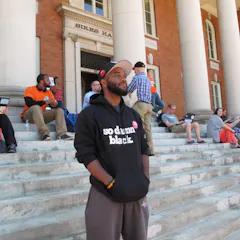
There’s an impulse by universities and media to inaccurately document hip-hop’s history. The genre is, in part, a response to that imprecision, a professor of hip-hop writes.

Here are some things you can do if your romantic partner has gone down a conspiratorial rabbit hole.
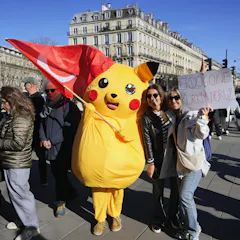
As the tide of AI ‘slop’ rises, it’s more important than ever to hone your reality-checking skills.
Harmful stereotypes, misinformation and conspiracy theories have all found their way into meme format.
We’re told we need to think critically, to not fall for misinformation. Thankfully, it’s a skill we can practise and become better at.

Fact-checking is seen as an effective strategy to combat misinformation and disinformation.
Knowing how to talk about misinformation can help preserve relationships with friends and loved ones that can be frayed during high-stakes election campaigns.
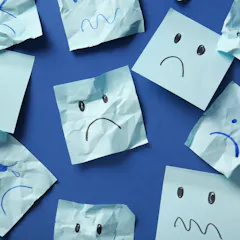
The nocebo effect is the opposite of the placebo effect. And it can affect what we think of medicines, and the side-effects we report.
Critical thinking involves specific skills for assessing evidence, but background knowledge about the subject is also essential.
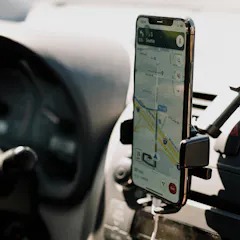
When compared to how common it is for the Google search engine to boost misinformation, changing the name of a body of water might not seem like a big deal. It is.
Top contributors
-

Professor of Social Psychology in Society, University of Cambridge
-
Professor and Chair, Department of Journalism, Stellenbosch University
-
Professor of Information Systems, Michigan State University
-
Associate Research Professor of Social Psychology, Louisiana State University
-
Associate Professor of Interdisciplinary Studies, Royal Roads University
-
Chair of Cognitive Psychology, University of Bristol
-
Lecturer in Journalism and Global Communication, University of Sheffield; Independent Social Research Foundation
-
Senior Research Fellow, Melbourne School of Psychological Sciences, The University of Melbourne
-
Director, News & Media Research Centre, University of Canberra
-
Lecturer in Psychology, University of Cambridge
-
Associate Professor, Epidemiology, Deakin University
-
Professor of AI and Behavioral Data Science, University of Technology Sydney
-
Professor of Informatics and Computer Science, Indiana University
-
Professor in Digital Media, Western Sydney University
-
Professor of Human Centered Design & Engineering, University of Washington