

Users must learn to understand and navigate digital environments critically.
Articles on Misinformation
Displaying 181 - 200 of 564 articles
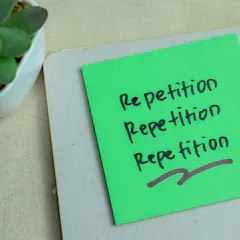
If you come across the same piece of misinformation several times, it will start to feel familiar – and familiar information feels more true.
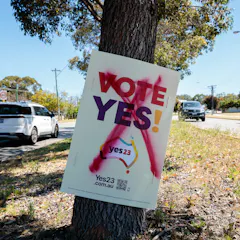
There is a new type of political messaging strategy in town – and it needs urgent attention.

Providing a correction can affect how the audience feels about the journalists trying to set the record straight.

We need to empower Gen Z to create a future where genuine human connections and experiences continue to thrive alongside technological advancements.

Instead of focusing on the people sending out the propaganda, we should turn our attention to those who receive it.

It is expedient for politicians to blame online platforms rather than acknowledge their role in producing a toxic political discourse.

Library scientists offer tips and tricks to figure out if a particular online news article is reliable or fake.

Many claims about the dangers of vaccines come from misrepresenting scientific research papers.

Bots are increasingly prevalent on social media and are being used to spread political messages.

Conspiracy theories aren’t based so much on objective facts, but rather through often loosely connected bits of information. That makes them potent sources of misinformation.
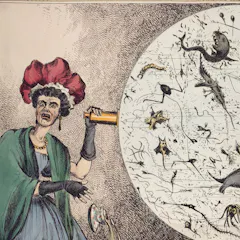
In the 19th century, many doctors might not have believed germ theory, but they switched to using protective methods anyway for a simple reason.

This phenomenon can help us understand polarisation in society.

Political ad transparency – who’s paying for ads and whether candidates stand behind them – is well-regulated for TV and radio. Online, not so much.

New Zealand is among many countries debating a ban on under-16s having social media accounts. But making digital media literacy education a priority would be a better first step.
You’ve heard of debunking, but what about prebunking? Getting ahead of misinformation can pay off, but it’s not a silver bullet.

While labelling satire seems like a fine idea in theory, in reality it probably wouldn’t work. It also takes away from my right (and yours) to be fooled.

Technology could come to the rescue, protecting the integrity of elections.

The prime minister attempted to play the populist and ended up playing into the hands of Nigel Farage.

A major report in the U.S. finds damning evidence of decades of deceit by American oil and gas companies. The situation in Canada is likely not much different.
Top contributors
-

Professor of Social Psychology in Society, University of Cambridge
-
Professor and Chair, Department of Journalism, Stellenbosch University
-
Professor of Information Systems, Michigan State University
-
Associate Research Professor of Social Psychology, Louisiana State University
-
Associate Professor of Interdisciplinary Studies, Royal Roads University
-
Chair of Cognitive Psychology, University of Bristol
-
Lecturer in Journalism and Global Communication, University of Sheffield; Independent Social Research Foundation
-
Senior Research Fellow, Melbourne School of Psychological Sciences, The University of Melbourne
-
Director, News & Media Research Centre, University of Canberra
-
Lecturer in Psychology, University of Cambridge
-
Associate Professor, Epidemiology, Deakin University
-
Professor of AI and Behavioral Data Science, University of Technology Sydney
-
Professor of Informatics and Computer Science, Indiana University
-
Professor in Digital Media, Western Sydney University
-
Professor of Human Centered Design & Engineering, University of Washington