

The latest research on menopause hormone therapy is reassuring, showing little to no association with stroke and blood clots, but benefits for bone health.
Articles on Medical training
Displaying 1 - 20 of 57 articles
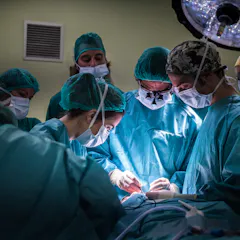
New Zealand’s requirement for patient consent means junior doctors can’t perform CPR on a patient, or practise care of babies and people with dementia.

Despite a shortage of physicians, Canada still struggles with the question of whether a doctor licensed in one province should be automatically qualified to practice in others.

The number of GPs has actually increased in the past five years. But the number of full-time equivalent GPs has gone down.

Many doctors become reluctant to ask questions or seek help when uncertain. This is exactly the opposite of what most patients want in a doctor making crucial decisions about their care.
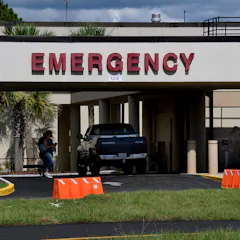
A new study finds more emergency medicine residencies are available, but hundreds of the positions are going unfilled.

‘The doctor will see you now.’ Except they probably won’t.

Education has a role to play in addressing the shortage of family doctors. A new program is designed specifically for comprehensive, community-based family practice.

Each encounter that health-care students have with patients and families helps them understand real-world patient needs. That means all Canadians have a role in educating future health-care providers.

The 2023 budget is unlikely to do the one thing our health system needs: provide the funding for a new medical school to meet our growing need for locally trained doctors.

A new study finds that medical students lose their empathy, to everyone’s detriment.
After decades of effort to reduce discrimination in the workplace, a cultural change may be happening that will enable people to move past their unconscious biases.

Organ models that more accurately capture finer details could reduce surgical error and lead to personalized implants.
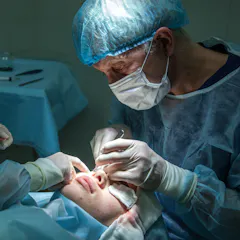
A new proposal is reigniting an old debate about cosmetic surgery. Now it’s focused on what kind of training cosmetic surgeons should have before wielding their instruments.

Most people don’t know that when a doctor says your X-ray is impressive, it’s generally bad news.
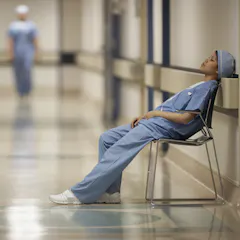
Physician burnout is a severe problem in the medical field, made much worse by the COVID-19 pandemic. But an online coaching program that could be scaled up had dramatic results for participants.

Small communities struggle to retain needed internationally educated health-care professionals. Challenges will persist until the compounding effects of social and professional isolation are addressed.

Medical schools need long-term equity planning and built-in accountability measures in order to help realize a larger vision of anti-racist and inclusive health care.

It’s time to make caring doctors the norm, not the exception.

The quality of grit – passion and sustained persistence – is a useful predictor of burnout and exhaustion for doctors and maybe the rest of us too.
Top contributors
-

Professor of Medicine (Cardiology), Queen's University, Ontario
-
Dean of Medicine & Dentistry, James Cook University
-
Director of Translational Institute of Medicine (TIME), Queen's University, Ontario
-
Senior Lecturer, Population Medicine and Sub-dean Student Support, Sydney Medical School, University of Sydney
-
Associate Professor, School of Psychiatry, UNSW
-
Clinical Lecturer, Anaesthetist, The University of Melbourne
-
Munk Global Journalism Fellow, University of Toronto
-
Professor, Social Foundations of Medicine, Medical School, Australian National University
-
Associate Professor, Sydney Medical School, University of Sydney
-
Professor of Community Medicine and Clinical Education, Bond University
-
Co-Director, Menzies Centre for Health Policy, University of Sydney
-
GP and Clinical Skills Educator, Griffith University
-
Academic Lead, Ethics and Professional Practice, Griffith University
-
Principal Researcher, University of Cambridge
-
Senior Lecturer in Medical Ethics and Law, St George's, University of London