
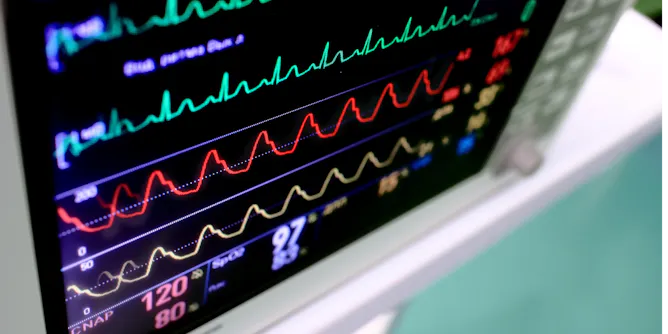
Doctor shortages affect rural communities the most, leading to a rise in chronic health conditions.
Articles on Medical schools
Displaying 1 - 20 of 33 articles
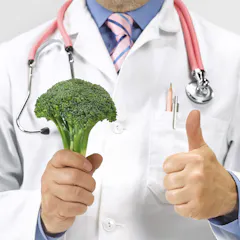
Looking for ways to eat better? Turns out your doctor may not be your best source of information.
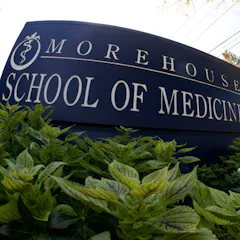
Increased mistrust of the US medical profession and higher mortality rates are consequences of the low numbers of Black doctors. A massive gift to Black medical colleges may help build those numbers.

Soliciting medical student feedback about work placements in ways that provokes critical reflection about inequities is part of creating more accountable medical education.

Close to half of those who die by suicide saw a primary care doctor within a month of their death.
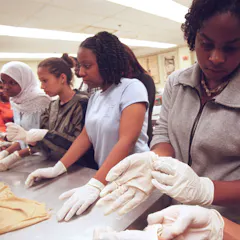
Most states permit government officials to donate unclaimed bodies to medical schools, with no legal requirement for prior approval from the deceased or their next of kin.

The lessons students learn from dissecting donor bodies go beyond anatomy – and they try to pay that gift forward.

This particularly physical kind of philanthropy caught on in the mid-20th century.
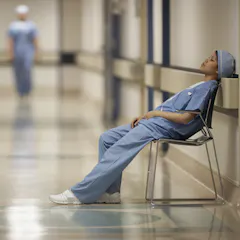
Physician burnout is a severe problem in the medical field, made much worse by the COVID-19 pandemic. But an online coaching program that could be scaled up had dramatic results for participants.

Medical education has not kept up with genetic discoveries — primary care physicians require more genetics and genomics training.
We should challenge government defunding of universities, and greater reliance on private donations that can affect the transparency, equity and democracy of public institutions, including hospitals.
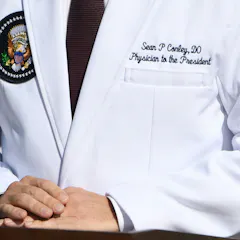
Almost 10% of physicians in the US are doctors of osteopathic medicine, and that proportion is rising. Their medical knowledge matches that of other doctors; the difference is the philosophy behind it.

To achieve diversity in medical schools, we need to look at the stories behind the numbers.

A ‘learn local’ strategy, along with increased residency positions and the return of a rotating internship could go a long way towards improving Canada’s system of medical training.
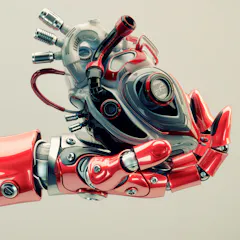
Health care relies on increasingly sophisticated devices for implanting into the body or monitoring it. Yet most med school graduates are not versed in engineering. That needs to change.

From weekend walks with your doctor to free gym memberships, there is a global movement afoot.
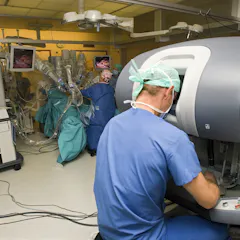
There are more robots than ever in the operating room – but that’s led to fewer opportunities for surgical trainees. Now, some new doctors are teaching themselves in secret.
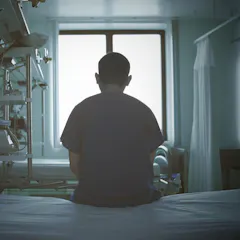
Teaching students to care for the dying requires specific skills that the student may not encounter in their ordinary clinical teaching.
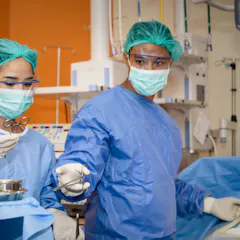
A radical new model of “competency based” medical education emphasizes trainee skill over time invested. Queen’s University is the first in Canada to fully embrace this shift.

We’ve come a long way since the dark days of grave robbing to provide bodies for dissection. Now, there are ceremonies and memorials to honour people who have donated their body to science.
Top contributors
-

Data specialist, Swinburne University of Technology
-
Professor of Biomedical Engineering and Medicine, University of Virginia
-
Professor of Health Sciences, Simon Fraser University
-
Professor of Education, The University of Texas at Austin
-
Dean, Western Sydney University
-
Executive Dean (Interim), Sefako Makgatho Health Sciences University
-
Professor, VCCC Chair of Palliative Medicine, The University of Melbourne
-
Professor of Physiology and Neurobiology, Dean of Faculty Affairs, Geisel School of Medicine, Dartmouth College
-
Assistant Professor of Medical Education, Dartmouth College
-
Associate Professor of Medicine, Geisel School of Medicine, Dartmouth College
-
Associate Professor of Emergency Medicine, Queen's University, Ontario
-
Associate Professor for Digital Innovation, University of the Western Cape
-
Professor, Department of Geography, Simon Fraser University
-
Professor of Clinical Anatomy, University of St Andrews
-
Associate Professor, School of Psychiatry, UNSW