

A few simple strategies can help older adults convey their needs to their health care provider.
Articles on Doctor shortage
Displaying all articles

With limited resources and budget constraints, how can policymakers to improve primary care access: Paying doctors more, or increasing their numbers?

Doctor shortages affect rural communities the most, leading to a rise in chronic health conditions.

Despite a shortage of physicians, Canada still struggles with the question of whether a doctor licensed in one province should be automatically qualified to practice in others.

Australia is recruiting more overseas-trained doctors to fill doctor shortages. But when a high-income country like Australia does this, we risk causing a ‘brain drain’ elsewhere.

Education has a role to play in addressing the shortage of family doctors. A new program is designed specifically for comprehensive, community-based family practice.

Each encounter that health-care students have with patients and families helps them understand real-world patient needs. That means all Canadians have a role in educating future health-care providers.

Recruiting internationally educated health workers is a key part of Canada’s proposed solution to the health worker crisis. But there are ethical questions about recruiting from foreign countries.

The 2023 budget is unlikely to do the one thing our health system needs: provide the funding for a new medical school to meet our growing need for locally trained doctors.

Ireland has a long history of doctor emigration, but something needs to be done to encourage doctor retention and return
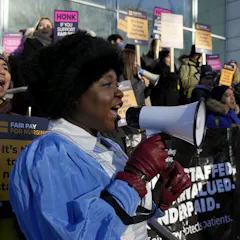
U.K. health worker protests echo issues in Canada. They are also a harbinger of future labour disputes and systemic collapse if austerity, underinvestment and neglect of health workers continue.
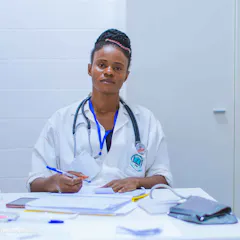
Canada is sidelining qualified doctors while many Canadians struggle to find health care. Here’s what we can and must do better for internationally trained physicians.

The pathway for foreign doctors to practise in New Zealand is neither easy nor very fair, meaning an over-stretched health system is missing out on valuable expertise.

Less than half of Canadians can see their doctor same-day, and millions don’t even have a family doctor. Improving access to care means providing doctors with the support they need to focus on patients.
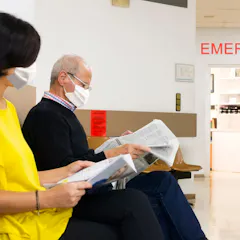
With COVID-19 placing heavy demands on the health-care system, non-COVID patients may struggle to access care, putting women, people in poor health and those without a regular doctor at risk.

From preventing emergency visits to understanding the context of a patient’s health issues, house calls have value in a modern medical practice.

In Canada, regulation of professions usually falls under provincial jurisdiction, but there may be feasible models for a national licence for health-care professionals.

The global game of supply and demand that lets UK doctors move abroad for better pay is the same force pushing down salaries at home.

Three features of a medical school help predict where medical students will eventually work as doctors: selection, the curriculum, and the professionalism of the newly-qualified doctors.
Top contributors
-

Professor of Medicine (Cardiology), Queen's University, Ontario
-
Professor of Social Policy, University of York
-
Senior Lecturer, Health Sciences, Simon Fraser University
-
Professor, Geography and Environmental studies, Wilfrid Laurier University
-
Assistant Professor, Global Health Policy, University of British Columbia
-
Avocat, enseignant et chercheur associé en droit et politiques de la santé / Lawyer, lecturer and research associate in Health Law and Policy, Université de Sherbrooke
-
Professor of Population Health, University of Waikato
-
Senior Research and Teaching Fellow, School of Health, Te Herenga Waka — Victoria University of Wellington
-
Clinical Associate Professor, Faculty of Medicine, University of British Columbia
-
Professor, School of Sociological and Anthropological Studies, L’Université d’Ottawa/University of Ottawa
-
PhD Candidate in Development Studies, Te Kunenga ki Pūrehuroa – Massey University
-
Associate Professor and Program Director, Occupational Therapy Department, University of South Dakota
-
Assistant Professor, Department of Health Policy and Management, Columbia University
-
Associate Professor, Nursing, MacEwan University
-
Associate professor, University of Sydney