

Pre-surgery exercise has benefits, whether it is supervised or home-based. But professional supervision can help patients achieve higher exercise intensities.
Articles on Surgery
Displaying 1 - 20 of 159 articles

Once we learn waists can be altered, it can be surprisingly easy to start questioning whether ours needs changing too.
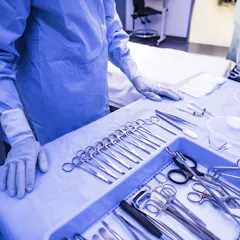
Government critics say changes to health insurance rebates will strain the public health system. But the evidence shows the impact might not be what you think.

Endometriosis is an age-old condition and yet until recently, the complex disorder remained largely overlooked due to medical and social perceptions of women’s pain.

Canada can significantly improve women’s health, in both the short- and long-term, by focusing on five attainable and affordable immediate actions.

Seeking a second opinion is a patient’s right. Knowing how empowering another perspective can be may make it less awkward to ask for one.

Surgeons are often judged by their technical skill. But new research shows that how they lead their teams can make a critical difference to patient outcomes.

Antibiotic prescribing around the time of surgery and in aged care isn’t always appropriate, a new report shows. Here’s what else we learned.

Some medical conditions involve cartilage tissue loss, which is why skin grafting is vital. Lab-grown cartilage could be the way forward for human tissue repair and reducing animal testing.

Vladimir Putin and Xi Jinping were recently caught discussing whether organ transplants could help a person live forever. The idea has scientific and ethical flaws.

Why surgical device design is changing to match the diversity of today’s operating rooms.

About one in four people have to go back to have corrective surgery after their implant, new research shows.
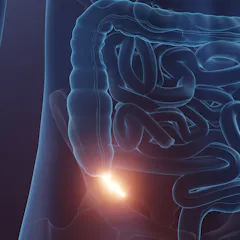
This small organ in our intestines plays a major role in regulating gut microbiome.

Preoperative anxiety is a problem for patients and linked to worse surgical outcomes. The Canadian system needs innovative solutions to address this.

Appendicitis is more common in children and young people. Here are the symptoms to look out for.
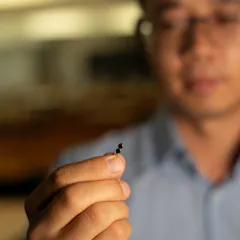
Robotic tools are too big for ‘keyhole’ brain surgery – but a new miniature technology using magnets could change all that.

Surgery was rare and risky in the medieval period. Though medical options were limited, trans people were able to take transitioning into their own hands.
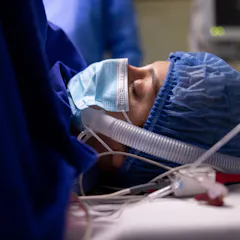
Surgical patients are opting out of opioids due to concerns about side effects and addiction. Combining methods to manage pain can take these fears into account without compromising on care.

Our friend the leech has become a rarity in the wild.

Seeing through mouse skin is one thing, disappearing humans is something else entirely.
Top contributors
-

Professor of Orthopaedic Surgery, UNSW
-
Professor of Anatomy, Lancaster University
-
Associate Professor, Physiotherapy, University of Sydney
-
Professor at Sydney Law School, University of Sydney
-
Professeur Titulaire. École d'optométrie. Expertise en santé oculaire et usage des lentilles cornéennes spécialisées, Université de Montréal
-
Postdoctoral Fellow Global Health, University of California Global Health Institute (UCGHI), Makerere University
-
Honorary Professorial Fellow, Department of Critical Care, Melbourne Medical School, The University of Melbourne
-
Lecturer - Department of surgery Speciality: Plastic & Reconstructive Surgery, University of Nairobi
-
Conjoint Clinical Associate Professor, Deakin University School of Medicine and Specialist Pain Medicine Physician, Deakin University
-
Adjunct Associate Professor, Anatomy, UNSW
-
Senior Research Fellow and Deputy Director, Centre for Biomedical Technologies, Queensland University of Technology
-
Professor of Orthopaedic Research, Queensland University of Technology
-
Honorary Enterprise Professor, School of Population and Global Health, and Department of General Practice and Primary Care, The University of Melbourne
-
Lecturer in Law, Sydney Law School, University of Sydney
-
Professor, Head of Body Image, Eating and Weight Disorders Research, Adelaide University