

Without enough resources to follow up on screening results, teachers, parents, and children may be left feeling frustrated and unsupported.
Articles on Literacy
Displaying 41 - 60 of 328 articles

Generative AI changes how we see – and how we decide what’s real.

An assessment of a learning intervention showed that the impact differed between groups of pupils.

Reading stories with young children lays the foundation for language and literacy development.

A new Productivity Commission report looks at how to make workers more adaptable. This starts with making sure school students learn basic maths and English skills.

Study finds a gap between policy and textbook that skews literacy test results.
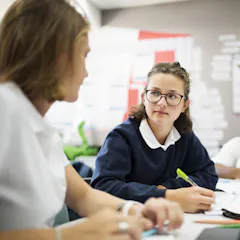
If the results are disappointing, try not to catastrophise them. For one thing, NAPLAN was done about four months ago – students will have made progress since then.

Whether reading a book or listening to a podcast, the goal is the same: understanding. But these activities support comprehension in different ways.

The effectiveness of a self-help book depends largely on the quality of its content and how it is used by readers.

Reading aloud to kids helps their vocabulary and comprehension. These are skills we continue to build all through our lives.

A pilot programme in 15 schools demonstrates how targeted, structured interventions can rapidly close foundational literacy gaps.
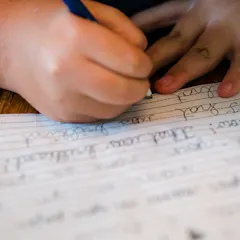
Teachers often have trouble finding enough time in the school day to teach all the expected writing skills, let alone cursive handwriting.
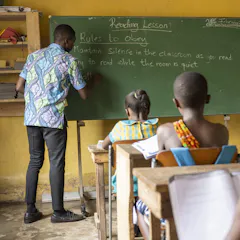
Literacy and numeracy have declined at the basic education level in Ghana.

US schools are going all in on phonics, but research shows that approach won’t work for every child. A blended literacy strategy can get more students reading.

The state, once ranked near the bottom of education standings, dramatically improved student literacy rates while using little money.

Using structured literacy to teach te reo Māori is more about an educational ideology than about understanding the essence of New Zealand’s Indigenous language.
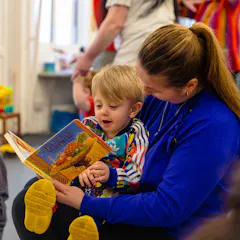
Library reading sessions tend to be attended by families who already engage with books at home

Parents can now search how their child’s school has performed in reading, writing, spelling, grammar and numeracy.

The new curriculum is grounded in research on how kids best learn to read. But it will take teachers time to learn which lessons work best for their classroom.
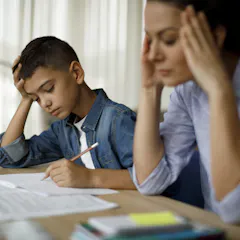
When talking about a child’s diagnosis of dyslexia, mothers rely on metaphors. A closer look at these metaphors reveals much about how schools can better help them.
Top contributors
-

Professor, School of Education, University of Southern Queensland
-
Associate Professor in Language, Literacy and TESL, University of Canberra
-
Associate Professor, University of Southern Denmark
-
Professor, Werklund School of Education, University of Calgary
-
Senior Research DECRA Fellow, Institute for Learning Sciences and Teacher Education, Australian Catholic University
-
Professor of Education Futures, The University of Melbourne
-
Deputy CEO (Research), Australian Council for Educational Research
-
Professional Learning and Development Facilitator in Literacy Education, Te Kunenga ki Pūrehuroa – Massey University
-
School Education Program Director, Grattan Institute
-
Professor at the Australian Centre for the Advancement of Literacy, Australian Catholic University
-
Professor, Canada Research Chair in Determinants of Child Development, Owerko Centre at the Alberta Children’s Hospital Research Institute, University of Calgary
-
Professor of Cognitive Psychology, School of Education, La Trobe University
-
Professor in Language Education, member bua-lit collective, University of Cape Town
-
Senior Lecturer in Literacy, Edith Cowan University
-
Professor in Early Childhood Education and Community, University of Canberra