
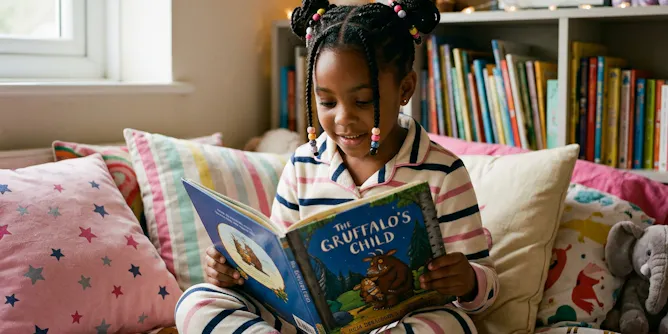
Books matter because they expose children to a broader and richer vocabulary than everyday conversation.
Articles on Phonics
Displaying 1 - 20 of 49 articles

While Alberta says Bill 6 will strengthen early literacy, the plan doesn’t measure the broader skills essential for reading success by Grade 4.

The proportion of children in England who struggle to read has remained at a similar level for many years.
The phonics screening check is so closely correlated with month of birth that it can be argued that it is a test of age rather than decoding.

Data from a ‘phonics check’ of new entrants is too incomplete to draw firm conclusions from, and word recognition is not the same as reading.
Compared with today’s structured literacy and standardised testing, the 1953 reading syllabus was a remarkably non-prescriptive blueprint for both teachers and pupils.

US schools are going all in on phonics, but research shows that approach won’t work for every child. A blended literacy strategy can get more students reading.

This assessment is high-stakes for schools – but children’s reading isn’t improving.

The new curriculum is grounded in research on how kids best learn to read. But it will take teachers time to learn which lessons work best for their classroom.

Reading isn’t natural for humans – but storytelling is. Using decades of data, my new research highlights the role of parents in encouraging a love of books long before children start school.

Victoria has just announced all government schools will be required to use phonics to teach reading from next year.

Reading and writing should be taught together again.
There are alternatives to England’s focus on synthetic phonics, which teaches children to decode words by learning the relationship between letters and sounds.
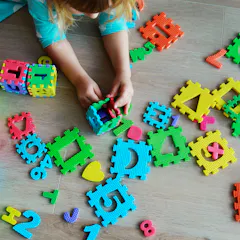
Changing attitudes to maths from the start of education can lead to more success later on.

A report from the Saskatchewan Human Rights Commission outlines government and school responsibilities for educating students with disabilities and calls for changes in reading instruction.

Low levels of literacy cost the US more than $2 trillion every year.
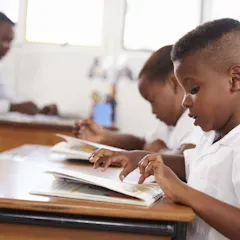
Reading fluency and expanding vocabulary are the bridge from decoding to comprehension. Weaknesses in any of these building blocks will limit a child’s ability to read for meaning.

The government’s focus on synthetic phonics is too narrow.

A recently released schools policy guide has been receiving some criticism. Reports suggest it instructs teachers to not use terms like “boys and girls”, for instance. This is not entirely correct.

Australia’s curriculum is being reviewed for the first time since 2014. The proposed changes include positive additions to acknowledge our many cultures. But there are some reductive changes, too.
Top contributors
-

Associate Professor in Language, Literacy and TESL, University of Canberra
-
Professor of Cognitive Psychology, School of Education, La Trobe University
-
Professor of Early Childhood and Primary Education, UCL
-
Senior Lecturer in Education, Auckland University of Technology
-
Senior Research Fellow, The Centre for Independent Studies; Associate Investigator, ARC Centre of Excellence in Cognition and its Disorders, Macquarie University
-
Professor of Sociology of Education, UCL
-
Professor, Werklund School of Education, University of Calgary
-
Emeritus Professor of Education, Macquarie University
-
Professor, School of Education, University of Southern Queensland
-
Senior Industry Fellow, School of Education, RMIT University
-
Associate Professor of Early Childhood Education, University of Maryland, Baltimore County
-
Associate Professor, Edith Cowan University
-
Emeritus Professor, Department of Cognitive Science, Macquarie University
-
Senior Lecturer, School of Education, Macquarie University
-
PhD Candidate, Sessional Academic, Edith Cowan University