
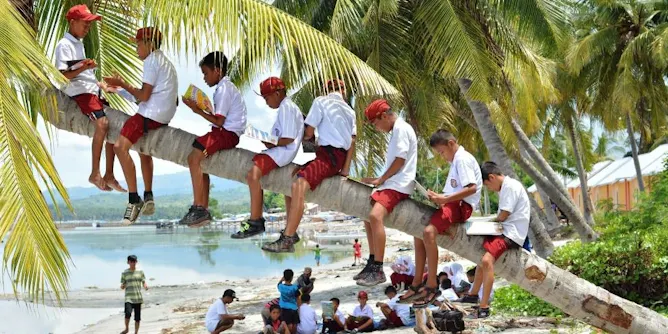
Indonesian politicians and public figures say Indonesians have a low interest in reading. But people in disadvantaged areas defy this perception; they always welcome new books with joy.
Articles on Literacy
Displaying 241 - 260 of 328 articles
The story of a six-year-old boy with dyslexia who, with support from friends and teachers, became a successful professor. Now he teaches teachers how to help children like him.

Eye-tracking research reveals that children are likely to read new words faster and easier if they have heard the words before.

Supporting early childhood literacy is not just about reading to your child. Research has found there are many and varied ways to increase literacy in early learning.
Research shows many concepts are best learned in the language that the learner understands.
Because of the way our brains work, we can remember songs and rhymes much more easily than just words or letters. The ABC song teaches kids the basics of the English language.
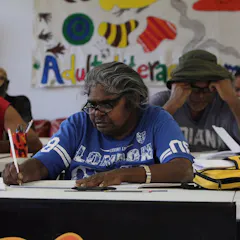
The children who are least likely to attend school regularly – and do well – grow up in households where the adults themselves have very poor literacy skills.
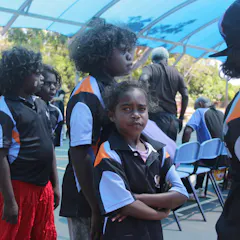
Indigenous students who graduate from university have slightly higher full-time employment prospects than their non-Indigenous peers.
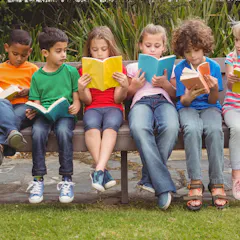
We are not hard-wired to read. It has taken thousands of years of practice to forge connections in our brains to help us do this.

Emoji provide a living language that is representative and inclusive in ways that words can’t always be. Just be careful if you use the eggplant or peach emoji.

Poor literacy impacts a child’s life chances – but there may be a rather colourful solution.

Pencil by default: the digital skills demanded by the welfare system may baffle Daniel Blake, but he is resourceful, creative and willing to work.

Were your teachers right about when to use commas, and about not starting sentences with ‘and’?

The latest round of NAPLAN results show Australia’s school systems are not good at reducing the influence of a student’s background on their academic achievement.
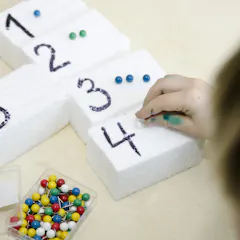
If we want excellence in our schools, we have to provide a system with the incentives, enablers and rewards for improvement built in.

The furore over Australia’s international ranking in science, maths and English obscures what we should really be focusing on.
A focus on phonics may be the cure to Australia’s literacy woes.

Images of Castro as either a monster or saviour miss the mark, but his commitment to literacy and culture is undeniable.
Being able to sound out letters in words doesn’t mean you can understand them. There is no clear evidence that a new phonics screening test for children in Year 1 will help improve reading levels.

For subjects mired in jargon and technical words, what role does language play in breaking down obstacles to communication and understanding.
Top contributors
-

Professor, School of Education, University of Southern Queensland
-
Associate Professor in Language, Literacy and TESL, University of Canberra
-
Associate Professor, University of Southern Denmark
-
Professor, Werklund School of Education, University of Calgary
-
Senior Research DECRA Fellow, Institute for Learning Sciences and Teacher Education, Australian Catholic University
-
Professor of Education Futures, The University of Melbourne
-
Deputy CEO (Research), Australian Council for Educational Research
-
Professional Learning and Development Facilitator in Literacy Education, Te Kunenga ki Pūrehuroa – Massey University
-
School Education Program Director, Grattan Institute
-
Professor at the Australian Centre for the Advancement of Literacy, Australian Catholic University
-
Professor, Canada Research Chair in Determinants of Child Development, Owerko Centre at the Alberta Children’s Hospital Research Institute, University of Calgary
-
Professor of Cognitive Psychology, School of Education, La Trobe University
-
Professor in Language Education, member bua-lit collective, University of Cape Town
-
Senior Lecturer in Literacy, Edith Cowan University
-
Professor in Early Childhood Education and Community, University of Canberra