

Every three years, the OECD releases its Programme for International Student Assessment results. Last time, Australia’s education system was doing much worse than some other countries. Has it changed?
Articles on Literacy
Displaying 181 - 200 of 328 articles

With a complex language, like English, learning to sound out words is critical but not enough for learning how to read.

A whole language approach to teaching reading gives kids a whole linguistic picture of how words work. This includes teaching individual letters and sounds, as well as what the words mean in context.
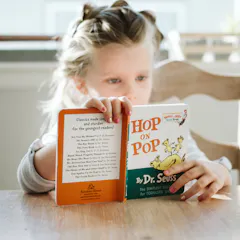
English is a code-based language, with 26 letters to represent 44 speech sounds. Children must first learn to master the code if they want to be successful readers.

Years 5-7 typically include the transition from primary to secondary but the reading slowdown can’t just be blamed on this, because numeracy progress has improved. So what’s going on with reading?

Unparalleled elegance and versatility in the design of the human hand, and the hand’s connections with the brain, lie behind how humans learn to read and write.

What children say about free writing is similar to how professional authors describe the creative process. Teachers should give kids freedom to explore, providing guidance when it’s due.
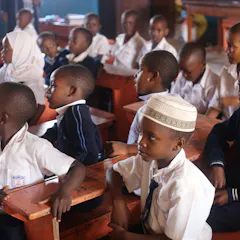
Uganda’s English language policy is at odds with the situation on the ground in the country’s rural schools.

Early experiences sharing and developing positive connections, language and communication set the stage for home reading to start children on the path to literacy.

Developing fluency in handwriting matters for literacy outcomes, and handwriting is an elegant testimony to the unique power of the human voice.

Help with reading and writing increases the probability of receiving the Disability Support Pension by about 20%.
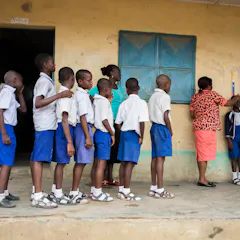
In addition to being poorly trained, Nigeria’s school teachers are being outnumbered by a growing population.

Most parents know how important it is to read to their child, but not as many know the importance of helping them learn emotional skills. And it’s the emotional skills teachers find most important.

Grade 4 student Charlene seemed chronically off-task – until an educator noticed she was, in fact, the sole student pursuing the question, ‘Was the oil boom bad for our wildlife?’

Some parents did speak of tutoring as a way of securing entry into a specific school. But they were in the minority. Most spoke of using it to help fix academic problems, temporary and ongoing.

Street art promotes public dialogue on social justice issues and can lead to opportunities for learning outside of formal schooling.

There are many reasons to be skeptical about PISA rankings, and their use to compare student achievement or to identify best practices or solutions for educational problems.
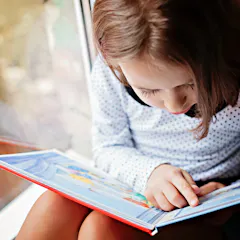
It would be wiser to spend money on policies that allow teachers to teach in ways that nurture children’s sense of belonging and making sure children are not hungry when they are trying to learn.

Are current forms of standardized literacy tests really measuring children’s capacity to read and interact with our rapidly-changing world?
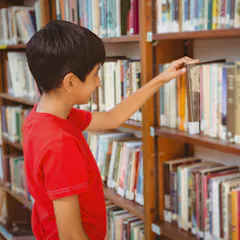
The role of the school library has evolved. Today’s school library goes beyond providing books. It must include teaching children digital literacy and how to critically evaluate information online.
Top contributors
-

Professor, School of Education, University of Southern Queensland
-
Associate Professor in Language, Literacy and TESL, University of Canberra
-
Associate Professor, University of Southern Denmark
-
Professor, Werklund School of Education, University of Calgary
-
Senior Research DECRA Fellow, Institute for Learning Sciences and Teacher Education, Australian Catholic University
-
Professor of Education Futures, The University of Melbourne
-
Deputy CEO (Research), Australian Council for Educational Research
-
Professional Learning and Development Facilitator in Literacy Education, Te Kunenga ki Pūrehuroa – Massey University
-
School Education Program Director, Grattan Institute
-
Professor at the Australian Centre for the Advancement of Literacy, Australian Catholic University
-
Professor, Canada Research Chair in Determinants of Child Development, Owerko Centre at the Alberta Children’s Hospital Research Institute, University of Calgary
-
Professor of Cognitive Psychology, School of Education, La Trobe University
-
Professor in Language Education, member bua-lit collective, University of Cape Town
-
Senior Lecturer in Literacy, Edith Cowan University
-
Professor in Early Childhood Education and Community, University of Canberra