

We need a clear plan in place to ensure that no child falls through the net. Such a plan needs to be both effective and cost-effective.
Articles on Literacy
Displaying 261 - 280 of 328 articles

A key argument in support of the jury system is that it is a valued form of citizen participation in democracies. But the system has led to human rights abuses in Ghana.
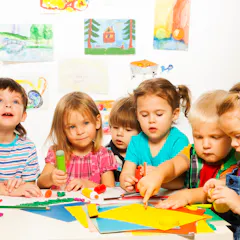
Parents are sending their children to private pre-school programs as a way to ensure they are ready to start school. But are these effective?

The Productivity Commission has said that education spending has substantially increased over the last decade but student achievement has shown little or no improvement. Is that true?
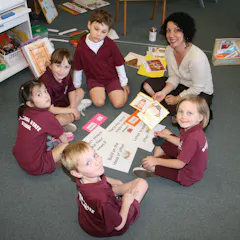
Teaching philosophy for just one hour a week can improve children’s progress in writing, maths and reading.
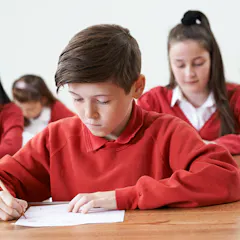
It is not reasonable for politicians to say NAPLAN results have plateaued, because comparisons from year to year are not reliably accurate.
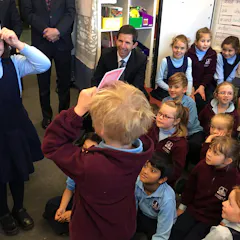
Teaching graduates are expected to meet new test standard from July 1 this year.
Average NAPLAN results don’t tell the full story. Diving into the details is essential if we are to understand what is going on in Australian education.
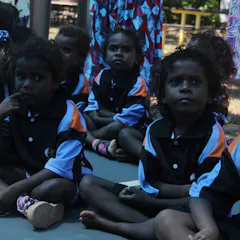
A New Zealand literacy program is helping to raise Indigenous achievement to mainstream levels.
Students from non-English speaking backgrounds learn differently depending on the types and number of languages they speak and are literate in.

A great deal of thinking about Cuba’s education system originated from one man. So who was José Martí, and what can his ideas about values education teach other countries?
Research shows linking teachers’ pay to performance has little impact on student achievement. Similar tests to the ones the government proposes for young children now face a backlash in the UK and US.
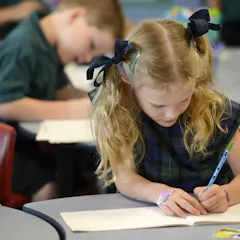
The Grattan Institute’s new report, Widening Gaps, invites us to think differently about how to measure student progress and tackle entrenched inequalities in achievement.

There is a lot of misinformation about how Australia prepares teachers to teach reading and writing in schools. So here’s how it really works.

Parents who provide learning support at home can improve their child’s literacy and emotional development, regardless of their class or educational background.

The political obsession with back to basics literacy is leaving schools behind. What is taught in school is becoming increasingly distant from what is required in the real world.
You wouldn’t feel so confident about claiming you weren’t good at reading, so why is it okay to be openly negative about mathematics?

Around a fifth of children aged five to 16 will experience reading difficulties. Schools need clear guidelines on how to choose the best literacy programs for their students.
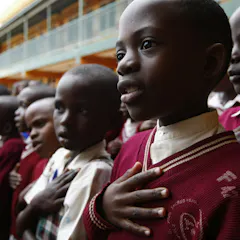
More and more children are attending primary school in Kenya, Uganda and Tanzania. But there are worryingly large gaps in their learning.

2013 was the year of Gonski; 2014 the year of higher education reform; 2015 has been the year of … hmmm … wait, what actually happened this year? Just a lot of chat really, with much debate, but little…
Top contributors
-

Professor, School of Education, University of Southern Queensland
-
Associate Professor in Language, Literacy and TESL, University of Canberra
-
Associate Professor, University of Southern Denmark
-
Professor, Werklund School of Education, University of Calgary
-
Senior Research DECRA Fellow, Institute for Learning Sciences and Teacher Education, Australian Catholic University
-
Professor of Education Futures, The University of Melbourne
-
Deputy CEO (Research), Australian Council for Educational Research
-
Professional Learning and Development Facilitator in Literacy Education, Te Kunenga ki Pūrehuroa – Massey University
-
School Education Program Director, Grattan Institute
-
Professor at the Australian Centre for the Advancement of Literacy, Australian Catholic University
-
Professor, Canada Research Chair in Determinants of Child Development, Owerko Centre at the Alberta Children’s Hospital Research Institute, University of Calgary
-
Professor of Cognitive Psychology, School of Education, La Trobe University
-
Professor in Language Education, member bua-lit collective, University of Cape Town
-
Senior Lecturer in Literacy, Edith Cowan University
-
Professor in Early Childhood Education and Community, University of Canberra