

Zimbabwe’s Education Amendment Act of 2020 is a step in the right direction, but more still needs to be done.
Articles on Literacy
Displaying 161 - 180 of 328 articles

To “warm up” a book, use the K-W-L strategy: Talk with your child about what you both KNOW about the subject, what you WONDER and afterwards, what you’ve LEARNED.

Too many adjectives, not enough ideas: how NAPLAN teaches bad writing
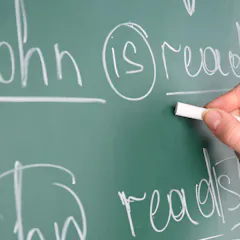
Grammar is a set of tools to make meaning rather than a set of rules to follow. The difference is in how we teach it.

With 52% of 15-year-olds now saying they read only if they have to, experts say a new way of teaching literacy is overdue.
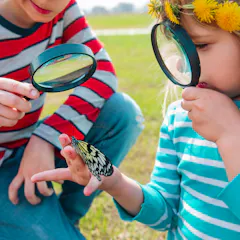
Playful activities that involve choice, active engagement and moments of delight are what children need this summer during the pandemic.

Now, more than ever, we need to share stories that build relationships, community connections and self-esteem, especially with our children.

Families play a vital role in the process of skill formation, which is just as important as the role of schools.
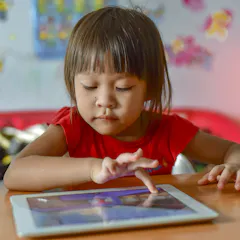
Remote contact with families in the coronavirus emergency is critical, but learning on a screen is not how young children will gain the foundational and developmental skills they need.

The fact that teachers in Uganda’s rural schools weren’t trained in the local language means they can’t teach children in their mother tongue and this leads to poor literacy acquisition.
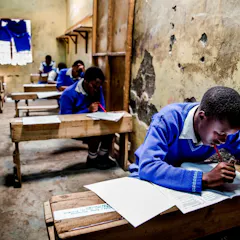
Study presents a model that can be scaled to improve learning outcomes and transition rates for young people living in urban informal settlements.
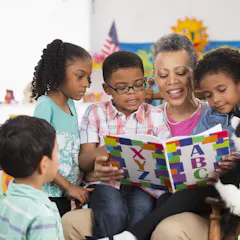
A federal court with jurisdiction over Kentucky, Michigan, Ohio and Tennessee found that the state governments have a legal obligation to ensure that children can learn how to read.

There’s more to learning than content. As long as kids maintain the essential literacy, numeracy and social skills, they will be well placed to pick up content they may have missed later.

New insights show that South Africa’s education system is heading in the right direction.

Early intervention with reading challenges has very high success rates for supporting reading development, but it is much more difficult to improve reading skills in older students.

A creative writing project in South Australian prisons shows those inside can be eloquent, expressive and reflective.

Handwritten letters enhance relationships among people of all ages, and help children become empowered and inspired through the power of the pen.
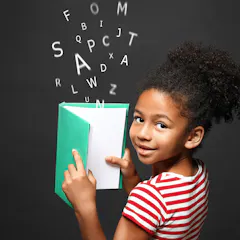
Two literacy scholars share their concerns about growing pressure on educators to emphasize phonics to teach reading. In their view, critiques of other methods often rest on a false premise.

We have transitioned from a literate culture to one that values speed, immediacy and the decoding of small grabs of words in search for information. But old and new ways of reading can co-exist.

Australian education is still going backwards from where we started in 2000 – new PISA results show.
Top contributors
-

Professor, School of Education, University of Southern Queensland
-
Associate Professor in Language, Literacy and TESL, University of Canberra
-
Associate Professor, University of Southern Denmark
-
Professor, Werklund School of Education, University of Calgary
-
Senior Research DECRA Fellow, Institute for Learning Sciences and Teacher Education, Australian Catholic University
-
Professor of Education Futures, The University of Melbourne
-
Deputy CEO (Research), Australian Council for Educational Research
-
Professional Learning and Development Facilitator in Literacy Education, Te Kunenga ki Pūrehuroa – Massey University
-
School Education Program Director, Grattan Institute
-
Professor at the Australian Centre for the Advancement of Literacy, Australian Catholic University
-
Professor, Canada Research Chair in Determinants of Child Development, Owerko Centre at the Alberta Children’s Hospital Research Institute, University of Calgary
-
Professor of Cognitive Psychology, School of Education, La Trobe University
-
Professor in Language Education, member bua-lit collective, University of Cape Town
-
Senior Lecturer in Literacy, Edith Cowan University
-
Professor in Early Childhood Education and Community, University of Canberra