

Sharing a book together doesn’t stop being important once a child learns to read.
Articles on Literacy
Displaying 201 - 220 of 328 articles

Research shows small financial incentives for doing maths homework can increase maths achievement. But this raises some tricky ethical questions.

Shared reading has many benefits. Among them, it can help your child develop a bigger vocabulary.
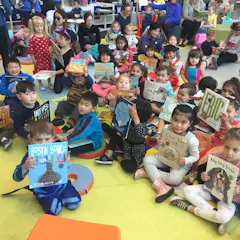
Children from minority groups rarely see themselves reflected in the books they read. This can negatively impact their sense of identity and their literacy levels.
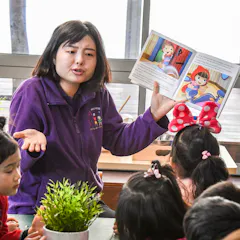
If schools and policy-makers want to boost children’s literacy, they should invest in teacher librarians.

Changes to the literacy and numeracy standards for new teachers in Victoria have raised questions about what makes a ‘good’ teacher.
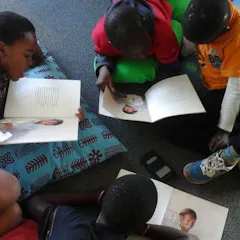
Reading involves more than decoding letter-sound relationships and making meaning from isolated texts.
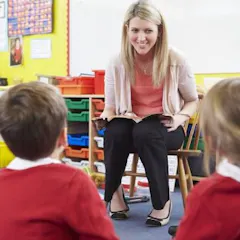
Children in the early stages of learning to read should be given decodable books to practise and generalise their developing alphabetic skills.
Teaching children how to break down words into their meaning and origin can help them be better spellers.
Girls are encouraged more often to read, despite performing better in reading assessments nationally and internationally. Here’s how parents and educators can help connect boys with books.

Providing text-message tips to parents on how to make their children stronger readers can make a difference, but only if parents don’t get too many or too few text messages, researchers find.
The current debate about comparability would be more concerning if 2018 results showed radically different trends compared to previous years, but they don’t.
Reading styles vary in effectiveness. Here are six things you can do, based on research, to help your child get the most out of shared reading.
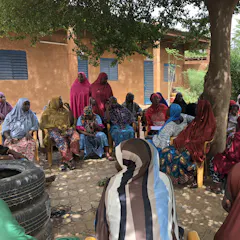
A new research project is helping Nigerien women access valuable, accurate information from which they are too often cut off.

Most book clubs are white and middle-class. Even today, books and reading can presume a divide between Indigenous oral story-telling and non-Indigenous literacy.

An unspoken class war has long been waged around the pronounciation of the letter “h” - is it haitch or aitch? Despite a snobbish leaning to the latter, haitch makes more sense.

Geospatial data offers a powerful new way to see the world. But these high-tech images can be misleading or incomplete.

The NSW government will review the K-12 curriculum over the next 18 months. Simplistic approaches may suggest reducing the number of subjects, but this would be a backward step.
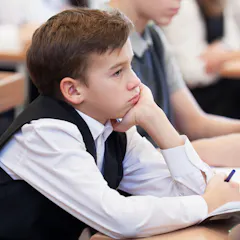
To assess problem-solving, creative and critical thinking skills on NAPLAN would fit with broader movements in education internationally, but there are some questions to address first.
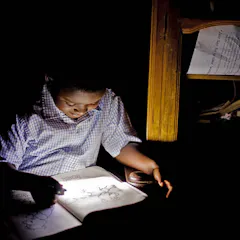
Initiatives to tackle South Africa’s reading crisis must take the country’s realities into account.
Top contributors
-

Professor, School of Education, University of Southern Queensland
-
Associate Professor in Language, Literacy and TESL, University of Canberra
-
Associate Professor, University of Southern Denmark
-
Professor, Werklund School of Education, University of Calgary
-
Senior Research DECRA Fellow, Institute for Learning Sciences and Teacher Education, Australian Catholic University
-
Professor of Education Futures, The University of Melbourne
-
Deputy CEO (Research), Australian Council for Educational Research
-
Professional Learning and Development Facilitator in Literacy Education, Te Kunenga ki Pūrehuroa – Massey University
-
School Education Program Director, Grattan Institute
-
Professor at the Australian Centre for the Advancement of Literacy, Australian Catholic University
-
Professor, Canada Research Chair in Determinants of Child Development, Owerko Centre at the Alberta Children’s Hospital Research Institute, University of Calgary
-
Professor of Cognitive Psychology, School of Education, La Trobe University
-
Professor in Language Education, member bua-lit collective, University of Cape Town
-
Senior Lecturer in Literacy, Edith Cowan University
-
Professor in Early Childhood Education and Community, University of Canberra