
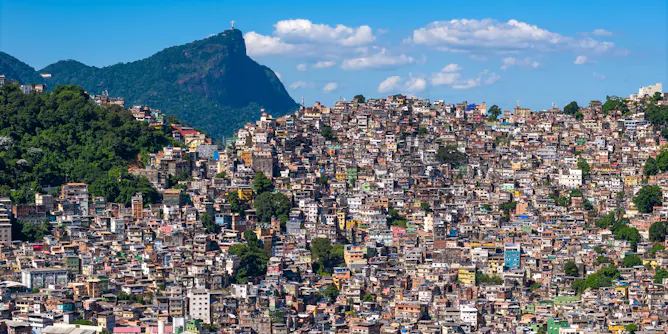
Tourism that seeks to engage with indigenous communities often masks the enduring historical struggle of who gets to decide what a place is and who benefits from it.
Articles on Indigenous communities
Displaying 1 - 20 of 43 articles
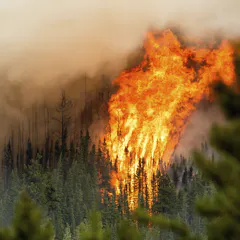
Wildfires disproportionately impact Indigenous communities. Over the last four decades, 42 per cent of wildfire evacuations across Canada have been of Indigenous communities.

Permafrost supports homes and communities across Northern Canada. However, as the climate warms, melting permafrost poses significant challenges for infrastructure.
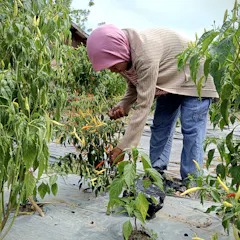
Indigenous Dayak women are starting to cultivate chili peppers and lead a just energy transition through backyard farming

As climate change leads to more extreme weather, temporary climate displacement could become permanent migration.
Using fast-evolving DNA-based techniques requires awareness, community buy-in, and, most importantly, trust and respect to tackle urgent challenges in the Arctic.

Growing and changing demands for water and the increasing impacts of climate change are adding to the challenge of ensuring everyone has access to a safe and reliable water supply.

All canoe trips pass through the territories of Indigenous Peoples who are rightsholders to those lands. How can canoers work to account and reconcile for colonialism in Canada?

Human activities can affect plants and have consequences for the human populations that consume them.

A new report finds tap water in more than 500 remote Indigenous communities isn’t regularly tested. But here’s why this isn’t news to us.

As Latin American communities continue to grow, universities must teach students about Latin America and Latinx communities in interdisciplinary ways.
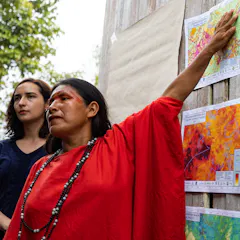
Illegal roads have brought deforestation, fire and other environmental damage to the Amazon. The results of the 2022 presidential runoff could have a major impact for the future.

The DIALOG network forms a bridge between scientific and Indigenous knowledge. It renews the relationship between the university and the Indigenous world, which has for too long been one-sided.

Access to safe water means more than building treatment plants: A study sheds light on water consumption and perceptions of water in Indigenous communities in the Northwest Territories and Yukon.
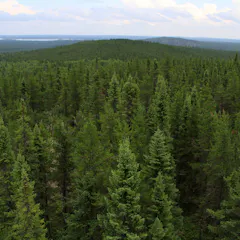
The Ring of Fire Regional Assessment is Canada’s first opportunity to apply new legislative tools to co-operating with Indigenous jurisdictions. But the government is messing up.
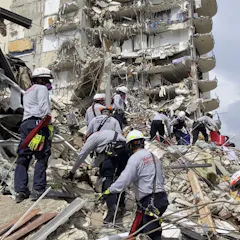
The Miami apartment collapse is a grim reminder of why engineering matters, and why comprehensive education in ethics should be embedded in the training of engineers.
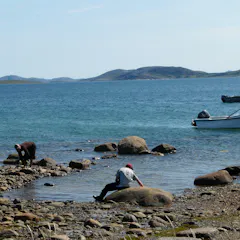
Summer 2021 is too soon for southern-based researchers and travellers to return to northern, Indigenous communities in the wake of COVID-19, for research fieldwork or leisure.
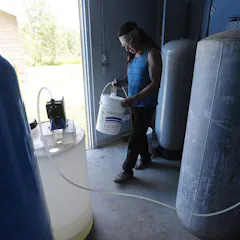
While investments are important, what’s more important is the process and mechanisms through which Indigenous people access funding.
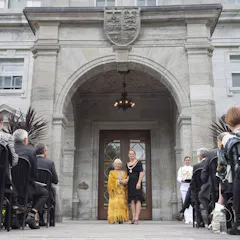
Canada’s new governor general will have to fuse the British, French, American and Indigenous elements of Canada that together are the core of the country.
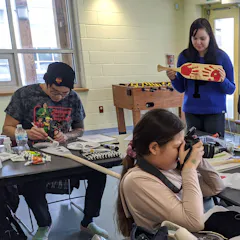
Collaborative research sought to document Six Nations youth perspectives shared through art and story to inform principles for water management in the lower Grand River.
Top contributors
-

ARC DECRA Fellow & Senior Lecturer in Construction Management, Faculty of Architecture, Building and Planning, The University of Melbourne
-
Professor, Director, Griffith University
-
Associate Professor in Public Health, The University of Queensland
-
York Research Chair in Environmental Law & Justice in the Green Economy, York University, Canada
-
NHMRC R.D. Wright Biomedical Fellow, The University of Queensland
-
Design Theory and Research Lecturer, Cape Peninsula University of Technology
-
Research assistant, Universitas Gadjah Mada
-
Industry Adjunct, Adelaide University
-
Research fellow, Deakin University
-
Lecturer, Department of International Relations, Universitas Gadjah Mada
-
Advisor, Author and Researcher, The University of Queensland
-
Adjunct Senior Research Fellow, Monash University
-
Adjunct Associate Professor James Cook University and University Fellow Charles Darwin University, James Cook University
-
Adjunct Researcher, James Cook University
-
Professor of Public Policy, Northumbria University, Newcastle