

When fires and floods hit, Aboriginal communities are often left to recover without much, if any, government support.
Articles on Indigenous policy
Displaying 1 - 20 of 93 articles
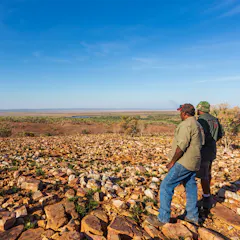
To close the gap, we need First Nations people involved in the evaluation of what worked and what didn’t about Indigenous-focused wellbeing programs.
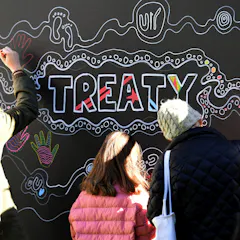
The referendum result left states and territories to pick up the mantle of agreement-making with First Nations people. While there’s been some progress, many efforts have stalled or gone backwards.
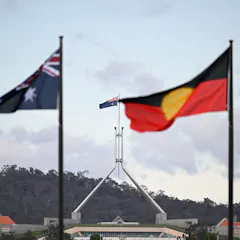
No campaigners said the Voice wasn’t the right solution, that they had better alternatives. In the 12 months since the referendum failed, no one’s offered any real solutions.

After the referendum loss, the government hasn’t had much of a plan for Indigenous Australians. The new minister’s biggest challenge will be making one.
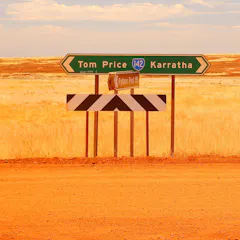
More Australian employers are keen to employ Indigenous workers, but a large-scale analysis of job adverts shows a mismatch between demand for and supply of Indigenous talent.
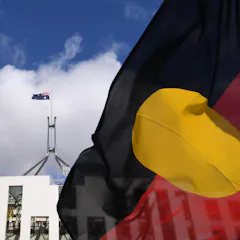
There is a quiet process underway, aimed at achieving the recognition of the First Nations that has so far eluded Australia.
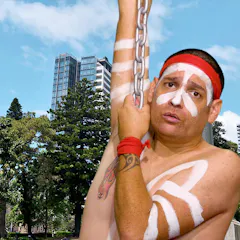
Monuments are testaments to how a society wants to remember. Now is the time to ask which monuments can withstand introspection. Artists are opening those conversations – sometimes hilariously.

Despite chronic housing need and persistent health and infrastructural inequities, northern communities are turning to the land and each other to prevent the spread of COVID-19.

Policies for Indigenous Australians must better reflect and prioritise Indigenous cultural values.

The Coalition government is stressing partnerships and accountability in its Indigenous policies, but PM Scott Morrison is actually taking a top-down approach and ignoring Indigenous advice.

When it comes to improving Indigenous policies and programs, Indigenous communities should be the ones evaluating government – rather than the other way around.
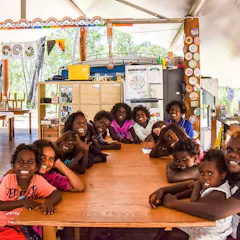
We now have a proven model for supporting self-determined building on Aboriginal homelands. The next question is how can its reach be extended?
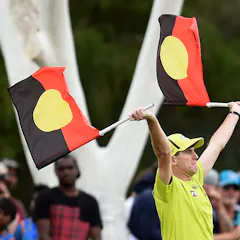
Indigenous procurement policies are kicking goals, but who for?
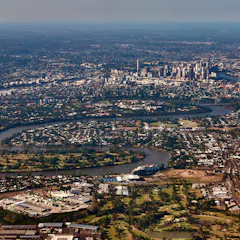
The myth of ‘the Queensland voter’, Australia’s trust deficit, and the path to Indigenous recognition
The Conversation122 MB (download)
Today, an election-themed episode about some of the biggest policy questions Australia faces, featuring Indigenous academic lawyer Eddie Synot and political scientist Anne Tiernan.

For First Nations peoples to recover from the multiple harms of settler colonialism, they must take control of the services they need, free from the control and interference of the settler state.

Some targets seem easier to meet than others, while some are just plain unreliable. Here are four things we’ve learnt from the last decade of Closing the Gap policy.

Centralised policies are not meeting the needs of remote Indigenous settlements. Increasing their decision-making input and the role of local industry can overcome the challenges of building remotely.
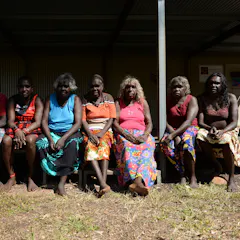
We decided to dig into the statistics and compare the experience of financial stress in Indigenous and non-Indigenous households.
Our findings surprised us.
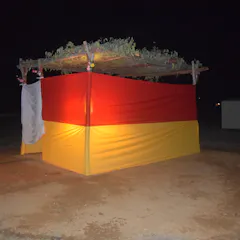
In remote Northern Territory, most Aboriginal people have been buried in unmarked graves. Archaelogists are carrying out painstaking detective work to help communities find their loved ones’ remains.
Top contributors
-

Professor of Economics and Public Policy, ANU College of Arts and Social Sciences, Australian National University
-
Professorial Fellow, Jumbunna IHL, University of Technology Sydney
-
Associate Professor of Public Policy, Crawford School of Public Policy, Australian National University
-
ARC DECRA Fellow, Australian National University
-
Professorial Fellow, University of Canberra
-
Senior Lecturer in Social Research and Policy, UNSW
-
Senior Lecturer In Public Policy, School of Social and Political Sciences, The University of Melbourne
-
Professor of Indigenous Health, Executive Director, Carumba Institute, Queensland University of Technology
-
Associate Professor, UNSW
-
Advisor, Author and Researcher, The University of Queensland
-
Pro Vice-Chancellor Indigenous UNSW and Professor of Law, UNSW ; University of Pennsylvania
-
Professor, School of Social and Political Sciences, Director, The (so-called) Australian Centre, The University of Melbourne
-
Lecturer, Faculty of Health Sciences, Australian Catholic University
-
Associate Professor, Macquarie University
-
Senior Lecturer in Criminology and Social Policy, The University of Queensland