

Research suggests cash bail is ineffective in ensuring those accused of crimes honour their bail conditions. Deterrence cannot be bought.
Articles on Incarceration
Displaying 1 - 20 of 134 articles
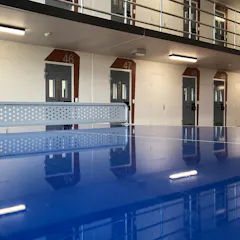
At best, prison work programs increase the chances of successful reintegration after release. At worst, they can be exploitative.

Rural places have long built and expanded prisons to tap federal funds during hard times.

Novel treatments include mental exercises to boost cognitive function, as well as strategies that help people with schizophrenia understand the emotions of others.

When children are denied bail, they’re often taken to police watch houses. But these don’t have the staff or facilities to keep children safe and well.
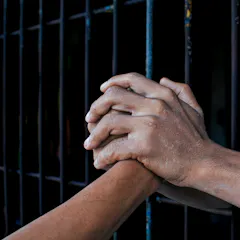
Nearly all county jails across Colorado’s Front Range allow prisoners to visit with their loved ones only virtually.
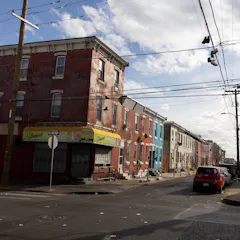
New research maps where legal financial obligations are concentrated – and finds they overlap with poverty, violence and racial inequality.

Since 2019, a number of workshops have been held in the Darwin Correctional Precinct, as part of an ongoing prison education project.
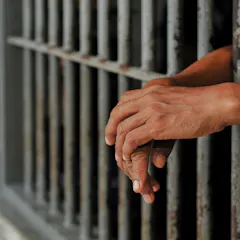
Many jails and prisons are dependent on incarcerated labor to keep costs low.
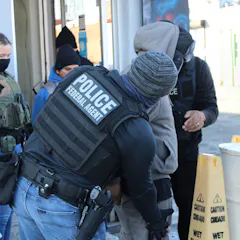
Pennsylvania’s patchwork of ICE detention centers makes it difficult to track loved ones.
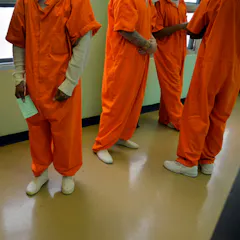
A new policy at Allegheny County Jail allows incarcerated people to earn money for their work. The goal is to improve conditions for everyone involved.
Arguing that confining and treating people against their will is ‘compassionate’ greatly expands the role of policing in medical matters, often with few limits.

A nurse scientist interviewed 29 formerly incarcerated Black men in Philadelphia to understand how they address their mental health needs.

At least 20 million Americans have served time. Most of them can’t or don’t vote, and that may distort some election outcomes, a political scientist argues.

HBCUs make up just 3% of the country’s colleges and universities. But their graduates include 40% of Black engineers and 50% of Black lawyers.
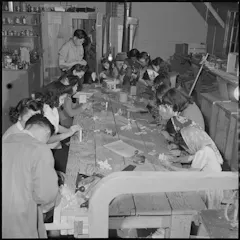
Incarcerated in rough barracks surrounded by barbed wire and armed soldiers, Japanese Americans made functional and beautiful items to ease their suffering.
Hope is not a soft word in prison. It shapes how people cope with their sentence and it determines whether - and how - they engage with staff and other prisoners.

State governments across the country have brought in harsher laws to deal with youth crime in recent years. But do the stats justify the punitive measures?

A criminologist whose nephew died in prison awaiting trial explains why the federal government’s proposed bail reforms will reduce, not enhance, safety without big investments in correctional systems.

To build safer communities, the federal government should commit to investing in support services while also helping provinces better monitor and enforce bail conditions.
Top contributors
-

Professor of Criminology, University of Technology Sydney
-
Professor Emerita of Criminology, UNSW
-
Associate Professor of Sociology, University of Guelph
-
Senior Lecturer, Political Science and International Relations, University of Canterbury
-
Assistant Professor of Criminology & Criminal Justice, The University of Texas at San Antonio
-
Assistant Professor, Criminology, Toronto Metropolitan University
-
Assistant Professor of School Psychology, Special Education, and Sociology
-
Kenneth D. Lewis Distinguished Chair in Interdisciplinary Health Studies, Georgia State University
-
Associate Professor, Boston University
-
Professor of Law, University of Technology Sydney
-
University Distinguished Professor of Forensic Behavioural Science & Dean, School of Health Sciences, Swinburne University of Technology
-
Associate Dean and Chief Academic Officer for Nursing and Director, Project Healthy Grandparents, Byrdine F. Lewis College of Nursing and Health Professions, Georgia State University
-
Associate Professor of Political Science, Emerson College
-
Assistant Professor of Sociology, University of Houston
-
Professor in History, University of Tasmania