

At best, prison work programs increase the chances of successful reintegration after release. At worst, they can be exploitative.
Articles on Prisoners
Displaying 1 - 20 of 84 articles

A court injunction has slowed plans to build a crocodile moat at a facility holding Palestinian prisoners. But Israeli government hard-liners are pushing ahead.

Nearly all county jails across Colorado’s Front Range allow prisoners to visit with their loved ones only virtually.

Israeli medical staff who treated Palestinian captives in the wake of the October 7 attacks say they are haunted by their experiences.
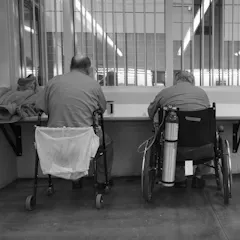
Parolees over 50 tend to have health issues and strained family ties. They’re less likely to reoffend after prison but need more help getting back on their feet.

Research shows 37 new prisons have been built in Australia since 2000. But the evidence shows increased incarceration doesn’t help reduce crime.

Greater support for ex-prisoners to start their own business could lead to a cut in re-offending rates.

Lengthy confinement within locked, poorly maintained and overcrowded cells triggers boredom and restlessness, and contributes to violent incidents.

Community notifications are intended to be helpful, however, they can also make reintegrating back into the community challenging for released individuals.

So much of day to day life is not powered by technology, but what happens if you’ve been behind bars for years? It’s time prisoners better prepared inmates for life once they’ve served their time.

Despite very strong results in the US, there’s very little entrepreneurship training for former prisoners in the UK.

This is a problem for everyone. Research shows mental health intervention and engagement helps reduce offending among people with serious mental illness who commit offences.

Built in 1821 to house and provide productive employment for the New South Wales colony’s growing population of female convicts, the Parramatta Female Factory was also the site of countless horrors.
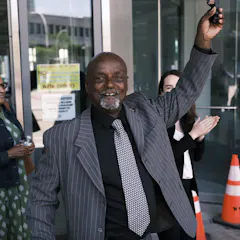
Leonard Mack spent years in a US jail for a crime he didn’t commit. Here’s how identification procedures can, and have, led to wrongful convictions, and what can be done to prevent it.

Mesopotamia’s prisons were built for detaining people, not punishing them. But they shaped powerful ideas about justice and reform that aren’t so different from today’s.

Most people leaving prison face an uphill battle of service navigation that is too often deficit-focused, intentionally seeking out the failures of the individual and centred on punitive responses.

Experts still disagree about why the US prison population has grown so much over the last few decades. But crime is only one part of the problem.

A scholar who has studied imprisonment explains why the promise of sentence reductions in return for organ donation raises ethical issues about whether inmates can ever consent freely.

Research finds that the threat of being sentenced to death has no bearing on how people contemplate violent crime.

Some vulnerable populations may have fallen through the cracks despite efforts to improve access to HIV services during the pandemic in Nigeria.
Top contributors
-

Professor of Entrepreneurship and Innovation, University of Strathclyde
-
Professor of Law, University of Technology Sydney
-
Assistant Professor of Sociology, University of Houston
-
Professor of Criminology, Australian National University
-
Assistant Professor, Department of Business-Society Management, Rotterdam School of Management
-
William Nelson Cromwell Professor of Jurisprudence and Political Science, Amherst College
-
Professor of Criminology, University of Bath
-
Emeritus Professor, University of South Africa and Visiting professor and strategic advisor in Faculty of Humanities., University of Johannesburg
-
Dean of Research (Creative), Adelaide University
-
Lecturer in Nursing, University of Dundee
-
Distinguished Fellow, Bard Prison Initiative and Levy Institute Research Professor, Bard College
-
Senior Lecturer in Leadership Studies, University of Exeter
-
Honorary Fellow, Department of Health Sciences, University of York
-
Dean, School of Law, Deakin University
-
Reader & Director of MANDRAKE, Manchester Metropolitan University