

Rural places have long built and expanded prisons to tap federal funds during hard times.
Articles on Jails
Displaying 1 - 20 of 37 articles
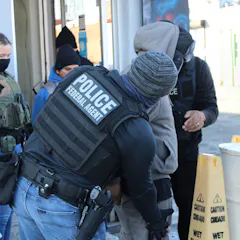
Pennsylvania’s patchwork of ICE detention centers makes it difficult to track loved ones.
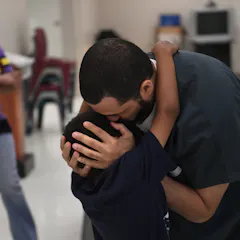
In-person visits in prisons and jails can strengthen family relationships and reduce recidivism.

For the more than 3 million Americans on probation or parole, rules and regulations often serve as hidden traps to reincarceration.

The history of a simple jail building in the Bay of Islands reveals the ways early settler New Zealand viewed itself, and wanted to be viewed by others.
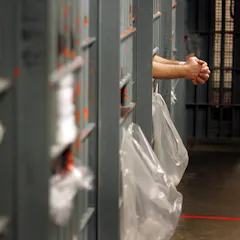
Prisons and jails are difficult to evacuate when wildfires or storms approach. Many of these facilities lack evacuation plans and may keep incarcerated people on-site instead of moving them to safety.
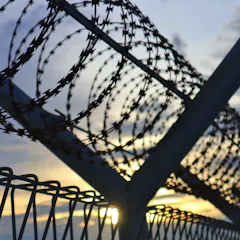
Only 218 programs offer credit-bearing college programs in prison. That’s about to change.

Most people leaving prison face an uphill battle of service navigation that is too often deficit-focused, intentionally seeking out the failures of the individual and centred on punitive responses.
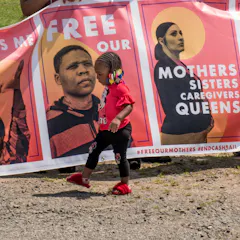
For Mother’s Day, we look at the fastest growing prison population in Canada — racialized women, many of whom are mothers. Experts connect the trend to rising poverty and the attempts to cope with it.

Experts still disagree about why the US prison population has grown so much over the last few decades. But crime is only one part of the problem.

Prisons and jails have a long history, but they weren’t always used for the same kinds of punishment.

A quarter of prisoners report a cognitive, intellectual or developmental disability. But the true figure could be even higher.
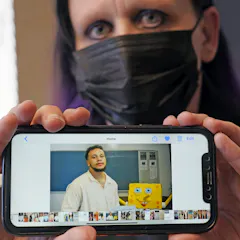
For the 6.5 million Americans who have an incarcerated family member, COVID-19 has made an already stressful situation much worse by drastically limiting communication and raising fears of death.

Infection rates of COVID-19 have soared among prisoners in the US. An expert on penal policy considers what is ‘unjust and disproportionate’ punishment at this time.
Coronavirus infections in prisons are a public health problem for everyone, not just prisoners and sfaff.
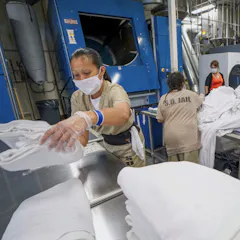
Amid the COVID-19 pandemic, missteps in transitioning the incarcerated back to their communities places this already vulnerable populace at greater risk of getting and transmitting the virus.

About half of incarcerated women in the United States are mothers to children under age 18. Natural spaces within a prison can help maintain their mother-child bonds.
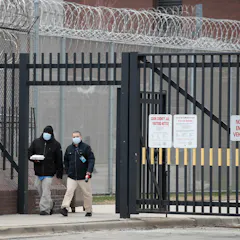
Half of incarcerated individuals have either a chronic medical or a mental health condition. But social distancing and rigorous hygiene are unattainable for many US jails and prisons.
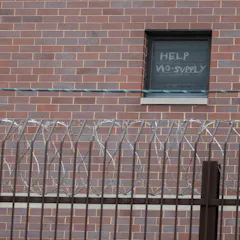
In the 1790s, penal reformers rebuilt America’s squalid jails as airy, hygienic places meant to keep residents – and by extension society – healthy. Now they’re hotbeds of COVID-19. What went wrong?
What does it mean to hold a party in a place with a long history of death and suffering?
Top contributors
-

William Nelson Cromwell Professor of Jurisprudence and Political Science, Amherst College
-
Senior Lecturer in Social Work, University of Salford
-
Woodruff Deem Professor of Law and Distinguished Fellow of Religion, Brigham Young University
-
Associate Professor, UNSW
-
Associate Professor in Criminology, The University of Queensland
-
University Distinguished Professor of Forensic Behavioural Science & Dean, School of Health Sciences, Swinburne University of Technology
-
Professor of History and Afroamerican and African Studies, University of Michigan
-
Professor of Law, Boston University
-
PhD Candidate, Department of Law and Legal Studies, Carleton University
-
Professor, Flinders Law School, Flinders University
-
Postdoctoral Fellow at Institute of Urban Policy Research and Analysis, The University of Texas at Austin
-
Director and Senior Researcher, Melbourne Criminological Research and Evaluation, The University of Melbourne
-
Associate Professor of Sociology, University of Wisconsin-Madison
-
Emeritus Professor, Law Faculty, UNSW
-
Professor of Management and Organizations, Cornell University