

In Iceland’s few open prisons, prisoners benefit from benign conditions, rural settings and internet access. This makes being imprisoned as a foreigner much easier than in other western Europen countries.
Articles on Incarceration
Displaying 41 - 60 of 134 articles

Receiving visitors while behind bars was a raft of benefits, but people have reported many barriers. It must be made easier to help drive down recidivism rates.

People with mental health challenges are more likely to die in custody. The coroner’s inquest into the death of Soleiman Faqiri in an Ontario jail is one such tragedy that calls out for reform.

People who get an education while serving time are less likely to return to prison and more likely to enter the job market, an analysis finds.

This is a problem for everyone. Research shows mental health intervention and engagement helps reduce offending among people with serious mental illness who commit offences.

The UK imprisons more people than most of its western European neighbours and the conditions in its prisons are getting worse.

In the mid-20th century, civil servants in Ireland recognised the harms incarceration wreaks not just on individuals but their families and society at large.

Mesopotamia’s prisons were built for detaining people, not punishing them. But they shaped powerful ideas about justice and reform that aren’t so different from today’s.

Only 218 programs offer credit-bearing college programs in prison. That’s about to change.

This new play by Suzie Miller, the one-time lawyer who wrote Prima Facie, ventures into dark places few want to confront.
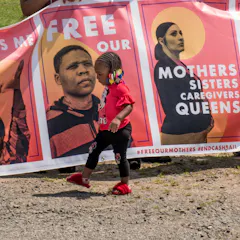
For Mother’s Day, we look at the fastest growing prison population in Canada — racialized women, many of whom are mothers. Experts connect the trend to rising poverty and the attempts to cope with it.

What does ‘justice reinvestment’ mean in practice? Who makes funding decisions? To find out more, we consulted Aboriginal communities in Bourke, Moree and Mount Druitt.
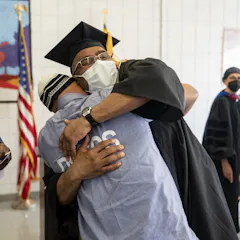
With the expansion of Second Chance Pell grants, more colleges and universities will soon offer degree programs to students in prison.

Ghana needs a more effective approach to juvenile justice reform that considers the long-term impact of detention on youth offenders.

Those determining bail must reflect on their own beliefs and show restraint as they determine risk to avoid relying on false racist narratives. So should those calling for bail reform.
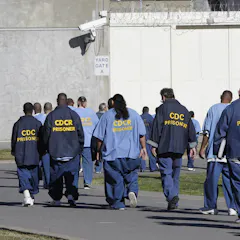
The US has one of the highest incarceration rates in the world. When it comes to violent offenders and the Black community, the system isn’t working, argue criminologists.

Prisons and jails have a long history, but they weren’t always used for the same kinds of punishment.

To protect communities, we must improve the likelihood that accused people can comply with their bail conditions by offering greater support on several fronts, from social services to law enforcement.

Migrants and refugee claimants in immigration detention continue to face serious trauma and abuse. The federal government must take action to stop migrant detentions.

Russell Marks’ Black Lives, White Law is not about solutions; it’s about identifying the problems with Australia’s criminal legal system, and the injustice it does to First Nations people.
Top contributors
-

Professor of Criminology, University of Technology Sydney
-
Professor Emerita of Criminology, UNSW
-
Associate Professor of Sociology, University of Guelph
-
Senior Lecturer, Political Science and International Relations, University of Canterbury
-
Assistant Professor of Criminology & Criminal Justice, The University of Texas at San Antonio
-
Assistant Professor, Criminology, Toronto Metropolitan University
-
Assistant Professor of School Psychology, Special Education, and Sociology
-
Kenneth D. Lewis Distinguished Chair in Interdisciplinary Health Studies, Georgia State University
-
Associate Professor, Boston University
-
Professor of Law, University of Technology Sydney
-
University Distinguished Professor of Forensic Behavioural Science & Dean, School of Health Sciences, Swinburne University of Technology
-
Associate Dean and Chief Academic Officer for Nursing and Director, Project Healthy Grandparents, Byrdine F. Lewis College of Nursing and Health Professions, Georgia State University
-
Associate Professor of Political Science, Emerson College
-
Assistant Professor of Sociology, University of Houston
-
Professor in History, University of Tasmania