
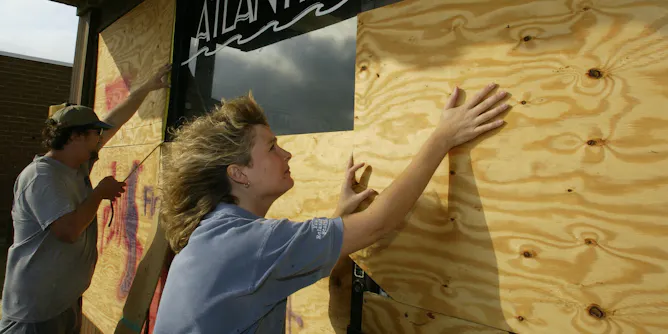
New Orleans has about a 40% chance of getting hit by a tropical storm in any given year. Here’s how heat, winds and the shape of the seafloor raise the hurricane damage risk.
Articles on Hurricanes
Displaying 141 - 160 of 303 articles
With adaptive design, infrastructure is ready to be expanded in the future. It’s working for the Dutch.
Economic recovery and carbon neutrality are linked. Both depend on the ocean’s ability to continue to regulate climate.
NOAA released its list of climate and weather disasters that cost the nation more than $1 billion each. Like many climate and weather events this past year, it shattered the record.
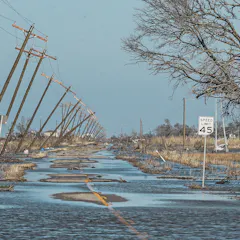
Many storms, heatwaves, fires and droughts slipped under the radar this year.
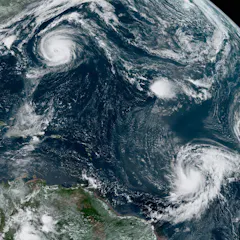
There were so many tropical storms in 2020, forecasters exhausted the list of names and started using Greek letters. And that’s only one reason 2020 was extreme.

Birds found along the Gulf Coast have evolved to ride out hurricanes and tropical storms. But with development degrading the marshes where they live, it’s getting harder for them to bounce back.
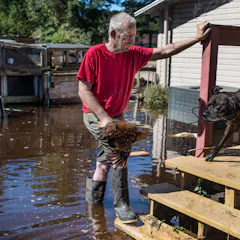
More than half the US production of broiler chickens is in states along the coast frequently struck by hurricanes.
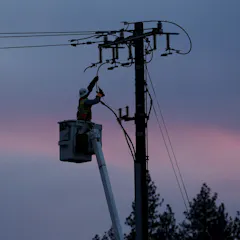
In an era of climate change and extreme weather, a microgrid — a self-sufficient, energy-generating distribution and control system — puts communities on the path to self-reliance.
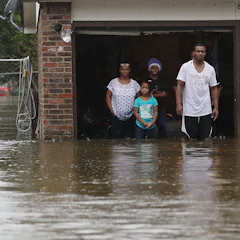
New risk models show nearly twice as many properties are at risk from a 100-year flood today than the government’s flood maps indicate.
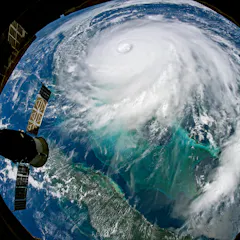
Hurricane stalling has become common over the past half-century, and their average forward speed has also slowed.
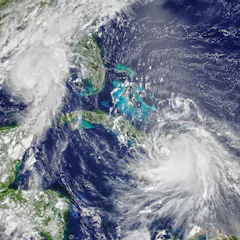
It’s only happened twice since naming started in 1950, and there’s an unusual twist to where many of the storms formed this year.
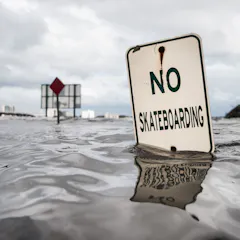
How destructive storm surge gets depends on both the hurricane and the shape of the land.
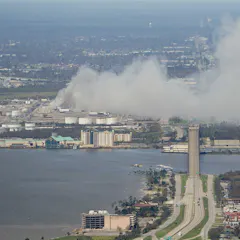
A storm-driven chlorine gas release in a vulnerable community is the type of worst-case scenario that scientists and engineers have warned about for decades.
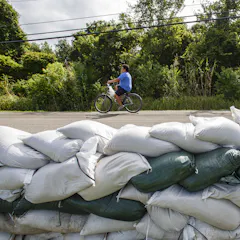
Knowing what makes an effective response to natural disasters will be increasingly important as the climate crisis intensifies.
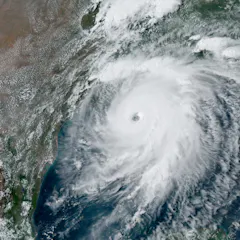
Laura went from a tropical storm to a major hurricane in less than 24 hours, sending coastal residents scrambling to prepare. Hurricanes Harvey and Michael exploded in strength in similar ways.
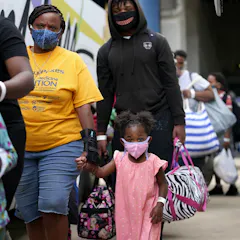
Disaster preparation and evacuation procedures weren’t made for social distancing. The pandemic means response decisions are now fraught with contradictions.
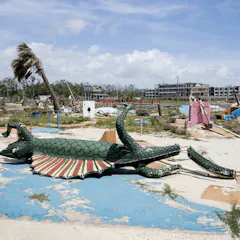
After the news media move on from a major disaster site, rebuilding continues for years.
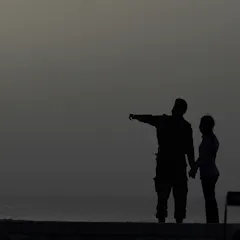
From June through October, it’s not unusual for huge Saharan dust plumes to blow across the Atlantic. They can darken skies but also bring calmer weather and electric sunsets. Here’s how they form.
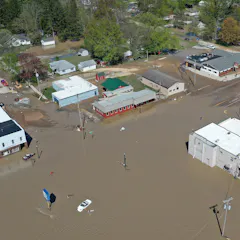
Extreme weather events prompt people to move, a trend that could accelerate in a warming climate. But the ability to migrate internally in the US depends largely on economic status.
Top contributors
-

Professor Emeritus of Geography, Louisiana State University
-
Professor of Atmospheric Science and Colorado State Climatologist, Colorado State University
-
ARC Future Fellow and Associate Professor in Climate Science, ARC Centre of Excellence for 21st Century Weather, The University of Melbourne
-
Associate Professor of Landscape Architecture and Urban Planning, Texas A&M University
-
Professor of Geology and Environmental Geosciences, University of Dayton
-
Professor of Political Science, Public Policy and Urban Affairs, Northeastern University
-
Director of Energy Studies, University of Florida
-
Furman Public Policy Scholar, New York University
-
Professor of Climate Science, UMass Lowell
-
Professor of Oceanography, University of Miami
-
Associate Professor of Human Development and Family Studies, Demography and Public Policy, Penn State
-
Assistant Professor of Nursing, University of Michigan
-
Postdoctoral research associate, University of Edinburgh
-
Distinguished Scholar, National Center for Atmospheric Research; Affiliate Faculty, University of Auckland, Waipapa Taumata Rau
-
Research Fellow, American University School of Public Affairs