
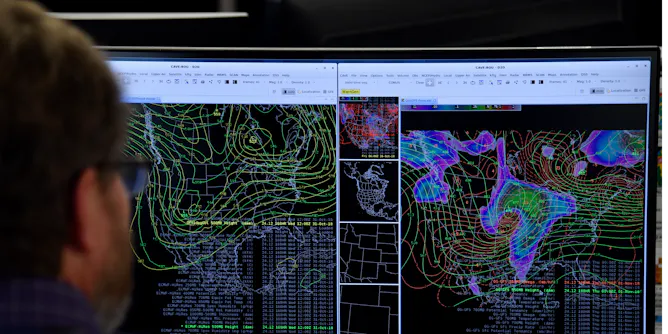
Would you trust a weather forecast made by a machine that had learned how weather systems behaved by reviewing thousands of past weather maps?
Articles on Hurricanes
Displaying 121 - 140 of 303 articles
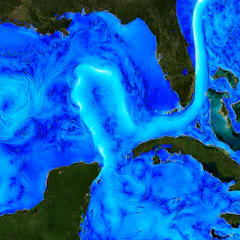
With La Niña helping clear the way for a busy hurricane season, this wide current of warm water could spell disaster for the northern Gulf Coast.

We asked 680 Florida real estate agents what they’re seeing in the market. Here’s what they said.
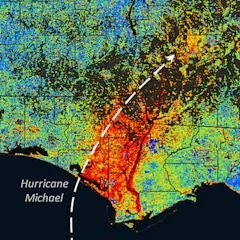
Hurricane Michael left a jumbled mess of downed trees. Cleaning it up is even harder than it sounds, and now dead trees are burning.

Children don’t have to be in physical danger for disaster images to have a powerful psychological impact.
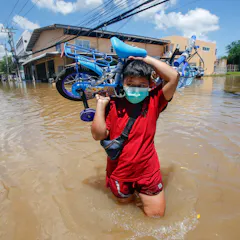
While surface temperatures were about the 6th warmest on record in 2021, the upper oceans were at their hottest – and they’re a stronger indicator of global warming. A top climate scientist explains.
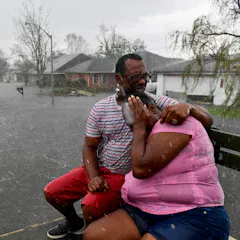
A hurricane that wreaked havoc from Louisiana to New York City, the Texas freeze and devastating western wildfires topped NOAA’s list of billion-dollar disasters in 2021.
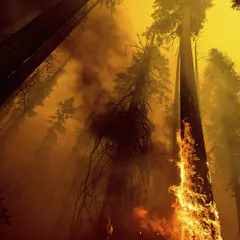
US disasters in 2021 told a tale of two climate extremes. A climate scientist explains why wet areas are getting wetter and dry areas drier.
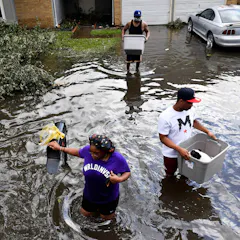
The most vulnerable communities are being pushed deeper into poverty with each climate-related disaster. Part of the problem is that government aid helps the wealthiest people most.
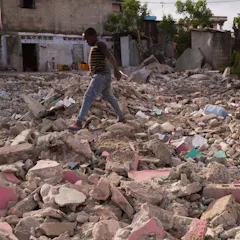
Collaboration can have immediate benefits in the most dire circumstances.
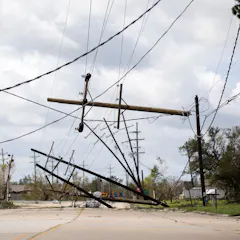
Building even more power poles and transmission lines won’t avert outages when major disasters strike.
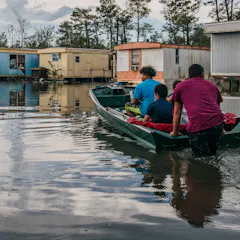
As the state copes with hurricanes and climate disasters, it is figuring out how to manage the slow-motion loss of its coastal land. But its plans could endanger the cultures that define the region.
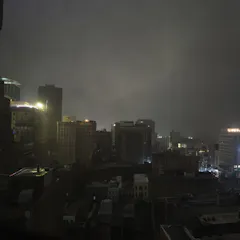
Hurricane Ida left the entire city of New Orleans in the dark and renewed discussion of burying power lines. But there’s no way to completely protect the grid, above ground or below.
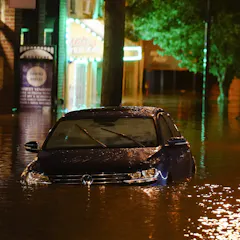
Evidence is mounting that, as the climate warms, the amount of rain falling in heavy storms is increasing, especially in the central and eastern US.

Ida exploded from a weak hurricane to a powerful Category 4 storm in less than 24 hours, thanks to heat from an ocean eddy. An oceanographer explains its rapid intensification.
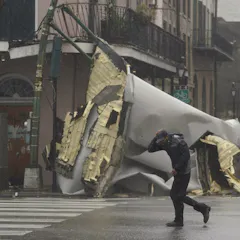
The New Orleans region is likely to see a hurricane about every seven years and a major hurricane about every 20.

Some of the climate changes will be irreversible for millennia. But some can be slowed and even stopped if countries quickly reduce their greenhouse gas emissions, including from burning fossil fuels.

As the climate changes, the ocean is also changing. And that’s putting our health at risk.
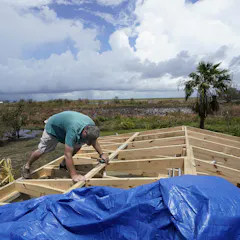
Federal weather scientists are pushing to make the US more ‘weather-ready,’ which could mean prepping for fires, flooding or storms depending on where you live. The common factor: thinking ahead.

Social inequalities worsen storm damage and challenge disaster recovery, increasing class divides over time.
Top contributors
-

Professor Emeritus of Geography, Louisiana State University
-
Professor of Atmospheric Science and Colorado State Climatologist, Colorado State University
-
ARC Future Fellow and Associate Professor in Climate Science, ARC Centre of Excellence for 21st Century Weather, The University of Melbourne
-
Associate Professor of Landscape Architecture and Urban Planning, Texas A&M University
-
Professor of Geology and Environmental Geosciences, University of Dayton
-
Professor of Political Science, Public Policy and Urban Affairs, Northeastern University
-
Director of Energy Studies, University of Florida
-
Furman Public Policy Scholar, New York University
-
Professor of Climate Science, UMass Lowell
-
Professor of Oceanography, University of Miami
-
Associate Professor of Human Development and Family Studies, Demography and Public Policy, Penn State
-
Assistant Professor of Nursing, University of Michigan
-
Postdoctoral research associate, University of Edinburgh
-
Distinguished Scholar, National Center for Atmospheric Research; Affiliate Faculty, University of Auckland, Waipapa Taumata Rau
-
Research Fellow, American University School of Public Affairs