

Travel bans, a recession and the government’s university reform package will leave an estimated $4.7 billion gap in research funding that needs filling to maintain our current output.
Articles on Higher education policy
Displaying 21 - 40 of 219 articles

Research shows predictions for the jobs of the future are unreliable, and the government’s funding changes don’t match what their own data shows about future earnings.

The reduced rate of funding to universities (of up to 17%), per place, for national priority courses sends perverse messages to universities.

The implications of the government’s announcement are about more than incentivising the career trajectories of students. They are a direct assault on the premise of universities.

For many people, universities remain institutions embodying past imperial practices. Universities have an important role to play in society, and they must do so with society.

This essay explores the way the social contract between universities, society and the state has changed over the course of the 20th century. And how generations of students paid and benefited.
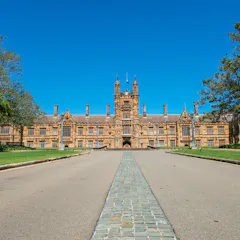
The government’s new funding package for universities is a good first step. But its plan for low-cost online courses is problematic.

The University of Sydney took in about A$750 million from international students in 2017. Two-thirds of that – about $500 million – came from international students from China.

Universities have put in place many measures to help international students. But online classes are not a simple solution, and the government could help with the extra money students have to spend.

Australia has never had such a drop in student numbers. Even during the SARS outbreak Australia didn’t implement bans on those travelling from affected countries.

The Coalition has had longer than a three year cycle to make some changes to education. But since the 2016 election, what has it actually done? And what is Labor proposing?

Labor has promised to review the tertiary education sector if elected next year. There are some major issues, and some examples from abroad they should consider.

Funding debates dominated most education policy talks in 2017, but discussions look to be extending past the dollar value in 2018 with a number of high profile reports due for release.

A number of universities around the world are providing free textbooks to first year university students as a way to increase retention rates.

The government should add a ‘super payment option’ that allows graduates to offset the cost of their HELP repayments.

Students who take longer to complete their degree will be hit hard by fee hikes.
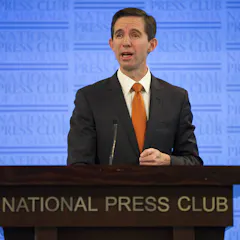
We shouldn’t take the government’s own budgetary savings rationale at face value.
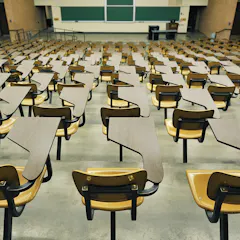
It takes a combination of formal and informal learning to equip academics to become better teachers. Universities need to encourage both approaches.

Students will now have to pay back more of their loan, and repay quicker.

Hidden in the detail of the latest higher education reform package, there are talks of creating teaching-only universities.
Top contributors
-

Professor of Higher Education Policy, Monash University
-
Associate Professor, Melbourne Centre for the Study of Higher Education, The University of Melbourne
-
Adjunct Professor, Department of Leadership, Higher and Adult Education, OISE, University of Toronto
-
Honorary Senior Fellow, Melbourne School of Psychological Sciences, The University of Melbourne
-
Senior Research Fellow, Curtin University
-
Honorary Professorial Fellow, Melbourne CSHE, The University of Melbourne
-
Associate Professor & Academic Director, Widening Participation, La Trobe University
-
Professorial Fellow, University of Canberra
-
Adjunct Associate Professor in History, University of New England
-
Executive Director, IRU, La Trobe University
-
Fellow, Higher Education Program, Grattan Institute
-
Mitchell Professorial Fellow, Victoria University
-
Vice-Chancellor, Western Sydney University
-
Honorary Senior Fellow, The University of Melbourne
-
Vice Chancellor, Victoria University