

Higher education reform means more pain for students and universities with long lasting consequences.
Articles on Higher education policy
Displaying 41 - 60 of 219 articles

Prevention messages by universities are often directed at the victim and what she or he can do to avoid being raped. This may then deter reporting of the incident.

Our need for unbiased, well-researched information has never been greater.

How we calculate university drop-out rates must be amended to reflect the changing cohort of university students, who often dip in and out of study and take longer to complete their degree.

Lower completion rates for rural and remote universities are not necessarily a reflection on the quality of the educational experience they provide, but reflect the demographics of their students.

We take a closer look at some of the common claims made this year to see if there is any truth to them.

A flat-rate fee on all student loans is a fairer economic proposal.

The government has announced it will accept recommendations to make the university admissions process more transparent. But that alone isn’t enough.

Research looking at evidence-based teaching in higher education tends to be based more on anecdotes than on large, robust and peer-reviewed data.

A new clause being embedded in a number of university contracts attempts to restrict academics from speaking freely in public debate about issues that are outside their area of research.

Placing greater control over student fees will not lift the quality of student outcomes and ensure the integrity of the qualifications issued.

Students feel they are not getting the support they need, despite research showing that the relationships students have with their lecturers can have a big influence over retention rates.

An independent authority should control the tertiary funding system in Australia in order to best implement policy objectives.

New research shows private VET providers are ill-equipped to tackle the learning needs of vulnerable young people, who are increasingly being enrolled onto these training courses.

While research shows HEPPP has helped to increase numbers of disadvantaged students going to university, more specific evidence is still needed.
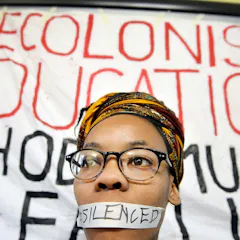
Higher education enables people to express a wide range of perspectives that can come together and be challenged.

In determining a replacement for the ATAR, it will be essential to consider the impacts of any such change on the school and vocational education systems.

Australia will face stiff competition from other countries, such as the US and UK, so it must have a clear strategy for how to deepen its engagement with India’s higher education sector.

Research and development investment remains stagnant in Australia. It’s time for a new, long-term strategy for research.

At best, there will be no new public money, just shuffling funds between programs. At worst, higher education will help reduce the budget deficit.
Top contributors
-

Professor of Higher Education Policy, Monash University
-
Associate Professor, Melbourne Centre for the Study of Higher Education, The University of Melbourne
-
Adjunct Professor, Department of Leadership, Higher and Adult Education, OISE, University of Toronto
-
Honorary Senior Fellow, Melbourne School of Psychological Sciences, The University of Melbourne
-
Senior Research Fellow, Curtin University
-
Honorary Professorial Fellow, Melbourne CSHE, The University of Melbourne
-
Associate Professor & Academic Director, Widening Participation, La Trobe University
-
Professorial Fellow, University of Canberra
-
Adjunct Associate Professor in History, University of New England
-
Executive Director, IRU, La Trobe University
-
Fellow, Higher Education Program, Grattan Institute
-
Mitchell Professorial Fellow, Victoria University
-
Vice-Chancellor, Western Sydney University
-
Honorary Senior Fellow, The University of Melbourne
-
Vice Chancellor, Victoria University