
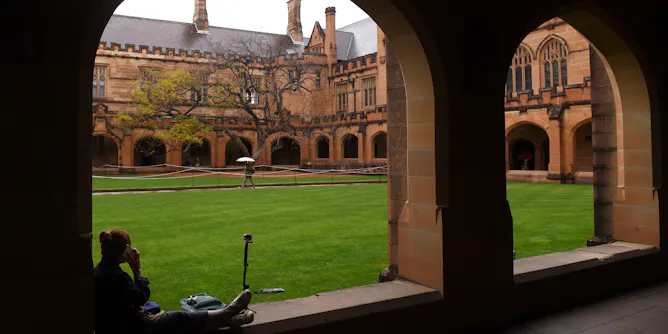
Though more moderate than the 2014 version, the new higher education reform package represents groundhog day for the major political parties.
Articles on Fee deregulation
Displaying 1 - 20 of 148 articles

Gonski funding was scrapped and the vocational education sector got a new student loan system. Here’s what else happened in education this year…

If the flagship policy does not end up driving choice or quality, it is hard to see it gaining support.

Liberal higher education policy is obscure; perhaps deliberately so. But the conclusion is clear. Unless students are required to pay significantly more, universities will face major cuts.

The onus is now on students, universities and the wider public to make clear where they stand on the options laid out in the discussion paper.

While the government finally ruled out full fee deregulation in its 2016 budget, it is still contemplating uncapping fees for some degree courses. Here’s what else is being discussed.

Combining a lower repayment scale with a super option would allow for earlier repayment of HELP loans and greater flexibility for graduates to manage living expenses early in their careers.

Academic experts respond to the latest report by the Parliamentary Budget Office on the impact of student loans on the budget.

The risks posed by deregulating the vocational education and training sector have serious impacts for large sections of the labour market.

2013 was the year of Gonski; 2014 the year of higher education reform; 2015 has been the year of … hmmm … wait, what actually happened this year? Just a lot of chat really, with much debate, but little…
Higher education policy development should involve learning from the Abbott government’s mistakes and other counties where university reform has been successfully achieved.
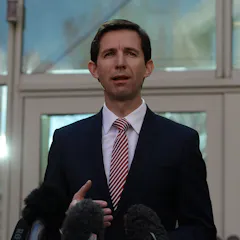
New Education Minister Simon Birmingham says the Turnbull government will abandon plans to deregulate university fees in time for 2016.
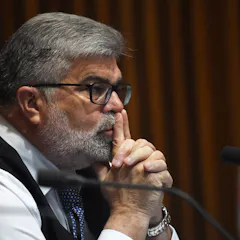
Labor has released a higher education policy intended to restart a discussion stalled by the failure of the Coalition’s deregulation package to pass the Senate. What is the point of the promised funding guarantee?

Christopher Pyne’s policies in the education portfolio were underpinned by liberal values of the free market, autonomy and education as a private commodity.
CC BY-ND31 MB (download)
Shadow Higher Education Minister Kim Carr talks to Michelle Grattan about Labor's new higher education policy.
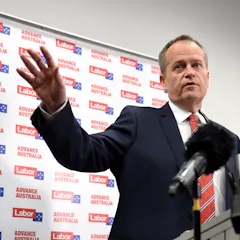
The opposition’s statement today rules out a number of the current government’s policies. Deregulation, as they’ve said before, but also plans to expand the demand-driven system.

Currently universities collaborate with one another and with other sectors in myriad ways, greater competition through deregulation could discourage such collaborations.
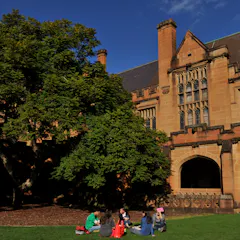
What are some of the consequences for reduced and declining government funding for Australia’s university sector?
If a future government does decide to resurrect compact-like agreements, they should learn from the first two goes with them.

International students are more attracted to universities that charge more, so would price equal quality in the eyes of Aussie students if fees were uncapped?
Top contributors
-

Adjunct Professor, Department of Leadership, Higher and Adult Education, OISE, University of Toronto
-
Associate Professor, Melbourne Centre for the Study of Higher Education, The University of Melbourne
-
Professorial Fellow, University of Canberra
-
Honorary Senior Fellow, Melbourne School of Psychological Sciences, The University of Melbourne
-
Professor of Higher Education Policy, Monash University
-
Senior Research Fellow, Curtin University
-
Honorary Professorial Fellow, Melbourne CSHE, The University of Melbourne
-
Associate Professor & Academic Director, Widening Participation, La Trobe University
-
Adjunct Associate Professor in History, University of New England
-
Professor, College of Business, University of Sharjah
-
Vice-Chancellor, Southern Cross University
-
Professor, School of Education, University of Southern Queensland
-
Vice Chancellor's Fellow at Victoria University and Adjunct Professor of Economics, Victoria University
-
Associate Professor, POLIS@ANU Centre for Social Policy Research, Australian National University
-
Distinguished Professor of Political Science, Crawford School of Public Policy, Australian National University