
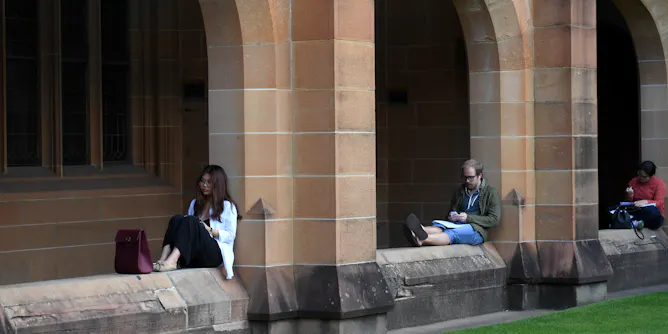
Universities have seen a decade of cuts and unfavourable policies under the Coalition government. Here’s what the major parties should be promising now.
Articles on Higher Education Policy Debate
Displaying all articles

The sameness of the way in which universities present themselves is based on a shared view of what they think stakeholders want. Behind the official facade it’s more like ‘organised anarchy’.
At best, when universities differentiate and specialise it can marshal talent and sharpen their focus. At worst. though, this debate can present universities with a false dilemma.

While research shows HEPPP has helped to increase numbers of disadvantaged students going to university, more specific evidence is still needed.

In determining a replacement for the ATAR, it will be essential to consider the impacts of any such change on the school and vocational education systems.

Australia will face stiff competition from other countries, such as the US and UK, so it must have a clear strategy for how to deepen its engagement with India’s higher education sector.

Research and development investment remains stagnant in Australia. It’s time for a new, long-term strategy for research.

At best, there will be no new public money, just shuffling funds between programs. At worst, higher education will help reduce the budget deficit.

One option could be to cut per-student funding and instead raise the student contribution from an average of about 40% to 50%, by raising HECS caps.

Demand for research grants has far exceeded supply, with success rates for grant applications falling to record lows.

Not only does higher education build the economy’s skills and knowledge, but that it pays for itself and much else many times over.

Mentoring support and campus visits are a couple of ways of familiarising students with university.

Liberal higher education policy is obscure; perhaps deliberately so. But the conclusion is clear. Unless students are required to pay significantly more, universities will face major cuts.
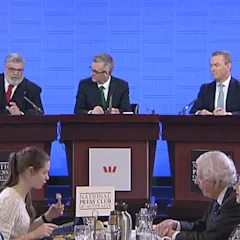
Pyne talked more about changing taxes and incentives to stimulate growth and industry, whereas Carr had clear plans for government investment.

The main failure of university expansion is the unwillingness to fund it. Costs are certainly escalating, but priorities are always political as well as financial.

While on the face of it a 1.5% increase in the number of disadvantaged students going to university might seem minimal, in real terms this is genuinely significant.
Labor’s policy essentially creates a new layer of tertiary education that would involve universities and TAFE Institutes working together to deliver associate degrees and advanced diplomas.
Top contributors
-

Honorary Professorial Fellow, Melbourne CSHE, The University of Melbourne
-
Executive Director, Student Equity; and Director, Centre for Higher Education Equity and Diversity Research, La Trobe University
-
Vice-Chancellor, Queensland University of Technology
-
Principal policy adviser, Queensland University of Technology
-
DECRA Research Fellow, School of Geography, The University of Melbourne
-
Professor of Higher Education Policy, Monash University
-
National Director, AVID Australia, Victoria University
-
Deputy Vice-Chancellor (International) and Senior Vice-President, Monash University
-
Senior Research Fellow, Curtin University
-
Vice Chancellor, Victoria University
-
Professor of Economics, Australian National University
-
Director, Pathways and Academic Learning Support (PALS) Centre, University of Newcastle
-
Chair, The Conversation Media Group
-
Professor and ARC Future Fellow, Education & Social Work, Education Futures Studio, University of Sydney
-
Associate Professor, Melbourne Centre for the Study of Higher Education, The University of Melbourne